
Great expectations: Vatican abuse summit has key, realistic goals

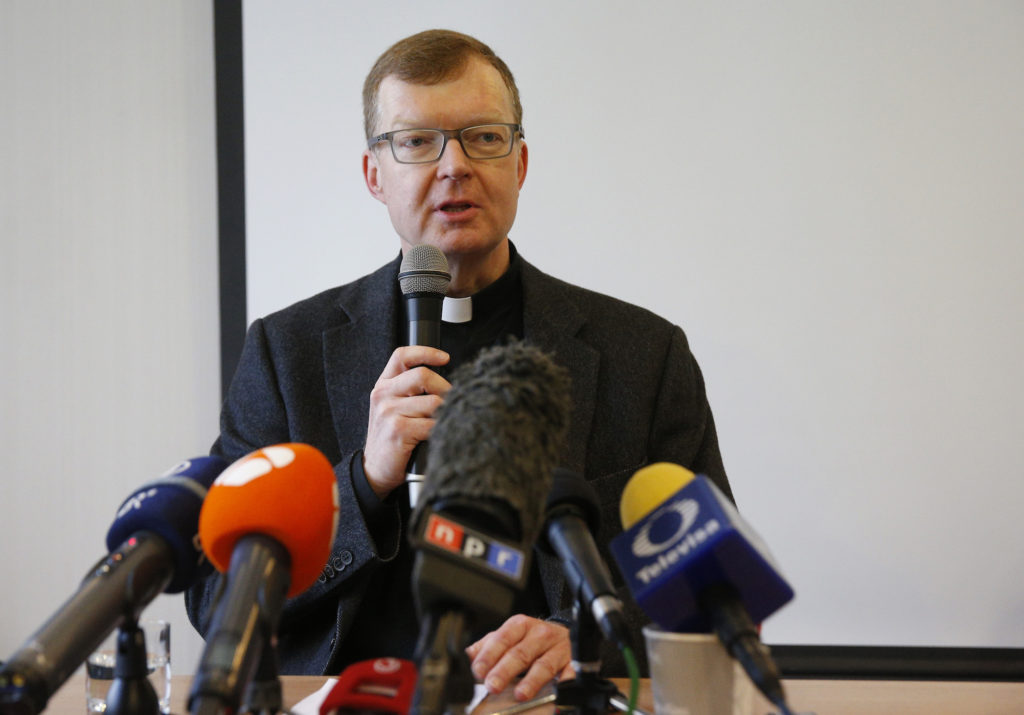
Jesuit Father Hans Zollner, a professor of psychology and president of the Centre for Child Protection at the Pontifical Gregorian University in Rome, leads a briefing for journalists in Rome Feb. 12, 2019. The briefing was to prepare for the Feb. 21-24 Vatican meeting on the protection of minors in the church. Father Zollner is on the organizing committee for the meeting. (CNS photo/Paul Haring)

VATICAN CITY (CNS) — All eyes and ears will be on the Vatican during an unprecedented gathering Feb. 21-24 to discuss the protection of minors in the Catholic Church.

When Pope Francis announced the international meeting in September, it sparked an optimistic note that the global problem of abuse finally would be tackled with a concerted, coordinated, global effort.

The breadth of the potential impact seemed to be reflected in the list of those convoked to the meeting: the presidents of all the world’s bishops’ conferences, the heads of the Eastern Catholic churches, representatives of the leadership groups of men’s and women’s religious orders and the heads of major Vatican offices.

But the pope tried to dial down what he saw as “inflated expectations” for the meeting, telling reporters in January that “the problem of abuse will continue. It’s a human problem” that exists everywhere.

Many survivors and experts, too, have cautioned that it was unrealistic to assume such a brief meeting could deliver a panacea for abuse and its cover-up.

So, what should people expect from the four-day meeting? The following five points hit the highlights:

1. It will be first and foremost about raising awareness, including that the scandal of abuse is not a “Western” problem, but happens in every country.

To make that point clear, the organizing committee asked every participating bishop to sit down with a survivor of abuse before coming to Rome and hear that “Me, too,” from a person of his own country, culture and language.

Jesuit Father Federico Lombardi, who is moderating the meeting, said there would be between 160 and 180 participants. He told reporters Feb. 12 to expect the presidents of about 115 bishops’ conferences, a dozen heads of Eastern churches, prefects of Vatican congregations directly involved with Vatican norms regarding abuse and negligence, eight delegates from the men’s Union of Superiors General, 10 delegates from the women’s International Union of Superiors General, three members of the pope’s Council of Cardinals who are not presidents of their bishops’ conference and four members of the organizing committee.

Everyone invited will be expected to learn what his or her responsibilities are as a leader or a bishop and to know the church laws and procedures that already exist to protect the young.

2. Organizers hope that by listening to victims and leaders who have learned things the hard way, participants will be inspired to adopt a culture of accountability and transparency.

Hearing what abuse and negligence have done to people has the power to transform the listener, “to truly open the mind and heart,” Jesuit Father Hans Zollner told reporters Feb. 12.

Just to be sure those voices are heard, the meeting will also feature testimonies from survivors from countries where the reality of abuse is still largely ignored, said the priest, an abuse expert who is part of the meeting’s organizing committee.

He said the word “accountability” doesn’t even exist in many languages, which often means that culture might lack a clear or coherent understanding of this key concept.

For that reason, the summit will devote a day to discussing accountability and “what structures, procedures and methods are effective” and viable in the Catholic Church, he said.

Church leaders must know what the norms are, he said, but the meeting also will stress that the procedures themselves “will not magically solve a problem.”

For example, he said, it was “a source of delusion” for U.S. Catholics when the 2002 Dallas Charter did not fix everything.

In fact, the meeting will not be about producing any documents, but pushing people to take the needed steps toward greater transparency and accountability, Father Lombardi said.

Those steps already are spelled out, he said, in Pope Francis’ 2016 document, “As a Loving Mother,” on the accountability of bishops and religious superiors.

“It must be put into practice effectively,” he said, adding that he was “convinced and firmly hope that this meeting will give a push in that direction.”

3. There will be a kind of “parallel assembly” as large numbers of survivors and advocacy groups converge on Rome to call for greater accountability, action and reform.

A variety of events are planned, including an evening “Vigil for Justice” near the Vatican and a “March for Zero Tolerance” to St. Peter’s Square, but a major focus will be media outreach and getting the voice and recommendations of laypeople and victims — many who had gone unheard for years — listened to.

4. Pope Francis will be present throughout the meeting, which will include plenary sessions, working groups, prayer, a penitential liturgy and a closing Mass.

In letters to the bishops of Chile and the United States, Pope Francis has made clear what he thinks the church needs to do to respond to the abuse crisis.

Administrative solutions involving new policies and norms are not enough, he has said.

He told Chile’s bishops that abuse and its cover-up “are indicators that something is bad in the church body.”

Therefore, they must not only “address the concrete cases,” but also “discover the dynamics that made it possible for such attitudes and evils to occur.”

Those attitudes are driven by the temptation “to save ourselves, to save our reputation,” he told the Chilean bishops.

In his letter to the U.S. bishops, he warned against the tendency to play the victim, to scold, discredit, disparage others and point fingers.

5. Expect the meeting to be one critical step along a very long journey that began decades ago and must continue.

Further measures will be taken after the meeting, Father Zollner has said. For instance, a task force made up of child protection experts “will probably be instituted in the various continents” to help bishops create, strengthen and implement guidelines.

The different “teams” of the task force should be able to help “for years to come to measure the success of this exercise of realizing one’s own responsibility, even on the global level, in the face of public expectations,” he told the Vatican newspaper in January.

Even though the church is well aware of larger, related problems of abuses of power, conscience and abuse and violence against seminarians, religious women and other adults, the meeting will focus exclusively on protecting minors from abuse, Fathers Zollner and Lombardi said.

The idea is that the attitude and spirit needed to protect the most vulnerable of the church’s members are the same that will protect and promote respect for the integrity and dignity of everyone.

In fact, Father Lombardi said, “I see this as a test of the profundity of the reform” of the church called for by Pope Francis.

In other words, the pope wants people “to examine how we live out our mission, with what coherence and how we can convert our attitudes, both in regard to our attention and compassion for those who suffer, as well as our consistent witness to the dignity of children, of women, and so on.”

— Carol Glatz, Catholic News Service. Contributing to this story was Cindy Wooden in Rome.

Actor Gary Sinise describes his road to the Catholic Church

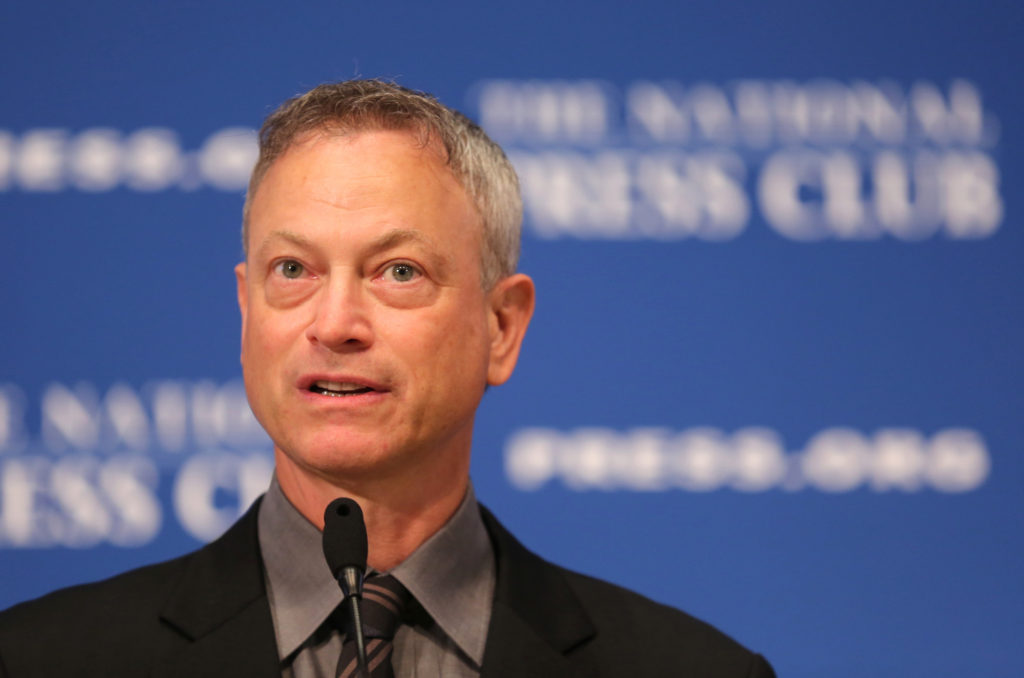
Gary Sinise, the actor perhaps best known for playing Lieutenant Dan in the 1994 movie "Forrest Gump," is pictured at the National Press Club in Washington June 15, 2015. Sinise, who converted to Catholicism in 2010, has a newly published book titled "Grateful American.," a memoir that details his life growing up in the Chicago suburbs. (CNS photo /Bob Roller)
Gary Sinise, the actor perhaps best known for playing Lieutenant Dan in the 1994 movie “Forrest Gump,” is pictured at the National Press Club in Washington June 15, 2015. Sinise, who converted to Catholicism in 2010, has a newly published book titled “Grateful American.,” a memoir that details his life growing up in the Chicago suburbs. (CNS photo /Bob Roller)

WASHINGTON (CNS) — Gary Sinise, the actor perhaps best known for playing Lieutenant Dan in the 1994 movie “Forrest Gump,” followed a rather unusual path to becoming a Catholic.

In a Feb. 4 telephone interview with Catholic News Service from Los Angeles, Sinise told his story.

“At one point in the late ’90s, I remember my wife (Moira) was doing a play, ‘The Playboy of the Western World.’ She was playing a woman in a tavern. She had just gone through sobriety, and she was new to her sobriety as she was playing this woman defending her life in a tavern,” Sinise said.

“At one point, she went to a Catholic church looking for an AA meeting. This little French woman, she asked her, ‘Where’s the AA meeting?’ She looked at her (Moira) and said, ‘You should become a Catholic,'” he added. “Something happened to her at that moment — I don’t know, something that had been aligned within her. Her mother was Catholic, but she fell away from the church and married a Methodist. She was not raised in any particular faith.”

After his wife finished the play, she met Sinise in North Carolina, where he was shooting a movie with Shirley MacLaine.

“There was a hurricane coming to Wilmington,” Sinise recalled. “Well, she was telling me this story, and I’m telling here we’ve gotta get out of here and drive to Charlotte and we’ll fly to Los Angeles. While we’re driving, the hurricane was blasting behind us. She turns around and says, ‘I’m going to the Catholic Church and I’m going to become a Catholic.’

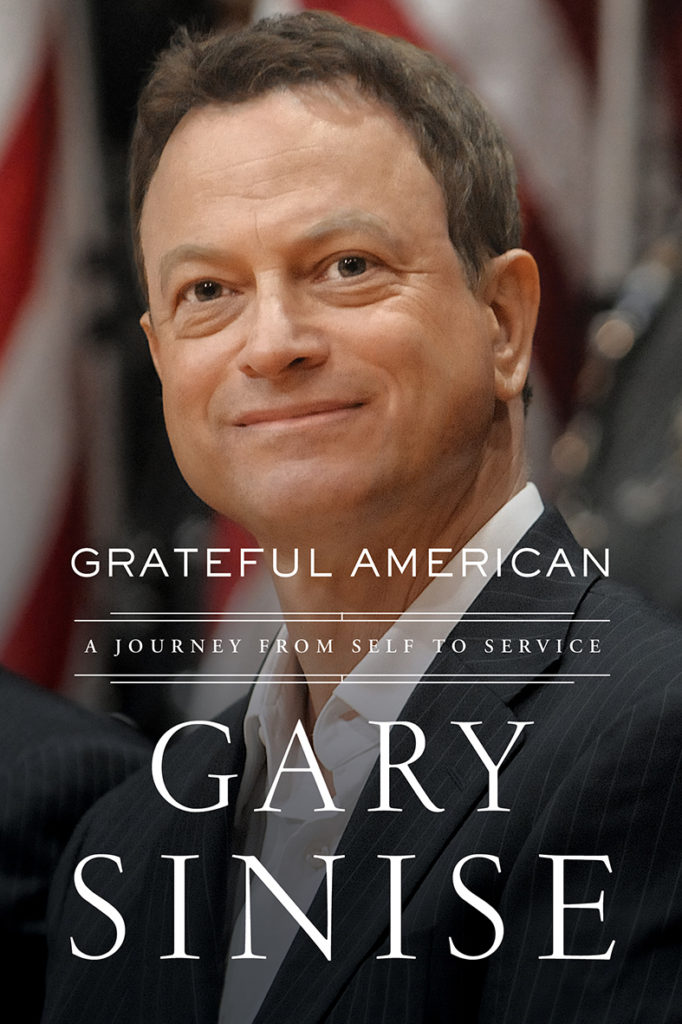
This is the cover of “Grateful American,” a memoir that details the life of actor Gary Sinise growing up in the Chicago suburbs. The Catholic actor is perhaps best known for playing Lieutenant Dan in the 1994 movie “Forrest Gump.” (CNS photo courtesy Gary Sinise)

“I laughed and said, ‘Wait a minute. We just moved across the street from a public school.’ ‘Yes, and I’m going to send our kids to a Catholic school,'” he added. “Sure enough, when we go home she went to the RCIA program at our local Catholic church.”

For the next year, his wife was in the Rite of Christian Initiation of Adults program. “We started going to Mass,” Sinise said. “My wife was confirmed in Easter 2000. … The following year that little church became a sanctuary, a place of great comfort” following the 9/11 terror attacks in 2001.

Oh, and “our kids started attending the school there,” he added.

Sinise himself joined the church in 2010.

“I surprised my family. I’d gone through the confirmation classes and whatnot myself behind everybody’s back and I didn’t tell anybody that I was doing it,” he said.

“On Christmas Eve 2010 I told the family I was taking them to dinner at Morton’s Steakhouse and have Christmas Eve dinner,” he said. “And on the way there, I pulled into the church, and everybody asked, ‘What are we doing here?’ I said come on in. We walked into the church. The priest was there, and he confirmed me. It was beautiful.”

This is one of the many tales Sinise tells in his newly published book, “Grateful American.” In the memoir, he details his life growing up in the Chicago suburbs, from being a bratty kid to trying out for a play in high school and catching the acting bug, to helping establish the still-going-strong Steppenwolf Theater Company in the Windy City, as well as his many adventures in films and on stage.

“It’s an autobiography for sure, but it’s a life-changing story,” Sinise told CNS. The 9/11 terror attacks were a pivot for him. “Something happened when I went from actor to advocate for our nation’s defenders,” he said.

A look at the Gary Sinise Foundation’s website, www.garysinisefoundation.org, includes a page listing his appearances and visits at military bases and hospitals — a list so extensive that Sinise seems to be the Bob Hope for the current generation.

“That service to others was a great healer to a broken heart after that terrible day, when we saw that terrible thing happen and we were all afraid and we were all wondering what was going to happen to our country,” Sinise said. “There’s something to my book where I talk honestly and say that that particular day was turning a point for a life of service.”

— Mark Pattison, Catholic News Service.

Palms to ashes: A few things to know about Ash Wednesday

Jena Roubidoux receives ashes during Ash Wednesday Mass Feb. 14 at Mercy Hospital Jefferson in Festus, Mo. The chaplaincy distributed ashes to many hospital patients that day. (CNS photo/Lisa Johnston, St. Louis Review)

WASHINGTON (CNS) — Ash Wednesday is March 6 this year. Here are some things to know about Ash Wednesday and the kickoff to Lent:

In the Table of Liturgical Days, which ranks the different liturgical celebrations and seasons, Ash Wednesday ties for second in ranking — along with Christmas, Epiphany, Ascension, Pentecost, Sundays of Advent, Lent and Easter, and a few others. But Ash Wednesday is not a holy day of obligation, though it is a day of prayer, abstinence, fasting and repentance.

Top ranked in the table are the Paschal Triduum — the Holy Thursday Mass of the Lord’s Supper, Good Friday and the Easter Vigil — along with Easter Sunday. Good Friday isn’t a holy day of obligation either, but Catholics are encouraged to attend church for a liturgy commemorating Christ’s crucifixion and death.

Ash Wednesday begins the liturgical season of Lent. There are hymns that speak to the length of the season — one of them is “Lord, Who Throughout These Forty Days” — but the span between March 6 and Easter Sunday, which is April 21, is 46 days. So what gives?

“It might be more accurate to say that there is the ’40-day fast within Lent,'” said Father Randy Stice, associate director of the U.S. Conference of Catholic Bishops’ Secretariat of Divine Worship.

“Historically, Lent has varied from a week to three weeks to the present configuration of 46 days,” Father Stice said in an email to Catholic News Service. “The 40-day fast, however, has been more stable. The Sundays of Lent are certainly part of the time of Lent, but they are not prescribed days of fast and abstinence.” There are six Sundays in Lent, including Passion Sunday.

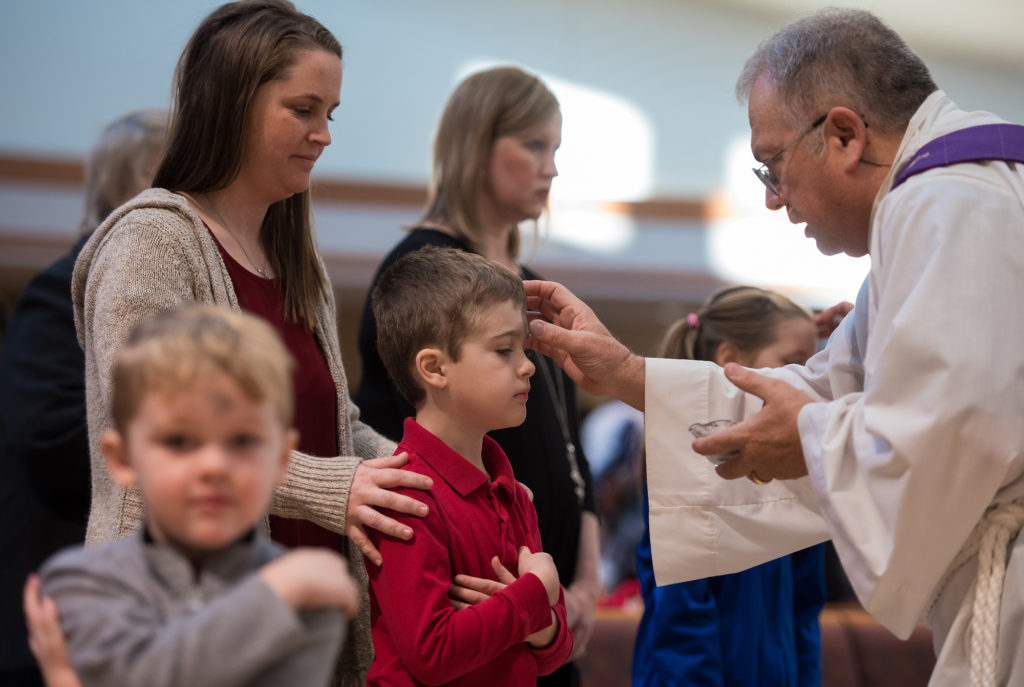
Deacon Manny Torres places ashes on the forehead of Brody Kamps on Ash Wednesday Feb. 14 at St. John the Baptist Church in Howard, Wis., while his mother, Nicol, looks on. (CNS photo/Sam Lucero, The Compass)

“Fasting during Lent followed the example of Jesus’ 40-day fast in the wilderness. It also recalled the 40 days that Moses fasted on Sinai and the 40 days that Elijah fasted on his journey to Mount Horeb.”

Father Randy Stice

The ashes used for Ash Wednesday are made from the burned and blessed palms of the previous year’s Palm Sunday.

“The palms are burned in a metal vessel and then broken down into a powder. I believe ashes can also be purchased from Catholic supply companies,” Father Stice said.

“As far as I know, palms from the previous year are always dry enough,” he added. “Parishes normally ask parishioners to bring their palms shortly before Ash Wednesday, so there is no need to store them. People usually like to keep the blessed palm as long as possible.”

Almost half of adult Catholics, 45 percent, typically receive ashes at Ash Wednesday services, according to the Center for Applied Research in the Apostolate at Georgetown University.

You might not have noticed, but the use of the word “Alleluia” is verboten during Lent. What is known as the “Alleluia verse” preceding the Gospel becomes known during Lent as “the verse before the Gospel,” with a variety of possible phrases to be used — none of which include an alleluia.

“The alleluia was known for its melodic richness and in the early church was considered to ornament the liturgy in a special way,” Father Stice said, adding it was banned from Lenten Masses in the fifth or sixth century.

Ash Wednesday also is a day of abstinence and fasting; Good Friday is another. Abstinence means refraining from eating meat; fish is OK. Fasting means reducing one’s intake of food, like eating two small meals that together would not equal one full meal.

“Fasting during Lent followed the example of Jesus’ 40-day fast in the wilderness. It also recalled the 40 days that Moses fasted on Sinai and the 40 days that Elijah fasted on his journey to Mount Horeb,” Father Stice said.

“In the second century, Christians prepared for the feast of Easter with a two-day fast. This was extended to all of Holy Week in the third century. In 325 the Council of Nicea spoke of a 40-day period of preparation for Easter as something already obvious and familiar to all.”

The U.S. Catholic Church’s Collection for Aid to the Church in Central and Eastern Europe is taken up on Ash Wednesday, as it has been since its inception in the early 1990s.

— Mark Pattison, Catholic News Service.

This year’s Lent could be just what struggling church needs

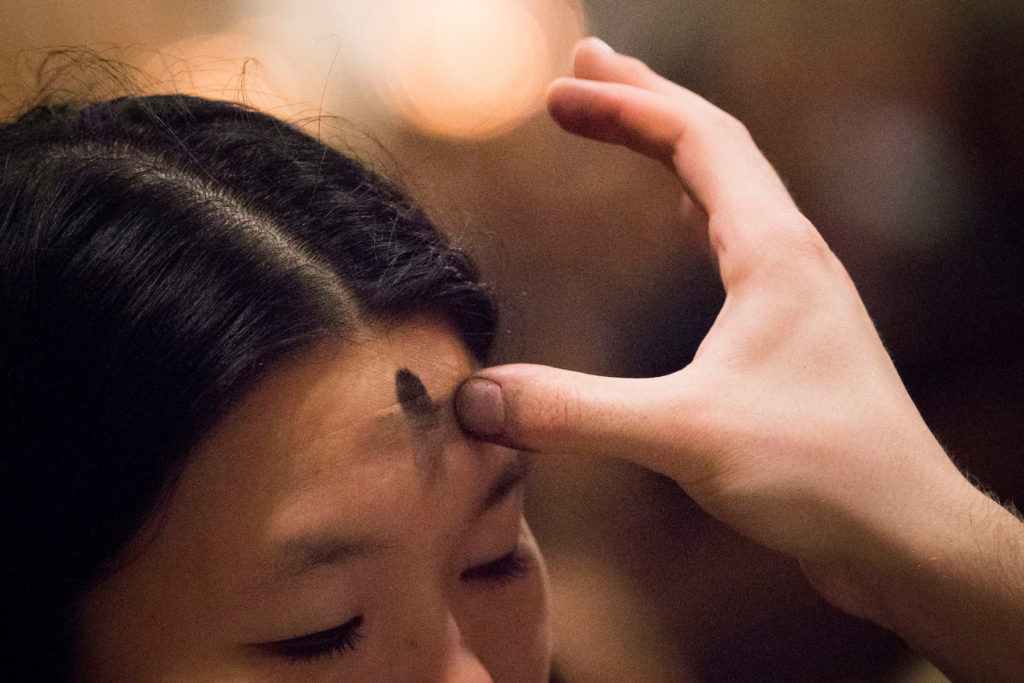
A cross is marked on the forehead of a woman during Ash Wednesday Mass at St. Patrick's Cathedral in New York City Feb. 14, 2018. After all the U.S. Catholic Church has been through with the abuse crisis, Lent this could be an important time for healing, some church leaders say. (CNS photo/Adrees Latif, Reuters)

WASHINGTON (CNS) — When Lent begins March 6, U.S. Catholics will likely be more than ready for it.

This set-aside time for prayer and reflection — after all the church has been through in recent months — could provide both a healing balm and a needed boost forward, some say.

Ash Wednesday, the start of Lent, is typically a big Catholic draw, filling churches with nearly Easter- or Christmas-size Mass crowds even through it is not a holy day of obligation. Conventual Franciscan Father Jude DeAngelo, director of campus ministry at The Catholic University of America in Washington, hopes this year is no exception.

“We in the American Catholic Church have been through a year of tremendous suffering and tremendous upheaval and frustration” he told Catholic News Service, referring to the past months of allegations of sexual misconduct and cover-up by church leaders.

The priest said some Catholics stopped going to church, “scandalized by the actions of a few” but that he hopes and prays they come back on Ash Wednesday, a day he described as a strong “reminder that God is never finished with us.”

“Ash Wednesday is that moment, I believe, especially this year, when we can say: ‘This is my church. It’s got its sins — it always has had its sins and sinners — but Christ calls me to convert my life to his image and likeness and that call is not for individuals only, it’s for the entire community.'”

A cross is marked on the forehead of a woman during Ash Wednesday Mass at St. Patrick’s Cathedral in New York City Feb. 14, 2018. After all the U.S. Catholic Church has been through with the abuse crisis, Lent this could be an important time for healing, some church leaders say. (CNS photo/Adrees Latif, Reuters)

By its very nature, Lent has an overall aspect of penitence to it, but that shouldn’t override the whole season, said Paulist Father Larry Rice, director of the University Catholic Center at the University of Texas at Austin.

His recommendation for this year’s Lent is “to do what the church has always asked us to do: prayer, fasting and almsgiving” and that concentrating on those things will bring people closer to God and one another.

“I think it’s important to make some distinctions that might rescue Lent for people this year,” he said, noting that it’s not “supposed to be about sorrow, sadness or anger, which people are justifiably feeling,” in the current church climate. “That is not what Lent is about,” he said, stressing that it should be a personal preparation for Easter.

The 40 days, especially this year, also shouldn’t be an effort of “muscular Christianity” or “pulling ourselves up by our bootstraps” to do Lenten practices, he said. Instead, it offers a time for Catholics to say: “Wow, we have completely hit bottom and we have to depend on God’s grace to build us up again.”

Father Rice said a lot of bishops have called for a year of reparation for the abuses committed by people representing the church, an action that has caused some misunderstanding among Catholics who say: “Why do I have to do it? I didn’t do anything wrong?”

And they are right, he said, noting that penance is what people do to show sorrow for what they’ve done, while “reparation is what you do to show sorrow for what someone else has done which opens the community to God’s healing grace.”

This Lent, “we don’t put reparation on hold, we just get to do both” — personal penance and reparation, he said.

Sister Teresa Maya, a Sister of Charity of the Incarnate Word based in San Antonio, said she has been moved by the expressions of reparation by priests in her archdiocese taking “collective responsibility” for abuse and any cover-up in the church.

“We have to trust our faith in the resurrection, in the grace that God will provide.… Hold the loss and the grief and hold one another in it.”

Sr. Teresa Maya

The sister, former president of the Leadership Conference of Women Religious, an umbrella group of 1,500 leaders of U.S. women’s religious communities, said it is important for the church to begin with reparation, but it can’t end with that.

“To live in the spirit of Lent there has to be path away from personal and systemic sin” that led to this crisis, something she said she hasn’t seen yet.

Sister Maya said the sacrament of reconciliation, which is talked about a lot in Lent, centers on listening and the church still needs to make it a priority to listen to abuse survivors, but Catholics also need to listen to one another.

For the past eight months or more, this abuse crisis has been “piling up on all of us,” she told CNS, noting that many Catholics are still shell shocked by it and the question that remains is: “How do we move forward?”

That’s where Lent once again comes into play, because she said it provides a time for people to examine where they are personally but also can raise the question “Where are we?” as the Catholic Church in the United States.

And no matter where you fit in the church, as a leader, family member or parishioner, she said the question of what’s next feels different; it’s not the same as it was when the church went through the sexual abuse crisis nearly 20 years ago.

She likened the church now to the time when the apostles were in the upper room wondering what to do next.

“We have to trust our faith in the resurrection, in the grace that God will provide,” she said. “Hold the loss and the grief and hold one another in it.”

This is a “critical moment” to return to the core of what Catholics believe, she said.

Father DeAngelo similarly stressed the need for Catholics to keep going and to support one another.

“We need people to return to the church. We need their criticism; we need to hear their frustrations, their stories” not just survivors of abuse but all who “are unfortunately part of the collateral damage of this scandal, people who are just overwhelmed by these revelations.”

“This moment — Ash Wednesday I think specifically this year — can be even more of a reminder that in spite of everything, the church, called by Christ, is the greatest hope for our humanity.”

Although the church has human failings, he said, it also has a divine call for everyone in it to “go forth” — after facing criticism the church deserves — and never lose sight of its main mission: “to bring life to the world through Jesus Christ.”

— Carol Zimmerman, Catholic News Service. Chaz Muth contributed to this story.

Feast of St. Pedro Maldonado

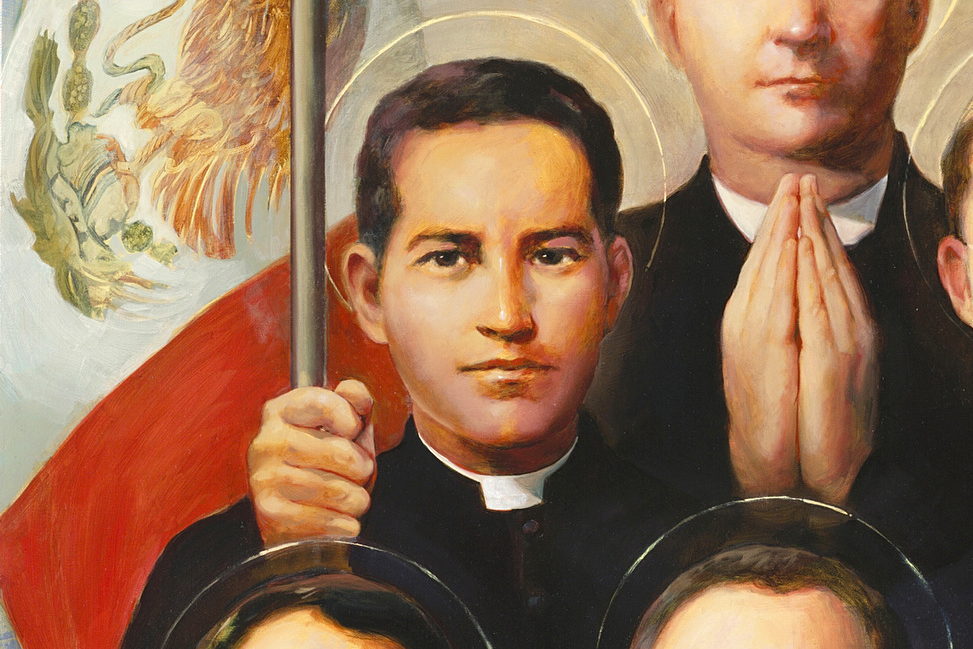
St. Pedro de Jesús Maldonado Lucero is depicted in this portion of a painting by Mexican artist Martha Orozco featuring six priests — members of the Knights of Columbus — who were canonized by Pope John Paul II May 21, 2000. The priests were among 25 martyrs of Mexico’s anti-Catholic persecution during the 1920s made saints by the pope that day. The painting is part of the permanent collection at the Knights of Columbus Museum in New Haven, Conn. (CNS, courtesy of Knights of Columbus)

St. Pedro de Jesús Maldonado Lucero is depicted in this portion of a painting by Mexican artist Martha Orozco featuring six priests — members of the Knights of Columbus — who were canonized by Pope John Paul II May 21, 2000. The priests were among 25 martyrs of Mexico’s anti-Catholic persecution during the 1920s made saints by the pope that day. The painting is part of the permanent collection at the Knights of Columbus Museum in New Haven, Conn. (CNS, courtesy of Knights of Columbus)

Tony Gutiérrez, editor of “The Catholic Sun,” discusses the life of St. Pedro de Jesús Maldonado Lucero on “The Bishop’s Hour” with host Michael Dixon.
CLICK HERE for full episodes.

Feb. 11

RESOURCES

KNIGHTS OF COLUMBUS

COLUMBIA MAGAZINE

DIOCESE OF EL PASO, TEXAS

HOMILY FROM POPE ST. JOHN PAUL II

One of the 25 Mexican martyrs canonized by Pope St. John Paul II in 2000, St. Pedro Maldonado was ordained in the United States.

Born June 15, 1892, he entered seminary at 17, but left when it was shut down during the Second Mexican Revolution in 1914. He later completed his priesthood studies in the U.S. and was ordained in St. Patrick Cathedral in the Diocese of El Paso Jan. 25, 1918 for the Archdiocese of Chihuahua, Mexico.

He returned to his home diocese, serving in several parishes even during the Cristero War of 1926-1929. While the persecution was relaxed after the war, there were still strong anticlerical sentiments.

EN ESPAÑOL: Festividad de San Pedro Maldonado

After celebrating Mass on Ash Wednesday 1937, he was kidnapped by a group of armed men. He was taken to the town hall where his skull was fractured and one of his eyes dislodged. He fell forward, covered in his own blood, and the pyx containing the Eucharist fell out. A soldier cynically told him to “eat this,” not realizing he was fulfilling Fr. Maldonado’s wish to receive the Sacrament before he died.

He was transferred to a local hospital where he died early the next day, Feb. 11. Fr. Maldonado is a patron of the Archdiocese of Chihuahua and of the Diocese of El Paso. Of the 25 martyrs, he is also among the six priests who were members of the Knights of Columbus, and as such is considered one of the organization’s patrons.

Festividad de San Pedro Maldonado

St. Pedro de Jesús Maldonado Lucero is depicted in this portion of a painting by Mexican artist Martha Orozco featuring six priests — members of the Knights of Columbus — who were canonized by Pope John Paul II May 21, 2000. The priests were among 25 martyrs of Mexico’s anti-Catholic persecution during the 1920s made saints by the pope that day. The painting is part of the permanent collection at the Knights of Columbus Museum in New Haven, Conn. (CNS, courtesy of Knights of Columbus)

San Pedro de Jesús Maldonado Lucero esta representado en este parte de una pintura por Martha Orozco, que representa seis sacerdotes — miembros de los Caballeros de Colón — quien fue canonizado por el Papa San Juan Pablo II el 21 de mayo del 2000. Los sacerdotes eran entre los 25 mártires de la persecución anti-Católica de México durante la década 1920 que fueron canonizado ese día. La pintura es parte de la colección permanente del Museo de los Caballeros de Colón en New Haven, Connecticut. (CNS, cortesía de los Caballeros de Colón)

El 11 de febrero

RECURSOS

SANTUARIO DE SAN PEDRO DE JESÚS MALDONADO

CABALLEROS DE COLÓN

COLUMBIA: “PERFIL DE UN MÁRTIR: SAN PEDRO DE JESÚS MALDONADO LUCERO”

COLUMBIA: “EL ULTIMO MÁRTIR DE MÉXICO”

DIÓCESIS DE EL PASO, TEXAS

ARQUIDIÓCESIS DE CHIHUAHUA

HOMILÍA DE PAPA SAN JUAN PABLO II

(ACI Prensa) — Nació en Sacramento, Chihuahua, México el 8 de junio de 1892. Tenía 17 años cuando ingresó al seminario de Chihuahua. Por problemas en el seminario y la suspensión de las clases por el conflicto político de 1914, abandonó los estudios un corto tiempo y se dedicó a aprender música.

Fue ordenado sacerdote en El Paso, Texas, en 1918. Desde ese momento se dedicó con entusiasmo a la catequesis de niños, incrementó notablemente la Adoración nocturna y las asociaciones marianas. Durante el recrudecimiento de la persecución en los años 30 el trabajo de los sacerdotes se hizo muy difícil y peligroso. En 1934 el P. Maldonado fue preso, maltratado y amenazado por la policía; fue desterrado a El Paso.

Pronto regresó e ejercer su ministerio en poblados y rancherías. El miércoles de ceniza de 1937, se presentó en su casa un grupo de hombres armados y ebrios, que iban a apresar al sacerdote. Lo obligaron a caminar descalzo delante de los caballos hasta Santa Isabel, donde lo metieron en la presidencia municipal. Ahí el presidente municipal y los caciques lo golpearon dejándolo inconsciente.

Más tarde fue llevado al hospital civil de Chihuahua donde murió en la madrugada del día 11 de febrero.

Fue beatificado el 22 de noviembre de 1992, siendo canonizado el 21 de mayo del 2000 por el Papa Juan Pablo II.

El P. Maldonado es patrono de la Arquidiócesis de Chihuahua y de la Diócesis de El Paso. También es uno de los seis mártires sacerdotes de los Caballeros de Colón y es un patrono de esa organización.

Feast of St. Scholastica

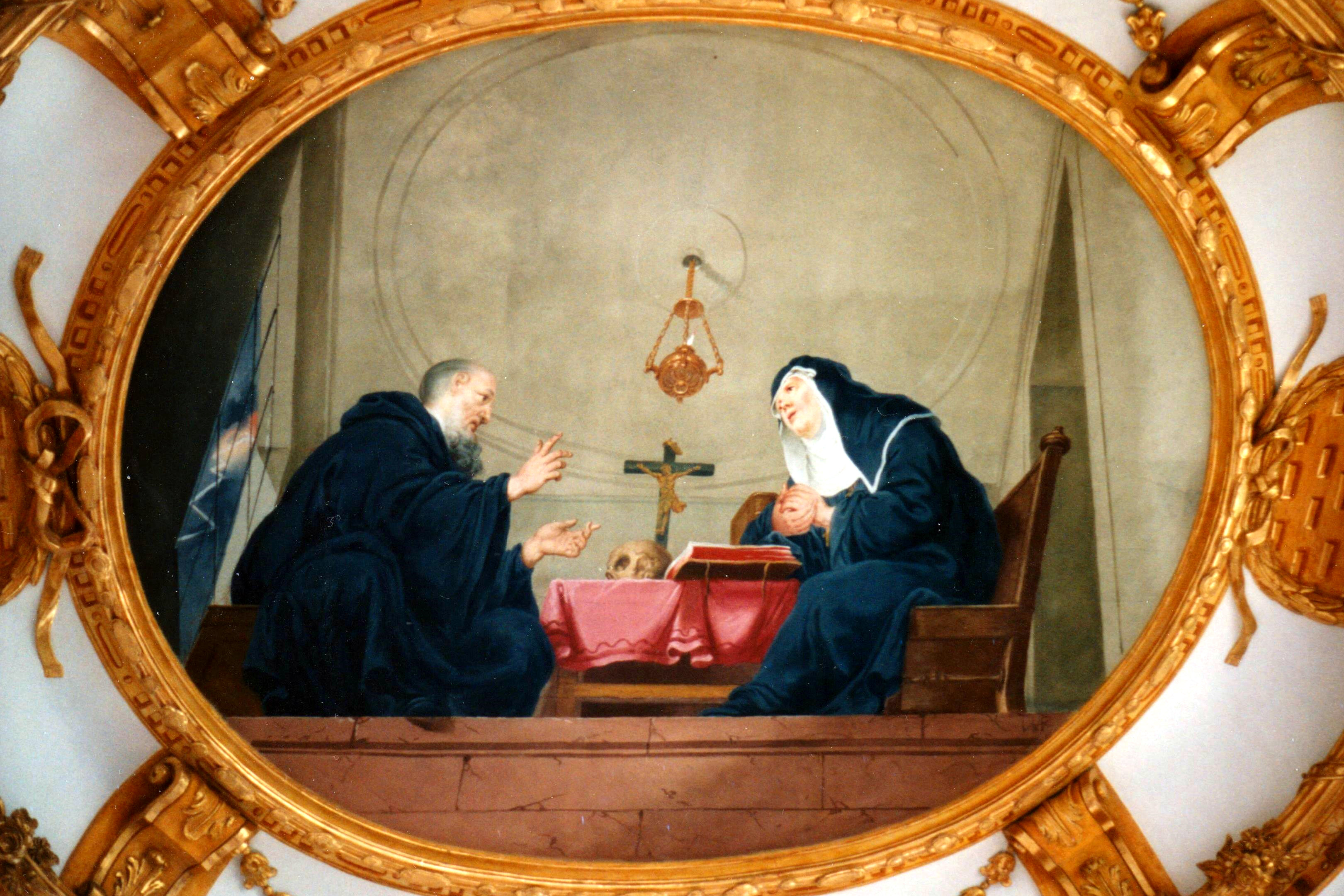
This 18th-century ceiling fresco from Elchingen Abbey depicts the final meeting between St. Scholastica and her brother, St. Benedict of Nursia, before her death. (Public Domain/WIKIMEDIA COMMONS)

This 18th-century ceiling fresco from Elchingen Abbey depicts the final meeting between St. Scholastica and her brother, St. Benedict of Nursia, before her death. (Public Domain/WIKIMEDIA COMMONS)

Feb. 10

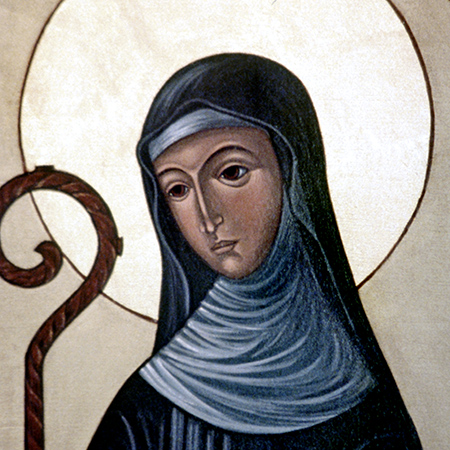
This image of St. Scholastica is found at St. Scholastica’s College in Duluth, Minnesota. (CNS)

Scholastica and her brother, St. Benedict, were born to a wealthy Christian family in Nursia, Italy. Details of their lives come from the Dialogues of St. Gregory the Great.

After Benedict established his monastery at Monte Cassino, she founded a convent at Plombariola, and was its abbess for many years. The siblings met once a year outside Monte Cassino.

At their final meeting, Scholastica begged Benedict to stay the night and, when he wouldn’t, she asked God for help. A violent storm ensued and Benedict had to stay. They spent the night discussing the joys of heaven, and she died three days later.

Scholastica is the patron saint of convulsive children and Benedictine nuns, including the sisters who reside at Our Lady of Guadalupe Monastery in Phoenix.

There’s plenty in a name, especially the One that is above every name

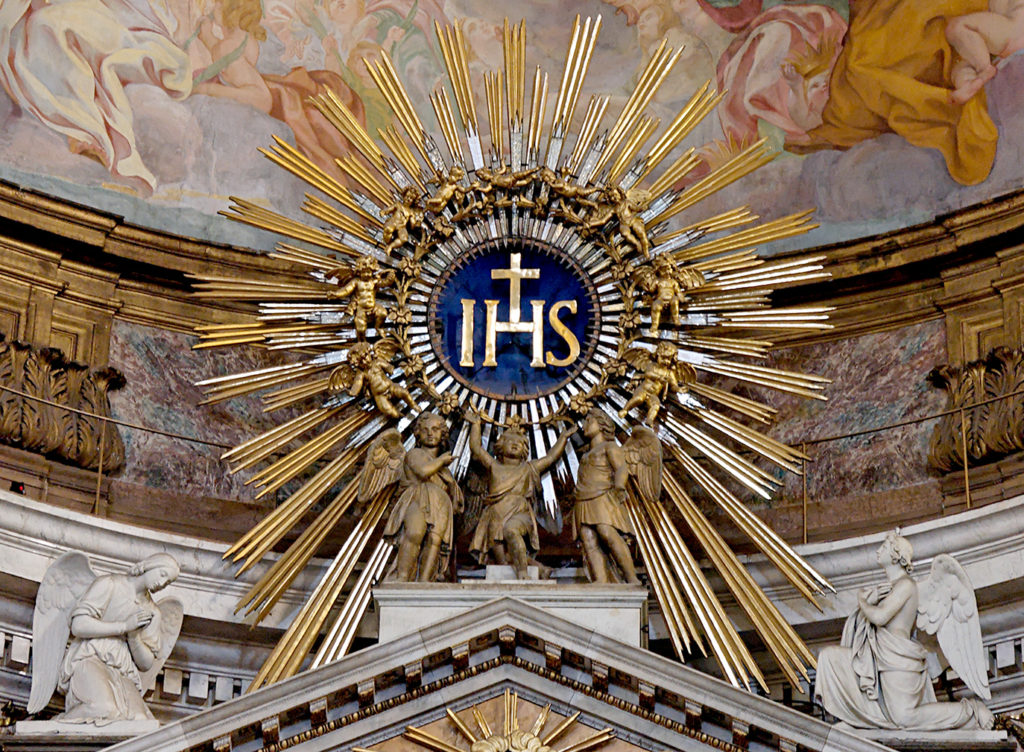
The IHS monogram, derived from the Greek word for Jesus — ΙΗΣΟΥΣ, is found on top of the main altar of the Gesù church in Rome. Surrounding the monogram are two angels bending at the knee in worship, taken from Philippians 2, where St. Paul writes that “at the name of Jesus every knee should bend, of those in heaven and on earth and under the earth, and every tongue confess that Jesus Christ is Lord.” (Public Domain/WIKIMEDIA COMMONS)

I can still hear her voice, all these years later: A coworker at the local newspaper where I was working was angry — very angry — and launched into an explosive tirade with one word. She sprang from her chair and practically shouted His Name, emphasizing the two syllables: “Je-SUS!”

I gulped. I’d never heard His beautiful Name spoken so violently. As a rookie on staff, I knew not to cross this woman. She was powerful and I didn’t want her wrath poured out on my head. She wasn’t talking to me, so I kept my eyes fixed on the screen in front of me, typing away, seemingly oblivious.

Joyce Coronel is a regular contributor to The Catholic Sun and author of “Cry of Ninevah.” Opinions expressed are the writers’ and not necessarily the views of The Catholic Sun or the Diocese of Phoenix.

Years later, I still cringe when I recall that scenario. What might I have said or done differently? Why do people kick God’s Name around? Why such casual disregard toward His Holy Name? These thoughts came to mind earlier this month on the Feast of the Holy Name Jan. 3.

Fr. Carlos Martins, CC, once an atheist and now a well-known priest who travels the world evangelizing, offered some strong words of his own regarding the sin of blasphemy.

While you and I have names, Fr. Martins wrote on his Facebook page, “God IS His Name. God and His Name are equivalent realities. An attack on His Name is an attack on Him. To do so is to curse yourself and the place where the blasphemy is uttered.”

As a priest who has participated in more than a few exorcisms, Fr. Martins said he has never heard a demon trash talk the Name of God. “I have seen them show disdain for the things God loves. I have seen them ridicule God’s reign. But I have never seen them disrespect His Name. That is a domain where, apparently, even the demons fear to tread,” Fr. Martins wrote.

In an age in which spineless politicians and Hollywood celebrities offer profuse apologies for violating the norms of political correctness, this strikes me as ironic. Heaven help us if anyone demonstrates insensitivity toward the sacred cows of a secularist society. But God’s Name? Well, that’s fair game. Christians are a bigoted, ignorant bunch anyway, right?

St. Paul tells us in Philippians 2:10 that “at the Name of Jesus, every knee should bend” and we need to take his words to heart. Now is the time for courage, not cowardice or complicity. Now is the time to have the courage of our Christian convictions. We can get up and walk out of the theater when actors insert crude language alongside God’s Name. We can pray on the spot for the person who has blasphemed. We can develop the habit of bowing our heads when we hear or speak God’s Name. We can ask the Lord to help us become the kind of people who love Him so much that others see that love and automatically censor themselves in our presence.

What it really all comes down to is evangelization — sharing God’s love and hope with others, helping them get to know Jesus and follow Him. When that happens, blasphemy becomes unthinkable. It begins with God’s invitation to turn from sin and be reconciled with Him. His love and mercy impel us to share the Gospel with our lives, our actions and our words.

We’re not alone in this endeavor. The Holy Name Society has been at it for centuries, tracing its roots to the 13th century. The society promotes reverence for the Name of God and fidelity to the teachings of the Catholic Church. It also helps its members grow in holiness and in their love for God and others through the spiritual and corporal works of mercy.

With myriad Catholic organizations and worthy causes vying for our time, you might wonder why the Holy Name Society should merit our attention. As our country drifts further and further from the ideals of Christianity, we must stand firm against the tide. Visit NAHNS.com and take the pledge to develop a love and reverence for God’s Name. May His Holy Name be praised from age unto age and may each of us grow in our devotion to Him.

Celtic Thunder’s Emmet Cahill to perform benefit concert in Phoenix on Feb. 19

(Courtesy of Emmet Cahill Promotions)

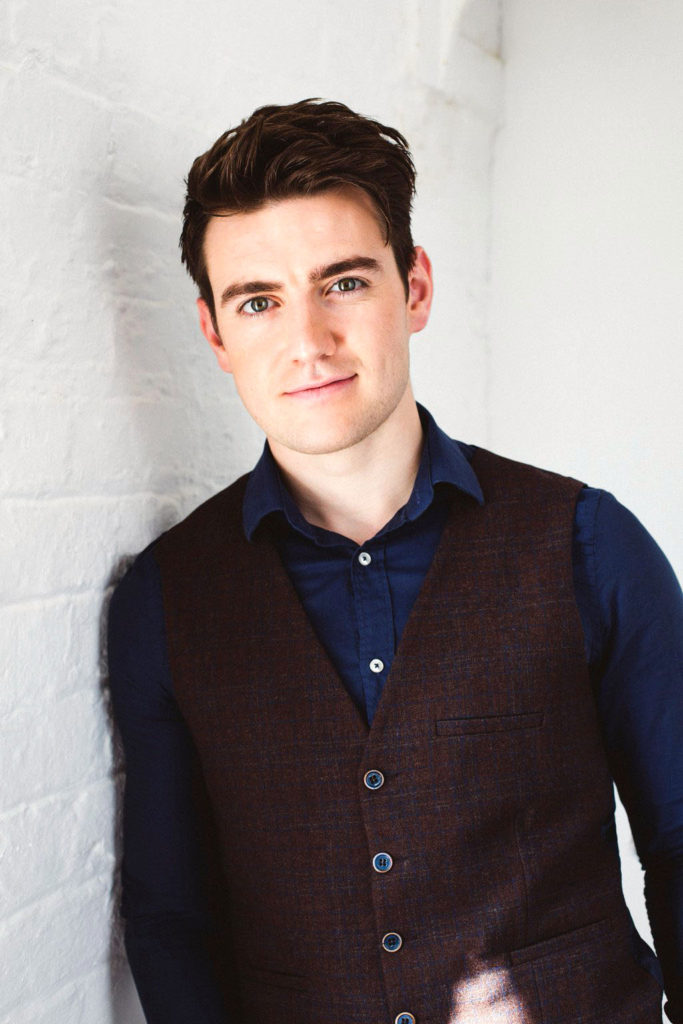
By Jeanne Hatter
Emmet Cahill Promotions

Emmet Cahill Live in Phoenix

7:30 p.m., Feb. 19

St. Mary’s Basilica, 231 N. Third St., Phoenix

Award-winning Irish tenor and lead singer with the acclaimed Irish music show Celtic Thunder will perform a concert benefitting St. Mary’s Basilica’s building restoration fund.

Cost: $30-45

Tickets can be purchased online or at the door.

PURCHASE TICKETS ONLINE

LEARN MORE ABOUT EMMET

LIKE EMMET ON FACEBOOK

Emmet Cahill, principal vocalist for Celtic Thunder and a solo standout, is returning to Phoenix as part of his North American tour to promote his new album, ”Blessing of Music.”

“For Blessing of Music, I chose Irish and liturgical songs that meant a lot; not only to me, but to the audiences as well,” said Cahill. “This album was recorded very much with the new show in mind, and I can’t wait to see what the folks think.”

From age 4, Cahill has been devoted to the world of music, going on to receive music scholarships, study a variety of instruments and receive formal classical training in opera at the prestigious Royal Irish Academy of Music in Dublin. Along with being recognized with accolades like “Tenor of the Year” by the Irish Music Association and winning multiple classical competitions throughout Ireland, Cahill has served as the principal vocalist for the world-renowned Irish music show Celtic Thunder since 2011.

In 2015, the star singer added “solo artist” to his list of achievements and in 2017, Cahill recorded his No. 1 world music album ”Emmet Cahill’s Ireland,” accompanied by the National Symphony Orchestra of Ireland. Released on the Sony Music USA label, it offers the best of the traditional Irish repertoire.

He then went on to perform to a sold-out crowd at Carnegie Hall in 2018, performed as a guest artist with symphonies in Tennessee, Florida and New York City and conquered a 75-city tour for Celtic Thunder X, the group’s 10th anniversary show.

In addition to performing selections from his albums, Cahill will also sing well-known Broadway standards, nostalgic favorites, beloved Church hymns and operatic arias. And no Emmet Cahill concert is complete without the ever-popular “request medley” segment, which often brings surprises from the audience.

“I’ve always had a wonderful time visiting Phoenix on my tours. I can’t wait to come back and see everyone again. The church has stunning acoustics, and we’ll create a special atmosphere on the night,” he said. “I’ll also be asking the audience to sing along with me — so have those voices ready and warmed up!”

Cahill will perform at 7:30 p.m. Feb. 19 at St. Mary’s Basilica in Phoenix. The concert will benefit the basilica’s building restoration fund. Tickets are $30-$45 and may be purchased online at emmetcahill.com/tour-dates or at the door.

More Videos

Emmet Cahill, “Ireland’s Most Exciting Young Tenor

“On the Street Where You Live” (with Celtic Thunder)

“Danny Boy”

“When Irish Eyes Are Smiling”

“Dream A Little Dream of Me”

“El Toreador” from Bizet’s “Carmen”

Double rookie aces diocesan spelling bee

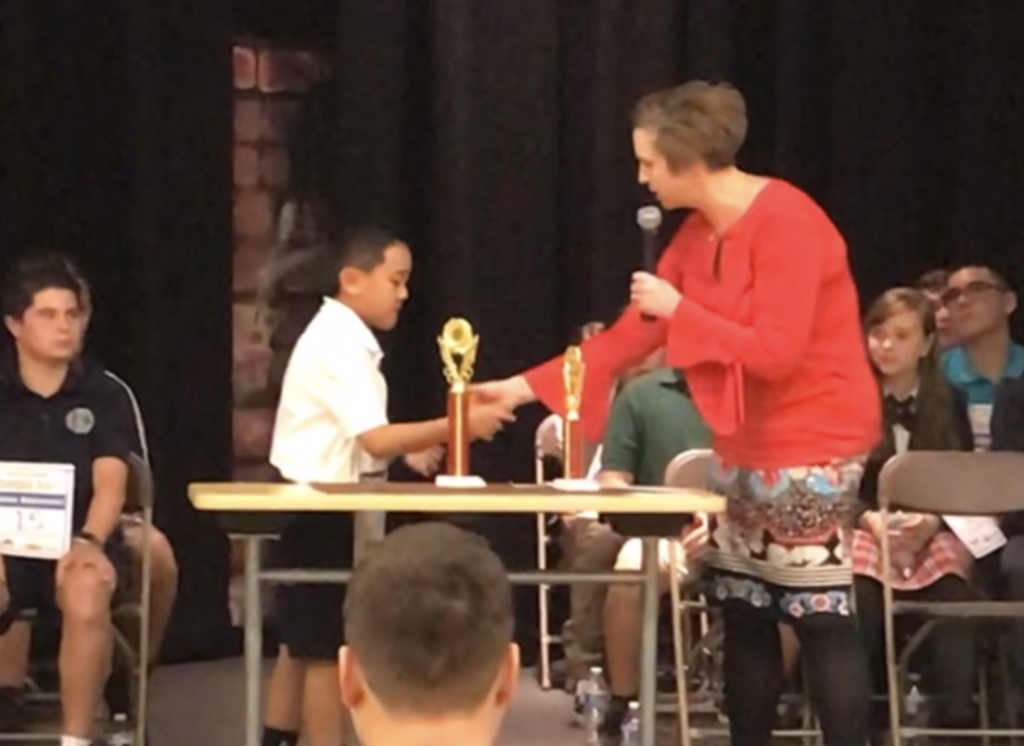
Colleen McCoy Cejka, assistant superintendent who oversees the Diocesan Spelling Bee, presents the first place trophy to Chema Estreller Jan. 30. Nick Butkiewicz, left, runner up, made his fourth and final appearance in the competition. (courtesy photo)

The winner of this year’s Diocesan Spelling Bee blazed a trail for himself and his school.

The Jan. 29 competition at St. Francis Xavier marked the fifth-grader’s first Diocesan Spelling Bee in Phoenix. His family moved to Arizona last June. It also marked his first spelling bee ever.

Colleen McCoy Cejka, assistant superintendent who oversees the Diocesan Spelling Bee, presents the first place trophy to Chema Estreller Jan. 30. Nick Butkiewicz, left, runner up, made his fourth and final appearance in the competition. (courtesy photo)

Chema Estreller, a fifth-grader at St. Thomas Aquinas, also set precedent as the youngest speller to represent his Avondale school since it opened in 2003. As soon as roughly four final ping-pong rounds ended between him and the runner up — who earned the same spot in 2017 and won in 2016 — Estreller earned another title: the first from St. Thomas Aquinas to be crowned the top diocesan speller. Estreller proceeds to his regional spelling bee Feb. 23.

Although only the winner and runner up Nick Butkiewicz, an eighth-grader from St. Theresa, went home with a trophy and different Amazon gift card amounts, all 26 contestants bore at least two “winner” titles themselves. They outspelled their classroom — and grade level if their school has two classrooms each — plus outspelled fellow students across every grade.

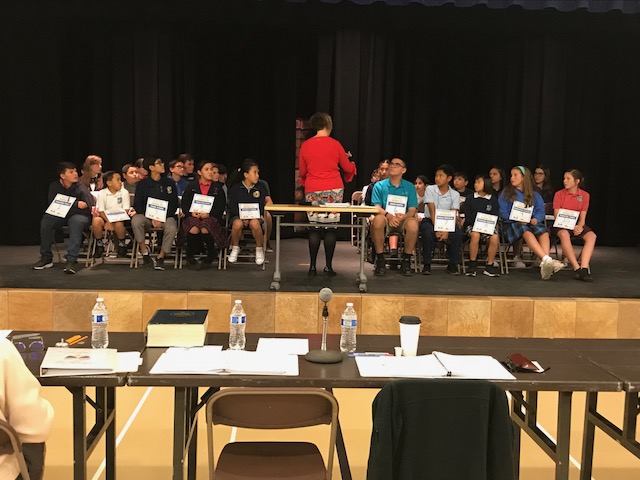
Top spellers from 26 diocesan elementary schools competed in the annual Diocesan Spelling Bee Jan. 30 at St. Francis Xavier. (courtesy photo)

For the youngest speller, third-grader Elaina Sawalha from Our Lady of Perpetual Help in Scottsdale, that meant spelling better than some 420 students. This year’s diocesan competition also featured two fifth-graders — including the winner — a handful of sixth-graders, six seventh-graders and 11 other eighth-graders.

Chema Estreller, a fifth-grader at St. Thomas Aquinas in Avondale, poses with his teacher, Kelly Klinger. (courtesy photo)

For one student, spelling “calculus” was as difficult as many find the subject matter itself. Other missed words included: penitent, amethyst, affidavit, maraca and incorruptible.

Estreller correctly spelled 16 words to win the bee, including pegasi, homonym and nougat, one of at least six food-related words Ryan Watson, assistant principal at Bourgade Catholic High School, dished up when it was Estreller’s turn to spell.

Butkiewicz spelled 100 percent of his words right in 2016 to win his debut year and continued to place in the top five ever since. That also put him in his regional spelling bee for at least three years. This year, Butkiewicz spelled every word right except “herpetology.”