
“Sagrada Familia del pajarito” or “The Holy Family with a Bird,” depicting St. Joseph holding Jesus with the Blessed Mother to the side, was painted in circa 1650 by Spanish baroque painter Bartolomé Esteban Murillo (1617-1682).
“Sagrada Familia del pajarito” or “The Holy Family with a Bird,” depicting St. Joseph holding Jesus with the Blessed Mother to the side, was painted in circa 1650 by Spanish baroque painter Bartolomé Esteban Murillo (1617-1682). (Public Domain/WIKIMEDIA COMMONS)
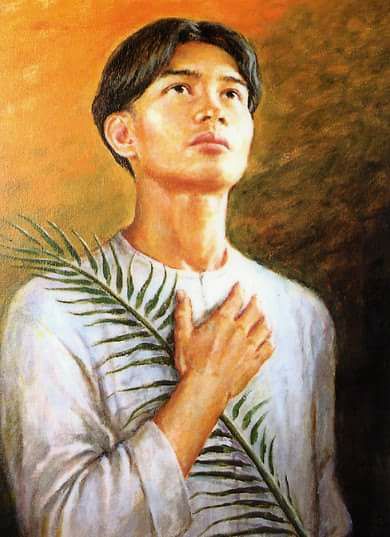
The husband of Mary, the mother of Jesus, and the legal father of Jesus according to Jewish law, Joseph is a model of humility and obedience to God’s will.
He followed God’s instructions — given by angels in dreams — and took the pregnant Mary into his home as his wife, protected her and Jesus from the Child’s birth in Bethlehem through the family’s sojourn in Egypt, and provided for them as a carpenter in Nazareth.
This feast, which was celebrated locally as early as the ninth century, became a universal feast in the 16th century.
Pope Pius IX named Joseph patron of the Universal Church in 1870; he is also the patron saint of carpenters, the dying and workers.
A sign describes the historic background of the Nativity of the Blessed Virgin Mary Chapel Church of the Nativity of the Chapel of the Blessed Virgin Mary in Flagstaff. (Jeff Grant/CATHOLIC SUN)
A sign describes the historic background of the Nativity of the Blessed Virgin Mary Chapel in Flagstaff. (Jeff Grant/CATHOLIC SUN)
ST. GEORGE, Utah — As our tour bus rolled out of the still mostly darkened parking lot of Ss. Simon and Jude Cathedral, Bishop Thomas J. Olmsted told us to “be prepared for whatever God has to show you.”
This pilgrimage to Utah, the third such trip to another part of the Western United States in as many years, was part of God’s plan for each of our lives, and we were urged to allow His Spirit to speak to us, allowing us to experience Him and draw closer to Our Lord.
“God is behind everything that is involved,” the bishop said.
The message to the 45 of us was to be open. Learn, and be ready for the unexpected.
“I try to have no expectations. That’s what I did last time, and it was amazing. You have your heart open to what God has planned. I was able to get closer to God,” explained Nikki Salgado. The 28-yer-old Ss. Simon and Jude parishioner took part in the Friends of the Cathedral’s first pilgrimage in 2016 to New Mexico. The trip took members to sites signifcant to the history of the Franciscan order, which first evangelized the area.
The current excursion is taking about 45 pilgrims to historic and religious sites throughout Utah, from Zion National Park and Bryce Canyon National Park in the southwestern part of the state to the Cathedral of the Madeleine, the Carmelite Monastary and the Mormon Temple in Salt Lake City. There are also stops in Flagstaff before and after the visit to Utah.
The exterior of the Nativity of the Blessed Virgin Mary Chapel in Flagstaff March 17. The sections in pink are severely deteriorating. (Jeff Grant/CATHOLIC SUN)
Built in 1929 — construction began a month before the October stock market crash that ushered in the Great Depression — the church’s pink decorative stone on its exterior includes volcanic material that is contributing to its accelerated deterioration, according to Roberta Wallace, coordinator of an unfolding effort to preserve the building.
Over the years, the material’s contact with precipitation has created an expanding gel that is breaking the decorative concrete apart, explained Wallace, whose great grandfather joined the effort in building the church. Replacement, rather than treating the concrete containing the material, is the best longterm solution, Wallace said. And because of the extent of the deterioration, along with other considerations such as repairing the roof and restoring the stained-glass windows, “We have essentially one shot to do this.”
“It would be a tragedy [to lose the church]; I can’t imagine downtown Flagstaff without it,” she said, fighting back tears. “I was raised in this parish and baptized here, my mother was married here, I was married here; we are fourth generation.”
"We have essentially one shot at this." Descendant of family who helped build this Depression-era church spearheading effort to save it from decay pic.twitter.com/e5Pl75i4oX
My fellow pilgrims and I were struck by the story as well as her emotion; a number of us offering prayers and encouragement as we departed.
The images of the decaying pink concrete on the church’s bell tower still fresh in our minds, we sat down for a quick lunch downtown, then boarded our bus for the six-hour ride to St. George, Utah, where we spent the night.
A day on the road and God’s majesty in the rocks
Bishop Thomas J. Olmsted delivers reflects on the life and witness of St. Patrick in his Homily homily during Mass at the Nativity of the Blessed Virgin Mary Chapel Church of the Nativity of the Chapel of the Blessed Virgin Mary in in Flagstaff Saturday, March 17. (Jeff Grant/CATHOLIC SUN)
As we traveled to St. George, we were reminded that winter is still very much present, both on the calendar and in the atmosphere. The sky gradually filled with clouds, and the sub-45-degree temperatures that greeted us in Flagstaff continued.
I visited with some of my co-travelers during this, the longest portion of straight travel.
Andy Groft, my seatmate and a Ss. Simon and Judeparishioner , had a special role on this trip.
“They [the parish] asked a few of us if we’d like to come to sing. I kind of have a job here.”
During Mass at the Nativity Chapel, we were treated to Groft’s talents as his a capella voice led us in the musical portions of the liturgy.
Sharon Sharp, a choir member from St. Thomas More in Glendale — my parish — is on her first pilgrimage with the Friends of the Cathedral.
“I thought it would be a good opportunity to travel, and it seems appropriate during Lent,” she said.
Salgado’s mother, Elizabeth, is looking forward to hearing from the Holy Spirit.
“I learned on the first trip to trust,” she said, referring to her initial pilgrimage. She also attended the 2016 trip to New Mexico.
After collecting some thoughts, a fellow pilgrim made it easier for me to write, lending a pillow to place under my laptop, allowing me to withstand the frequent bumps and jostles while we traveled the two-lane highway in the Marble Canyon area in far northern Arizona.
As I studied the multi-colored layers of rock rising from the canyon floor, I was struck by God’s power and authority, and how we can encounter Him, as Romans 1 tells us, through creation. I was reminded that He knows every inch of the land He made — spoke into existence — along with the rest of the universe. Hours before, I had studied the hand-blown, stained glass Gothic-style windows back at the church in Flagstaff and thought, “God knows each of these panes’ intricate detail, and knows every hair on the head of every person who worked on them.” How could we not fall on our knees in awe, speechless perhaps, when we finally meet Him face-to-face?
A woman receives Communion from Archbishop Bernardito Auzu, Vatican nuncio to the United Nations, during the 2015 St. Patrick's Day Mass at St. Patrick's Cathedral in New York City. Bishop Thomas J. Olmsted has given a dispensation from the law of abstinence from meat for the faithful of the Diocese of Phoenix for St. Patrick's Day, but has asked them to perform some other act of penance. (CNS photo/Gregory A. Shemitz)
A woman receives Communion from Archbishop Bernardito Auzu, Vatican nuncio to the United Nations, during the 2015 St. Patrick’s Day Mass at St. Patrick’s Cathedral in New York City. (Gregory A. Shemitz/CNS)St. Patrick is depicted in a stained-glass window at St. Aloysius Church in Great Neck, New York. Archbishop Eamon Martin of Armagh, Northern Ireland, said that “as Irish people, we cannot think of St. Patrick without acknowledging the enormous humanitarian and pastoral challenges facing growing numbers of people who find themselves displaced and without status in our world.” (Gregory A. Shemitz/CNS)
The patron of Ireland, this bishop was born in Roman Britain, kidnapped at 16 by Irish raiders and sold into slavery in Ireland.
He was a lonely shepherd for six years before escaping and returning home. But his dream of converting the Irish pagans propelled him to priestly studies in Gaul (now France), and about 432 Pope Celestine I consecrated him bishop and sent him to Ireland.
For nearly 30 years he preached tirelessly, made countless converts, founded monasteries and established the primatial see at Armagh. Toward the end of his life he made a 40-day retreat in Mayo that gave rise to the famous ongoing Croagh Patrick pilgrimages.
“Team Serendipity”, an eighth-grade girl powerhouse of five from Ss. Simon and Jude School, will present its award-winning project from the latest Honeywell Fiesta Bowl Aerospace Challenge at least one more time.
The team will be part of the first “STEAM City” at Luke Air Force Days March 18. The girls will be among more than 25 interactive science, technology, engineering, art and math activities for all ages. Their exhibit will showcase their top-notch scale model and written report about an International Logistics Mission to colonize Phobos, a moon of Mars. The mission was designed to develop a plan to establish a sustainable base on Phobos with minimum support from Earth.
Team Serendipity earned first place in the Aerospace Challenge Feb. 10, making it the sixth time that Ss. Simon and Jude brought home such a title. The team will enjoy a week at Space Camp this summer and be featured at half-time during the Fiesta Bowl game. Ss. Simon and Jude is the only school to be a repeat winner since the competition debuted in 1999.
“ETT5,” a team from St. John XXIII School in Scottsdale, was among a trio that earned a “finalist” title this year. Over 200 teams comprised of 900 students competed in the middle school challenge.
In other STEAM news, March 16 marks the 10th year that Xavier College Preparatory students and faculty have hosted a “Girls Have IT Day” designed to get middle school girls involved and interested in STEAM. Listen to KJZZ interview. Several hundred students attended today.
And all Ss. Simon and Jude students got to “walk” on Mars this week.
WASHINGTON (CNS) — James Faulkner, the British actor in the title role of St. Paul in the upcoming movie “Paul, Apostle of Christ,” isn’t taking a lot of credit for his portrayal.
“I didn’t play Paul, it played me,” Faulkner told Catholic News Service during a Feb. 22 telephone interview from London. “I was imbued with the spirit of Paul and I found it transforming.”
Faulkner, a lifelong Anglican, attributed this, at least in part, to writer-director Andrew Hyatt: “I felt I had been transformed by Andrew’s script and his direction. And an entire page of notes on how to play Paul — nothing precise but overall notes on how I should approach it. I’ve never had a director do something so tellingly about a character.”
Jim Caviezel as Luke and James Faulkner as Paul are seen in the film “Paul, Apostle of Christ.” “His message of love and life and mercy is so important for us today,” said Eric Groth, one of the executive producers of the new movie. He spoke to an invitation-only audience of about 60 at a Feb. 15 advance screening of the film at St. John Paul II National Shrine in Washington. (CNS photo/Sony Pictures)
It’s not as if Faulkner had a lot of time to prepare for the part. “My manager called me and told me, ‘This is a fabulous script. I’ve had you in mind for months. Read it and come straight back to me.’ I read it and got back to him.”
Faulkner said he recalled saying to his manager, “It’s wonderful.” His manager replied, “You’re on a plane to Malta in three days’ time. Good luck.”
His preparation had to be quick. “I had a really good grounding in the religion as a schoolboy. I was relatively familiar with the New Testament. One thing I was able to do was read the letters before I started ‘Paul,’ not the stories, but from his hand. That was very useful.”
When he arrived in Malta, “I had three days’ rehearsal with Jim (Caviezel, who plays St. Luke) and Olivier Martinez (who plays Roman prison warden Mauritius). I insisted on a table read. I wanted us to sit down and read it together. I’m the last person to be cast. I don’t know anybody on the film. I want to meet absolutely everybody. There’s a company of players on the film and we should get to know each other as much as possible given the schedule.”
The film was shot in 23 days. Faulkner’s parts were shot in just nine days, he said. “Once I started shooting, I was in it. Long days, and we fortunately, in a sense, had split days — midday to midnight or 2 a.m. — so I had a couple of hours every morning to review the text for the rest of the day, because I was certainly too tired to read it” at night. Learning lines, he added, is “the great trial of the actor.”
On his final day of shooting, Faulkner told CNS, he did 16 scenes, including — spoiler alert — his beheading.
Faulkner also read each of Paul’s letters for a companion audiobook to be released by the American Bible Society.
Asked if that was part of the original package, Faulkner replied, “No, they spring that on you in a weak moment. … ‘Oh, just read this for me, will you? And this and this and this and this and this — and this and this and this and this.’ And off I went.” A veteran of audiobooks, he added, “Reading is always a joy to me, because you don’t have to learn it.”
Television viewers may be familiar with his sonorous voice from cable. “For seven years I was the voice of the History Channel,” Faulkner said. He also did voiceovers for the National Geographic Channel and for ITV News in his native England.
He said his voice got that deep from, believe it or not, singing. He had been singing in church and school choirs from age 7. “My voice didn’t break until I was damn near 16,” Faulkner said. His choirmaster at the time recommended he rest it for two or three years, but the strong-willed Faulkner ignored the advice and shortly became what he calls a “foghorn baritone.”
Faulkner’s recent credits include “Game of Thrones,” “Da Vinci’s Demons” and one season of “Downton Abbey.” “April 1, 2014, my agent called me to tell me I’d been offered a role in ‘Downtown Abbey.’ It wasn’t an April Fool’s joke. It was real,” he said.
This year, April 1 is also Easter Sunday, and “Paul, Apostle of Christ” will have been out for a week in cinemas in the United States and at least a dozen other countries; the publicity schedule is longer than the filming schedule. What does he expect to be doing this April 1? “Heaven knows,” Faulkner said. “I don’t.”
Memorials: Sisters of Charity, BVM Support Fund, 1100 Carmel Drive, Dubuque, Iowa 52003, or online.
Sr. Mary Ernest Rothe, BVM, may have ranked among the nation’s longest-serving sisters. The one-time educator in the Diocese of Phoenix died March 5 at Caritas Center in Dubuque, Iowa. She was 90.
Longtime Valley Catholics might recognize Sr. Mary Ernest’s name from her brief time at St. Agnes (1949-51) where she taught while still in formation herself. Sr. Mary Ernest, a native of Burbank, California, was born Aug. 19, 1927 and entered the BVM Congregation Sept. 8, 1946, the feast of the Nativity of the Blessed Virgin Mary.
She professed final vows Aug. 15, 1954, the feast of the Assumption, and proceeded to serve in a handful of schools throughout southern California as well as Stockton, California; Chicago; Kansas City, Missouri; and Tucson. She spent the 1973-74 school year at St. Matthew School in Phoenix and an unknown period at Our Lady of Mount Carmel in Tempe. Some of her time in California was also as parish director of religious education and tutor.
Sr. Mary Ernest was preceded in death by her parents and brother, Fr. James A. Rothe. She is survived by brothers Ernest R. (Jean) Rothe, Port Ludlow, Washington, and Frank A. Rothe, Sun Valley, California; a sister, Lorraine (Richard) Schneider, Newbury Park, California; nieces; nephews; and the Sisters of Charity, BVM, with whom she shared life for 71 years.
Pope Francis venerates the crucifix as he leads the Good Friday service in St. Peter's Basilica at the Vatican in this April 14, 2017, file photo. The pope has been meditating on the wounds of Christ this Lent. (CNS photo/Paul Haring) See VATICAN-LETTER-WOUNDS March 22, 2018.
By Brother Scott Slattum Order of Friars Minor
As Catholics, we sometimes enter the season of Lent with a sense of somberness and woe. After all, this is a time of fasting, prayer and giving alms as we reflect on the suffering and death of Christ.
“For those of us grieving the loss of someone dear, Lent offers boundless hope.”
When we view Lent through that lens alone, though, we only get part of the experience. In reality, there are two natures of Lent, and Christ challenges us to experience them both in their fullness. First, we need to remember that Lent is ultimately about our baptism. Through Baptism, we were freed from sin and reborn as sons and daughters of God. Through Lent, we repent from sin and return as prodigal sons and daughters to a rejoicing Heavenly Father.
As strange as it may sound to our modern ears, to early believers the word “sin” in the Bible implied hope. It meant faithful followers of Christ had the chance to repent, change the situation, and be made new. They were not defined by their past sins, but rather could move forward into lives of love. Like these early believers, Lent gives us the opportunity to reflect on the sinfulness in our own lives and find healing and love.
The second part of Lent invites us to focus on the suffering and death of Jesus. The traditional Lenten devotion of the Stations of the Cross offers us a meaningful way to prayerfully reflect on Jesus’ suffering and death, and, ultimately, His resurrection. It also reminds us that we are called to hand our own struggles over to God and allow our Heavenly Father to transform them so they may become a source of healing for others. During Lent, we are invited to unite our suffering with Christ’s so it can become redemptive.
For those of us grieving the loss of someone dear, Lent offers boundless hope—the hope of mercy, the hope of healing and the hope of eternal life in the arms of our loving Father by reminding us of our own baptism. The Catholic Funeral Rite remind us of that same hope for our loved ones who have died, “In the waters of baptism [we] died with Christ and rose with him to new life. May [we] now share with him eternal glory.” (OCF, 160)
In the end, Lent is a time to remember that our life with all its cares and joys is temporary. Every one of us will die and stand before our God. Our actions go before us. Our Lord stands beside us.
I wish you the joy, hope and love of the Lenten season.
The students honored the victims with 17 minutes of silence while 17 students stood on the sideline holding a photo of each victim. More from Cronkite news.
Students gathered in front of the Admin Bldg this a.m. to pray for the 17 victims of the shooting at Marjory Stoneman Douglas H.S. They were reminded of the words of St. Teresa: “I alone cannot change the world, but I can cast a stone across the waters to create many ripples.” pic.twitter.com/piqbSnb9en
RT frwfw "Joining thousands around the country, sjberchmans students and teachers walk out, pray for peace and commit to being peacemakers. archchicago ChiCathSchools pic.twitter.com/5VNIbeYzzE"
To promote unity and love for one another, Austin Catholic chose to "Pray Out" for Peace instead of "Walking Out" today. The organized 17 minute prayer service, held at 10 a.m. in the Chapel, allowed Austin students, faculty, and staff to Pray for Parkland. #PrayOutForPeacepic.twitter.com/GVj2N6p4Yk
Bishop Dennis Sullivan joined the students of @Paul_VI High School today in their procession and prayer service remembering the 17 students and faculty who were killed at Marjory Stoneman Douglas High School in Parkland, FL. #prayoutforpeace#NationalSchoolWalkoutpic.twitter.com/UTbLpBIZpF
Fr. David Mbimadong, parochial vicar at St. Anne Parish in Gilbert, presents the Traveling Crucifix to Kevin Ramos, 6, and his family during the 9 a.m. Mass at the church Feb. 25. (Courtesy of Paul Wold/PINEAPPLE PHOTOGRAPHY)
GILBERT — The East Valley chapter of the Serra Club, the only lay organization whose mission is promoting vocations to the priesthood and religious life, is praying a traveling crucifix will help address the ongoing shortage of such men and women.
The club, together with St. Anne Parish, launched the program with the unveiling of the 2-foot-tall silver metallic crucifix and the presentation to its first host family during the 9 a.m. Mass Feb. 25. The crucifix remained with the family of Annalia Ramos for a week before being returned and presented to a different family. It will stay with a different family each week.
“The hope is we have a prayer commitment from the family for each day. At the end of the week, they will have established a practice of praying for vocations. That would be wonderful fruit,” said Chuck Wold, the East Valley club president.
The Ramos family with representatives of the East Valley Serra Club after the family was presented with the traveling crucifix at St. Anne Parish in Gilbert Feb. 25. From left to right are, Serrans Louise Cline and Alice Wold, president Chuck Wold, with Ramos family members Fernando (rear), Elsy, Annalia (holding crucifix), Kevin and Ana and club vice president for membership Victor Hernandez. (Courtesy of Paul Wold/PINEAPPLE PHOTOGRAPHY)
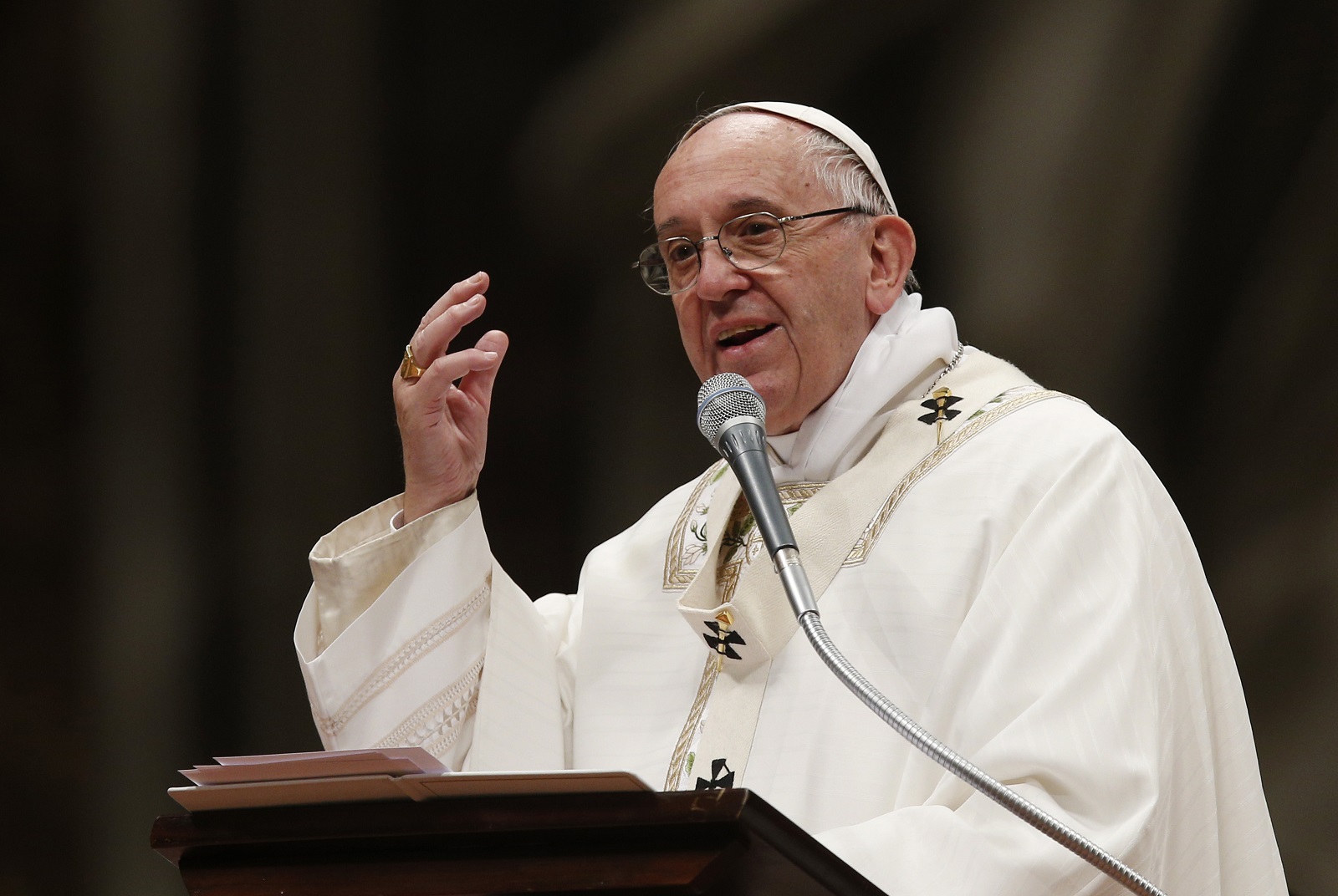
“The problem of vocations is a serious problem,” Pope Francis is quoted as saying in an interview with the German publication Die Zeit published March 8, 2017, and subsequently reported by several Catholic publications.
“The first response (is) … the Lord told us to pray,” the pontiff added.
Annalia Ramos holds the traveling crucifix following the 9 a.m. Mass at St. Anne Parish in Gilbert Feb. 25. (Jeff Grant/CATHOLIC Sun)
“In the United States, (that means) about one priest for every 3,000 parishioners,” noted Serran Louise Cline, a member of St. Anne’s vocations committee who is spearheading the “Traveling Crucifix” program. The numbers are worse in Europe but better in Africa, according to the Vatican report.
The shortage affects spiritual life, said Fr. David Mbimadong, parochial vicar at St. Anne and a native of Ghana.
A priest “cannot give [his parishioners] the best he can,” Fr. Mbimadong explained. People have less access to a priest, so spiritual growth is not as healthy, he said. “A person needs direction face-to-face; one-on-one,” and the lack of access discourages them.
The priest and both Serra Club representatives said families are an effective vehicle for prayer in the “Traveling Crucifix” program.
“One of the big barriers is that parents don’t want children to go into a vocation,” Wold noted. “They won’t have any grandchildren or carry on the family name. (But) where do priests come from? They come from our families and our children.”
Ramos wanted her family to be involved as soon as the “Traveling Crucifix” program was announced at St. Anne last month.
Serra Club East Valley president Chuck Wold, spiritual director and St. Anne parochial vicar Fr. Dan Vanyo, and Serran and parish vocations committee member Louis Cline, following the 9 a.m. Masss at St. Anne Parish in Gilbert Feb. 25. (Courtesy of Paul Wold/PINEAPPLE PHOTOGRAPHY)
“We really need a lot of prayers in the world. We need a lot of priests,” she said.
The crucifix resided for a week in the Ramos family’s living room.
“We have a little place where all of us usually hang out and pray. At night or in the morning when we are all together, we pray the Rosary.”
The idea of a traveling crucifix is not entirely new. Cline and Wold — the Serra Club members — said other churches and clubs across the U.S. have used it or a chalice as a vehicle for prayer.
“A lot of times, a crucifix is used for schools. It will travel from classroom to classroom each month,” Cline explained. “I’m hoping as [the program] continues, more people will sign up. As long as we have people willing to host it, I would love to continue this.”
High school students hold candles in front of the North Carolina Capitol in Raleigh Feb. 20, 2018 in memory of the victims of the shooting at Marjory Stoneman Douglas High School in Parkland, Fla. The students were calling for safer gun laws after 17 people were killed when 19-year-old former student Nikolas Cruz stormed the Parkland school Feb. 14 with an AR-15 semi-automatic style weapon. (Jonathan Drake/CNS, via Reuters)
High school students hold candles in front of the North Carolina Capitol in Raleigh Feb. 20 in memory of the victims of the shooting at Marjory Stoneman Douglas High School in Parkland, Fla. The students were calling for safer gun laws after 17 people were killed when 19-year-old former student Nikolas Cruz stormed the Parkland school Feb. 14 with an AR-15 semi-automatic style weapon. (CNS photo/Jonathan Drake, Reuters)
By Carol Zimmermann Catholic News Service
WASHINGTON (CNS) — March 14, exactly one month since the deadly school shooting in Parkland, Florida, students from around the country planned to walk out of their schools in protest of the nation’s gun laws for 17 minutes.
The time is meant to pay tribute to the 17 students and staff members killed that afternoon by gunfire at Marjory Stoneman Douglas High School.
The national movement, at 10 a.m. in all time zones in the U.S., was organized primarily by youths working with EMPOWER, the youth branch of the Women’s March, which organized marches for women’s rights in Washington and many other cities after President Donald Trump took office.
Another nationwide school walkout is scheduled for April 20, the 19th anniversary of the school shooting at Columbine High School in Littleton, Colorado. A related event is the “March for Our Lives” a youth-led demonstration March 24 in Washington, where 500,000 are expected to attend. Other demonstrations will take place in several U.S. cities to protest current gun laws.
The school walkouts are intended to make a statement and vary from simply walking out of school for the allotted time or attending an organized rally.
Most Catholic schools across the country did not sanction walkouts, but they planned to mark the somber anniversary of the deadly school shooting in Florida and also support youth-led advocacy of anti-gun violence in a different way — through prayer.
Instead of walkouts, some schools were hosting “pray-outs,” saying “rosaries for our lives” or attending school Masses to pray for recent shooting victims and their families and for an end to violence.
Sr. John Mary, a member of the Dominicans’ St. Cecilia Congregation in Nashville, Tennessee, said Catholic schools that are providing alternative school walkout events are teaching their students to pray for a situation that needs a response and encouraging them to take action by writing to legislators about gun legislation.
She sent Catholic school superintendents an email March 5 acknowledging that “many dioceses have chosen to support student participation in this important dialogue and discussion through a clear presentation of Catholic social teaching and peaceful civic engagement.”
For many diocesan and private Catholic school leaders, balancing student advocacy and safety was a critical decision not made lightly.
The principal at St. Francis High School in Sacramento, California, wrote to parents in early March saying: “Like other schools and districts across the nation, we have been wrestling with the type of action we should take as a school community” to the walkout, recognizing that many students want to show solidarity and express their views but also noting there are “serious safety issues presented by students leaving campus in the middle of the school day.”
The decision, announced by Elias Mendoza, who is principal of the all-girls school, was to “provide students with an alternative avenue to express their viewpoints in a constructive and meaningful way, while remaining on campus.” The school planned a prayer service for peace and healing at 10 a.m. and said parents who wanted to allow their students to participate in a political rally that day would have to contact the school office.
The letter echoed what other Catholic school leaders have expressed: “At the end of the day, we know our focus is educating students and keeping them safe, not taking sides in politics or creating policy. Additionally, our staff is aware that we’re tasked with the responsibility of maintaining political neutrality in our role as educators, regardless of our own political views.”
At Xavier College Preparatory in Phoenix, another all-girls school, a campus-wide prayer service will commence at 9:45 a.m.
Students from Marjory Stoneman Douglas High School in Parkland, Fla., cross a street in Tallahassee prior to speaking with Florida state legislators Feb. 20 at the Capitol. About 100 students from the Parkland school traveled in a three-bus caravan to demand gun restrictions a week after the deadly shooting that left 17 of their classmates and teachers dead. (CNS photo/Colin Hackley, Reuters)
Diane Starkovich, superintendent of Catholic schools for the Atlanta Archdiocese, said students walking off campus “cannot occur” because of concern that administrators wouldn’t be able to keep students safe if they left the school property.
In an email to The Georgia Bulletin, the archdiocesan newspaper, she said local high school administrators were talking with students “to allow them opportunities for solidarity with other students across the country who share the same concerns regarding gun control and mental illness issues as well.”
Grade schoolers in @archatl participate in national student action against gun violence.#Atlanta Catholic schools and students showing support for the cause with prayer and tributes to 17 victims of Florida school shooting. https://t.co/ZN3qldsEb9
On the day of the national walkout, students at some Catholic high schools in the Atlanta area will have the chance to exchange their uniforms for clothing with the school colors of the Parkland high school — maroon and silver — and funds donated for this will be set aside for the victims of the Florida shooting.
Archdiocesan high schools also are amending some courses as students have expressed concern for the Florida high school community and want to talk about gun laws. Theology classes, for example, will examine these shootings from the Catholic perspective, asking questions about injustice and violence in the world and how believers are to respond.
In Michigan, students from throughout the Detroit Archdiocese planned to hold prayerful gatherings to remember the Parkland shooting victims and also a mother and father fatally shot allegedly by their son March 2 at Central Michigan University in the neighboring Saginaw Diocese.
“The Archdiocese of Detroit adamantly detests gun violence of any kind, and I have encouraged our schools to discuss as a community, ways to prayerfully respond to these tragic events,” said Kevin Kijewski, superintendent of schools. “The result is a range of Catholic, faith-based responses to gun violence and a united appeal to the Lord for assistance during these difficult times.”
In the Archdiocese of New Orleans, all Catholic schools have been asked to have 17 minutes of prayer during the National School Walkout — beginning with a rosary, followed by an archdiocesan prayer against violence, murder and racism — a prayer that is said aloud by Catholics at every Mass in the archdiocese.
Students are reunited with parents and family after a shooting Feb. 14 at Marjory Stoneman Douglas High School in Parkland, Fla. At least 17 people were killed in the shooting. The suspect, 19-year-old former student Nikolas Cruz, is in custody. (CNS photo/Giorgio Viera, EPA)
“We didn’t hear of any schools or students participating (in the walkout), but we were hearing from our school communities,’What could we do, what could we offer in support of lessening gun violence?'” said RaeNell Houston, the archdiocese’s superintendent of Catholic schools.
Houston told the Clarion Herald, New Orleans’ archdiocesan newspaper, that children deserve to be safe in our school communities and school officials felt that “intentional, dedicated prayer would yield more fruitful results than a walkout.”
Chicago archdiocesan schools also were encouraged to take part in “peacebuilding activities” March 14.
“We believe this is a time to come together and work as a community of Catholic schools to help achieve a lasting peace,” said Jim Rigg, archdiocesan school superintendent, in a March 6 letter to school principals.
The Diocese of Harrisburg, Pennsylvania, planned school prayer services March 14 as a “positive way to respond to the concerns of students, for the safety of schools and to recognize the mourning of a country for so many lost,” a diocesan statement said.
Fr. Edward Quinlan, diocesan secretary for education, said the time of prayer should not just be focused on the effects of gun violence. “School violence takes many forms,” he said, “from the tragic assaults we saw in Florida to the day-to-day bullying and harassment of other students.”
For some Catholic schools, the alternative walkout day event was simple. St. Saviour High School in Brooklyn, New York, was having a prayer service in the school gym that would include reading the names aloud of those killed in the Florida school shooting.
Chaminade College Preparatory High School in West Hills, California, was inviting students to participate in a 17-minute walk at lunch around the track as an opportunity to show unity “and honor the students and faculty who lost their lives.”
A week before the national school walkout, hundreds of students at St. Teresa’s Academy in Kansas City, Missouri, walked out of school in one of the first area school protests of gun laws joining the national discussion about gun legislation, the Kansas City Star reported.
“We wanted to make a statement,” said a student of the all-girls school who was one of the organizers for the event where there were speeches against gun violence and a letter to local political leaders urging them to take a stand against gun violence was read aloud.
These students will not be taking part in the March 14 walkout, nor did their school plan an alternative event, because they are currently on spring break.
Contributing to this report was Christine Bordelon in New Orleans and Andrew Nelson in Atlanta.