My husband, Rich, has always supported my work in ministry. But he was initially ambivalent about my involvement with Kino Border Initiative (KBI), a nonprofit that provides humanitarian assistance to families and individuals in Nogales, Mexico — often immediately after deportation.
Experiencing KBI had enriched my life greatly, so for months I invited him to join me for a weekend there. Eventually, he agreed.
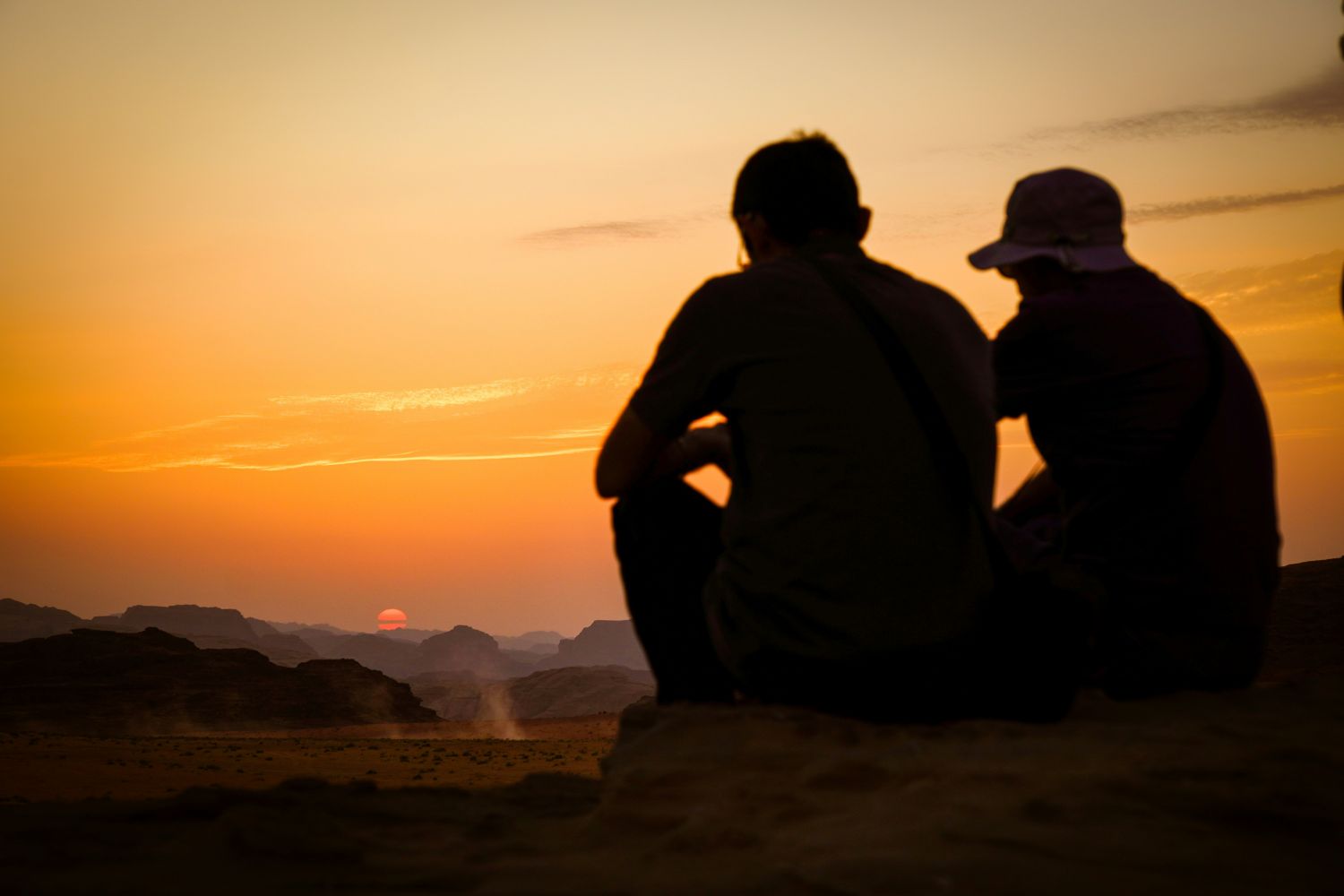
During that visit, Rich struck up a conversation with a man who had recently been deported from Los Angeles — Rich’s hometown. The man was wearing a Dodgers cap — the team Rich grew up loving. That small, familiar detail opened the door to conversation.
They talked baseball. They talked about Los Angeles. Slowly, they began to talk about life.
The man shared that he had two small sons still in Los Angeles and feared losing the landscaping job he had held for five years. Rich and I also had two small sons. We, too, had left Los Angeles for Phoenix so that we could better provide for our family. In that shared space of fatherhood, hope and responsibility, something shifted.
Rich no longer saw an “immigrant” or a “case.” He saw a father — a neighbor.
In that moment, they walked a path of encounter, shared humanity and grace together. That walk changed the direction of where the Spirit would lead Rich from then on. As a City of Phoenix police officer, it did not erase his respect for the law, but it expanded his heart. What happened in that shared moment between two fathers did not come through a lecture or a policy decision. It came through relationship.
It reminded Rich, and all of us, that dignity is not conferred by status, but by God alone.
In a time when hot button issues all too easily result in policy debates, enforcement strategies and political talking points, what is too often lost is the human face — the inherent dignity of the person standing before us.
As people of faith, we are called to see God in each other, to accompany and to love. The Church has consistently reminded us of this call. Through the witness of our bishops, the invitation to solidarity and now through El Camino Real, year two of Bishop John’s seven-year pastoral plan, we are encouraged to take ownership of this call and walk the road of life together as neighbors.
One way I feel called to do this in my daily life is to take the U.S. Conference of Catholic Bishops’ Cabrini Pledge, which offers a concrete way forward. Inspired by St. Frances Xavier Cabrini, patroness of immigrants, the pledge calls us to pray, learn, act and advocate so that our hearts and our communities may be transformed. At its core, the Cabrini Pledge is not about changing laws — it is about allowing God to change us.
It’s about encountering our neighbors at work and in grocery store aisles and on street corners in the same way Rich and that father in Nogales encountered one another: as neighbors without judgment, without qualification, united by the truth that God created us all.
I have seen how that transformation happens when we allow the Spirit to lead us and keep our hearts open. In this Easter season, I pray that my own heart remains continually conformed to God’s — open, attentive and willing to be transformed — and I pray that we may all walk together, sustained by the risen Christ.
To learn more about the Cabrini Pledge, visit www.usccb.org/cabrinipledge