

Men in the Breach: Supporting vocations keeps West Valley Catholic Fredd Quiñonez rooted in prayer

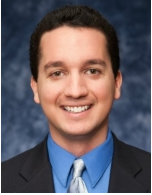
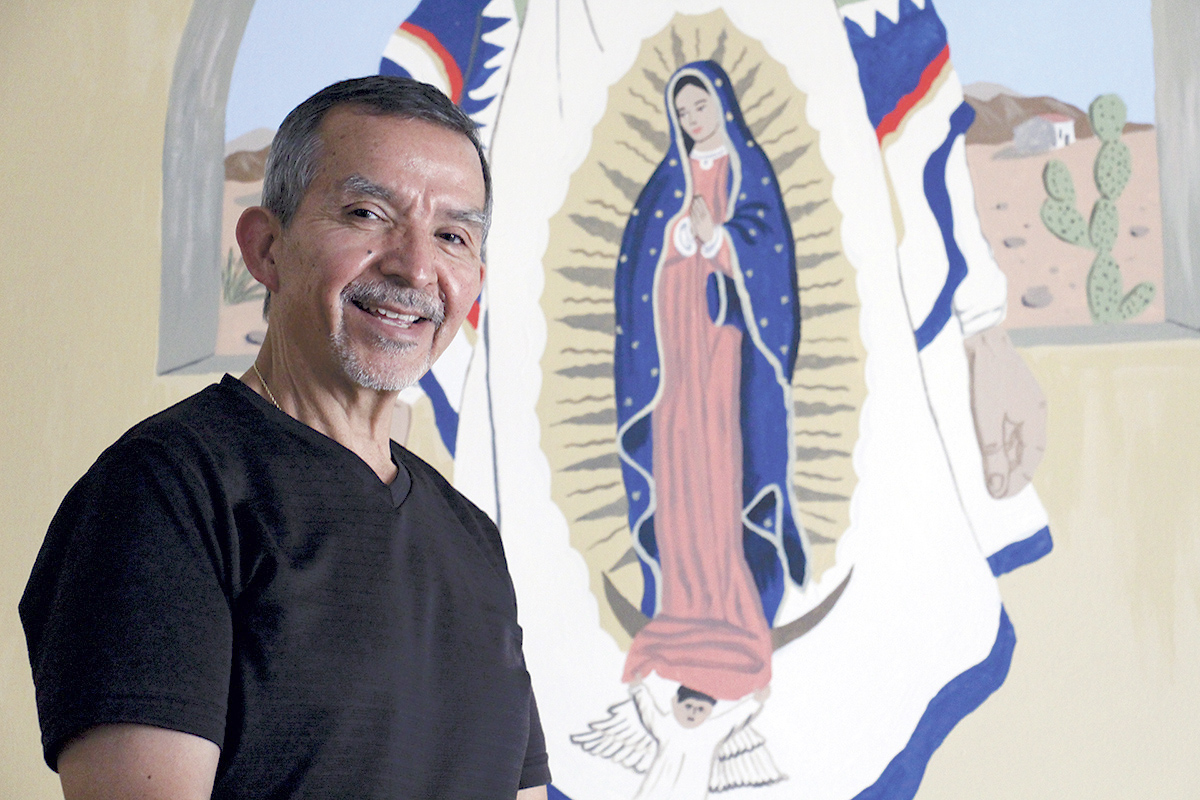
Fredd Quiñonez, a charter member of the West Valley Serra Club, poses inside Our Lady of Guadalupe Monastery in Phoenix where the group meets. (Ambria Hammel/CATHOLIC SUN)

By Ambria Hammel
The Catholic Sun
In response to Bishop Thomas J. Olmsted’s Apostolic Exhortation, “Into the Breach,” every month The Catholic Sun will feature one of these “Men in the Breach” who’ve answered the bishop’s call to authentic Catholic masculinity.

[dropcap]T[/dropcap]here’s no telling what a lunchtime meeting twice per month can do for the soul.

The impact on those they pray for during that meeting — their top agenda item — is equally immeasurable. The main order of business: pray for and network with priests, religious and those in discernment.

It’s the core of what Catholic men and women in more than 1,000 chapters across the globe, including three locally, commit to daily as a member of Serra International. Fredd Quiñonez joined the West Valley chapter during its infancy six years ago.

Serra Club re-energized his prayer life. He’s grateful his three 12-hour work shifts don’t conflict with meetings. Quiñonez also loves that its meeting location, Our Lady of Guadalupe Monastery, was not only around the corner from his childhood home, but would always remind him of his own earthly mother — Guadalupe — who taught him the value of prayer.

“Yeah, we’re men, but we get a lot of strength from our grandmothers, our mothers, our wives, our granddaughters,” Quiñonez said. “We get a lot of toughness from these women that are around us.”

As a child, Quiñonez joined his mother and grandmother in praying for the souls of the departed. He recalls praying through the Rosary and Stations of the Cross before each Mass at Blessed Sacrament in Tolleson where he was an altar server. He still speaks to grieving family members and friends who gather there for funerals.

Serra International

serralgNamed for St. Junípero Serra, Serra International is an organization of lay Catholics dedicated to promoting vocations. There are 240 Serra Clubs with more than 8,000 members in the United States. Three of those clubs are located within the Diocese of Phoenix
  • The Serra Club of Phoenix meets at 12:10 p.m., the first and third Tuesday of the month at the Diocesan Pastoral Center, 400 E. Monroe St., Room 104.
  • East Valley Serra Club meets at 12:10 p.m., the second and fourth Tuesday of the month at Native New Yorker, 1837 W. Guadalupe Rd., Mesa.
  • West Valley Serra Club meets at noon, the first and third Tuesday of the month at Our Lady of Guadalupe Monastery, 8502 W. Pinchot Ave.
 

Quiñonez remains a West Valley Catholic and a walking parish directory for the area. He quietly jumps at the chance to match Mass times, language and style of music with what best suits a person’s schedule or interest. Serra involvement sparked his own interest in personal prayer time with the Crosier community, Eastern and Latin Rite Catholics — all contacts he met at Serra meetings.

Quiñonez is a charter member of the West Valley Serra Club alongside his wife, Isabel. Two sisters, a brother, a brother-in-law and a grandson also helped the chapter charter, but have since left due to work conflicts.

Like a true Serran, Quiñonez sees St. Junípero Serra’s motto, “Always forward. Never back,” within the text of Bishop Thomas J. Olmsted’s apostolic exhortation, “Into the Breach.” He listened to the audio version, calling it forward-thinking, especially in its ability for the bishop, several priests and peers to reach young Catholic men and for its share-ability. Two Serrans began a men’s group at St. John Vianney around the same time.

He recommended Catholics regularly review “Into the Breach” to remind men to gently evangelize those around them.

“You gotta do it with love. Otherwise, it just does not get through,” Quiñonez said.

Supporting the Serra Club has further encouraged him to answer St. Paul’s call to pray without ceasing. Quiñonez ’s prayers aren’t just for vocations. They’re intercessions for the dead and for Catholics to get married in the Church. They’re also petitions for his own health and offers of thanksgiving for recent strides.

Quiñonez joined the Serra Club while seeking another resource for prayer. Around the same time, he began to recognize in himself the same symptoms of severe rheumatoid arthritis that killed his mother at age 49.

It still afflicts two of his six younger siblings. Quiñonez couldn’t work for three months because of his own pain. On related sleepless nights, the father of two sons, four grandchildren and seven godchildren turned toward the crucifix on his wall.

“When you know someone who’s suffering, you get to connect with them,” Quiñonez said. “Your prayer becomes stronger. Your faith in God becomes stronger.”

Today, Quiñonez’s health is stronger too. He went from 200 pills per week to 70-80 now, half of which are vitamins. Quiñonez plans to live into his 90s, if not become a centenarian, but rests in God’s divine plan. Until then, he spends his time in prayer and encourages others to do the same.

“You do have that down time. You’re driving? Pray,” Quiñonez recommended. Begin and end the day with a little prayer. Spend part of a lunch break in personal prayer or spiritual reading like the Magnificat.

Faith, tradition highlight First Nation Sunday at Ste. Anne-de-Beaupre

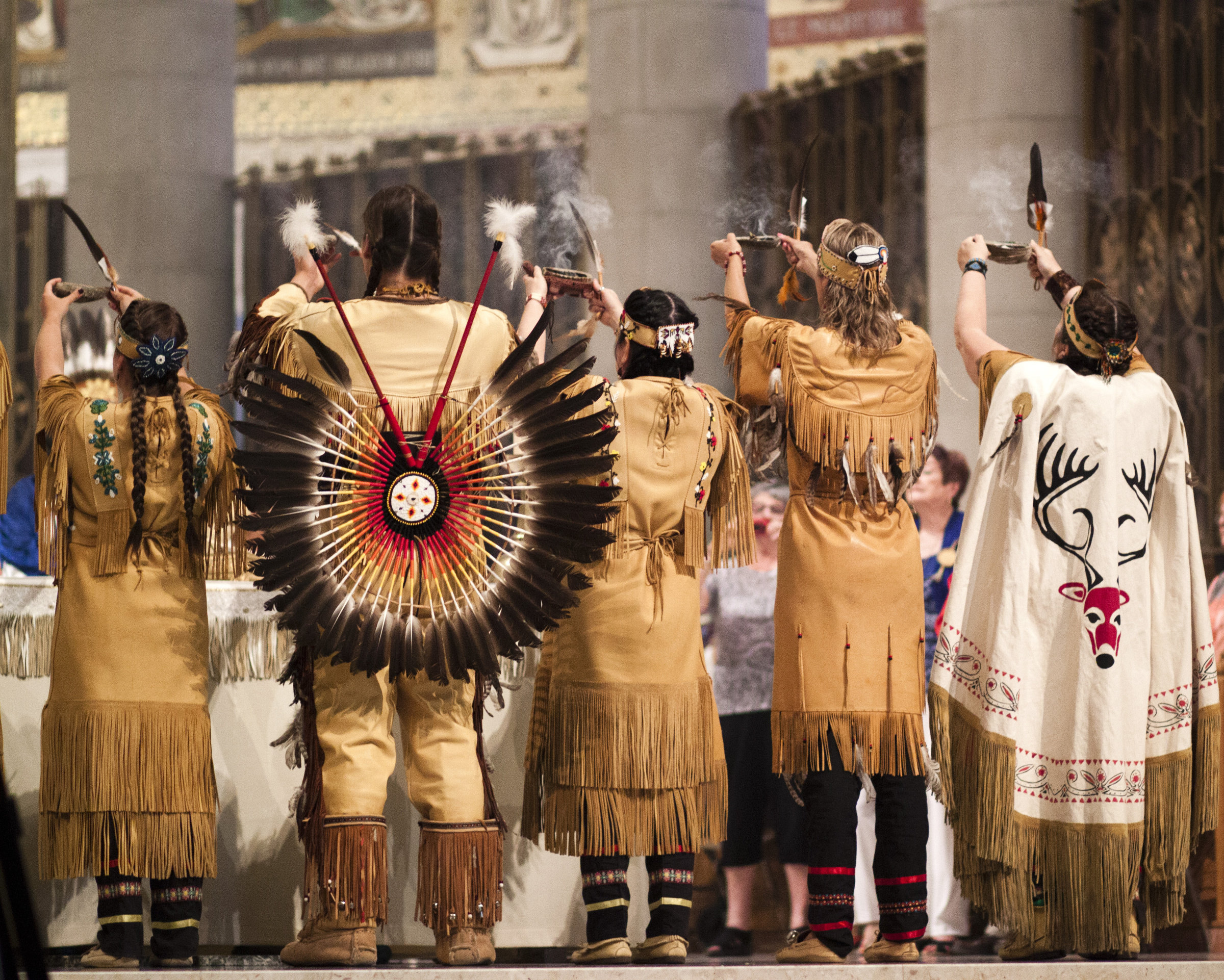
Members of Canada's First Nations participate in Mass at the Basilica of Sainte Anne-de-Beaupre in Quebec June 26. (CNS photo/Philippe Vaillancourt, Presence)
Members of Canada’s First Nations participate in Mass at the Basilica of Sainte Anne-de-Beaupre in Quebec June 26. (CNS photo/Philippe Vaillancourt, Presence)

By Philippe Vaillancourt
Catholic News Service

QUEBEC CITY (CNS) — Faith and tradition were the highlights of this year’s First Nations Sunday at the Basilica of Sainte Anne-de-Beaupre.

In a year marked by political and ethical debates regarding Canada’s First Nations, organizers decided to focus on the Christian message and the native peoples’ long-standing devotion to St. Anne.

The 1,400-seat basilica was full for the Mass attended by 1,000 people from First Nations, mostly from the Canadian provinces of Nova Scotia, New Brunswick and Quebec.

Dressed in a red shirt, John Cremo from the We’koqma’q First Nation on Nova Scotia’s Cape Breton Island chatted cheerfully with others inside the basilica. Cremo, a captain on the Mi’kmaq Grand Council, knows the place well.

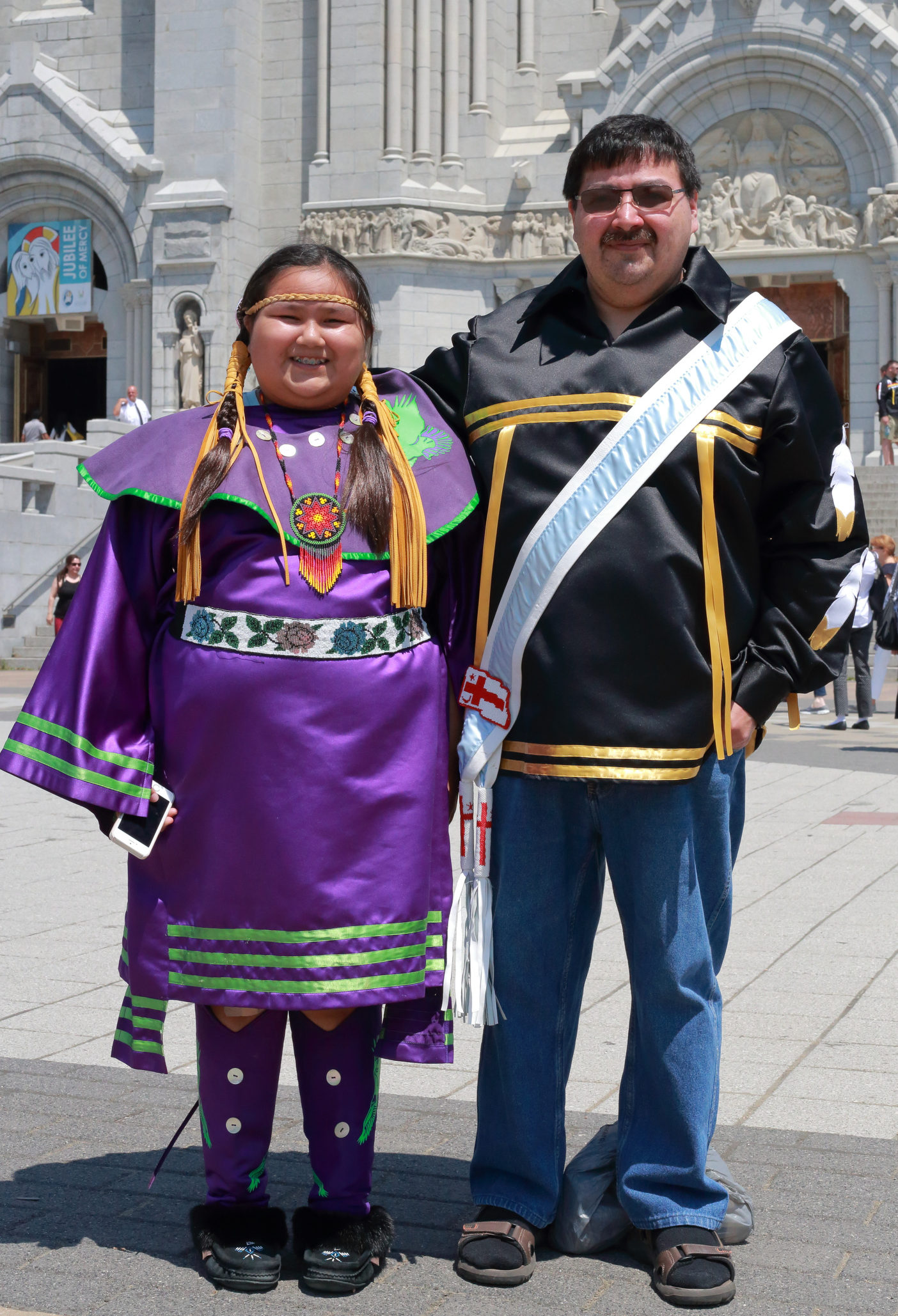
Blair Paul and his daughter, Jada, pose for a photo outside the Basilica of Sainte Anne-de-Beaupre in Quebec June 26. They are native people of the Membertou First Nation in Nova Scotia. (CNS photo/Philippe Vaillancourt, Presence)

“I’ve been coming for 50 years to honor St. Anne, our patron saint. She’s the saint we pray (to) for healings,” he said.

The Basilica of Sainte Anne-de-Beaupre is North America’s oldest Catholic shrine, and the First Nations have been a part of it since the 17th century.

Many take advantage of this special day to wear traditional vestments. Many native peoples were smiling while taking pictures with tourists. Such was the case of Blair Paul and his daughter, Jada, of the Membertou First Nation in Nova Scotia.

“This is a peaceful place, very spiritual,” he said between two photos. “It’s only the second time I come. But before me, my father came for 40 years. So I came to pray.”

This year’s celebration was led by Bishop Dorylas Moreau of Rouyn-Noranda, Quebec. His diocese has three native territories, and he visits them a few times every year.

A few minutes before the Mass, Bishop Moreau acknowledged some of the First Nations’ hardships, including the sometimes difficult relationship with white police officers. He said he hopes the situation will improve, especially after the final report of the Truth and Reconciliation Commission of Canada that widely recognized the abuses suffered by First Nation peoples over many decades.

The bishop said the Church still has much to learn from the First Nations.

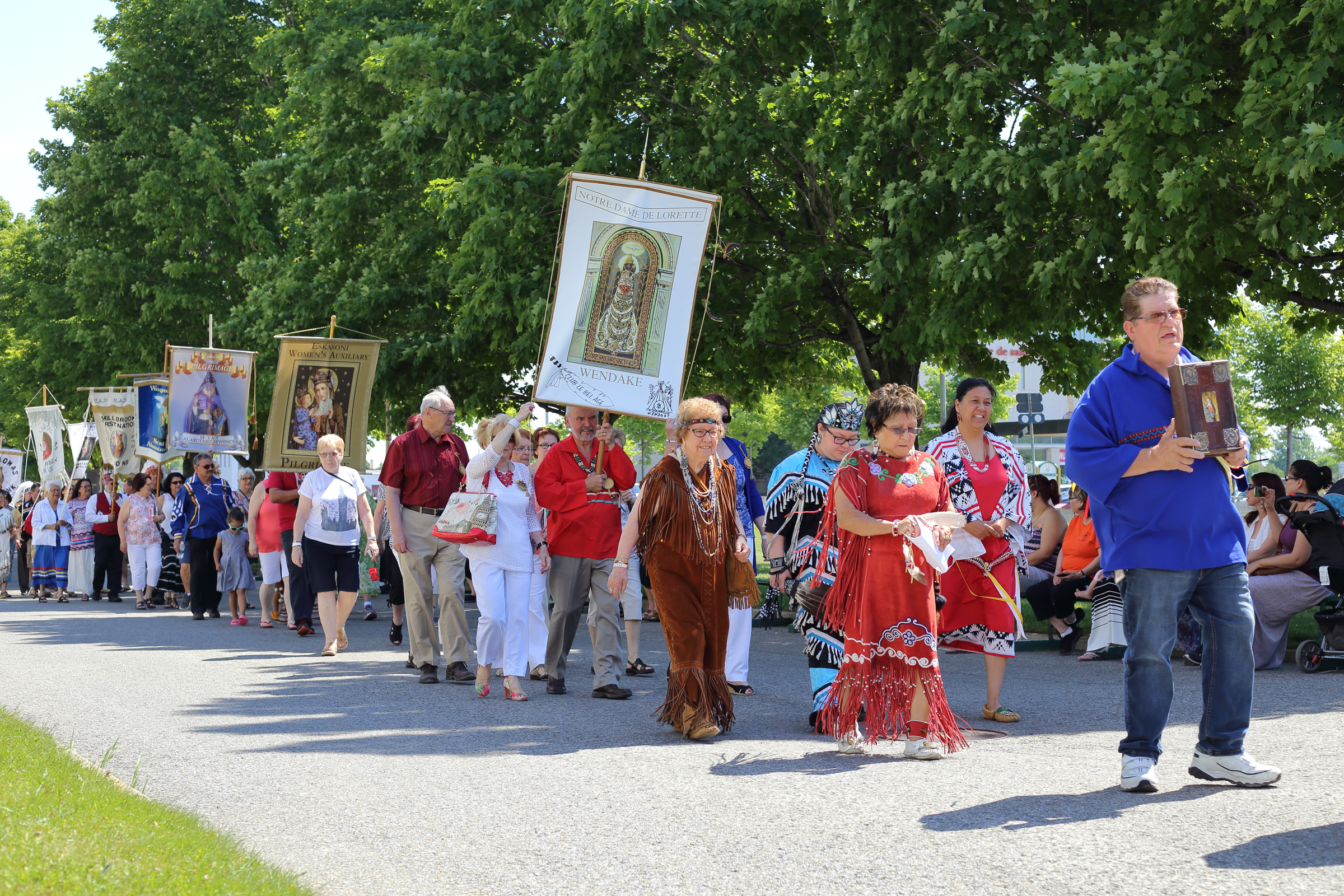
Native people from the Huron-Wendat First Nation community in Quebec City display traditional vestments outside the Basilica of Sainte Anne-de-Beaupre in Quebec June 26. (CNS photo/Philippe Vaillancourt, Presence)

“They’re very strong on popular devotion. We have to regain that. Popular devotion mostly has more to do with the heart instead of reason. It’s to touch and be touched. Faith means entering God’s mystery and abandoning yourself to him. The natives teach us to live our relationship with God through the heart,” Bishop Moreau said.

On the other end of the vast sacristy, the provincial superior of the Redemptorists of Ste. Anne de Beaupre was brushing up his homily. “I don’t want to mention these last year’s events, I don’t want to deliver a political message,” said Father Charles Duval. “I want us to be called by Jesus.”

He said the basilica has always been a place “where we can celebrate together. I appreciate this day because we come together as one family, while many things might divide us in our daily lives.”

Bishop Dorylas Moreau of Rouyn-Noranda, Quebec, delivers his homily at the Basilica of Sainte Anne-de-Beaupre in Quebec during Canada's First Nations Mass June 26. (CNS photo/Philippe Vaillancourt, Presence)
Bishop Dorylas Moreau of Rouyn-Noranda, Quebec, delivers his homily at the Basilica of Sainte Anne-de-Beaupre in Quebec during Canada’s First Nations Mass June 26. (CNS photo/Philippe Vaillancourt, Presence)

Members of different Nations carried their banners in the procession. At the beginning of the Mass, the Sandokwa dance troupe from the Huron-Wendat Nation performed a purification ritual with smoke.

In his homily, Father Duval pointed out that “God is inviting us to be one nation.”

“To be able to celebrate one God together is a great testimony,” he added.

During the offertory, the Mi’kmaq Nation gave the shrine a banner depicting Our Lady of Guadalupe. Duce Sylliboy, daughter of Grand Chief Ben Sylliboy of the Mi’kmaq Nation, presented the banner. Shaken by the miscarriage of one of her daughters, she committed herself to making sure every Mi’kmaq church in Canada had a picture of the Virgin of Guadalupe.

“I know she was the patron saint of the unborn. Everything happens for a reason. … She gives us peace and comfort,” she said.

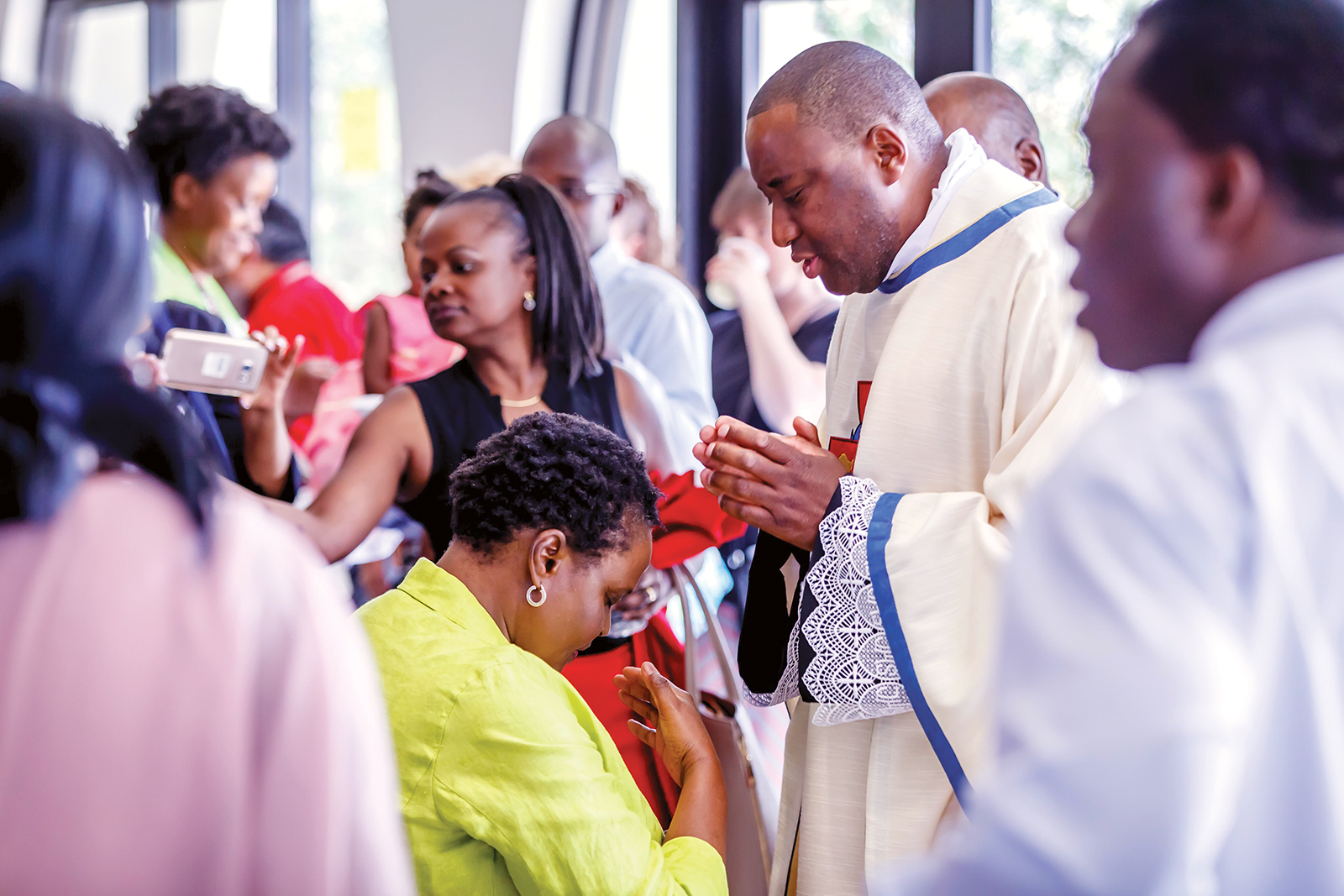
At the end of the celebration, people gathered in front of the basilica, talking and taking pictures. On the front steps, many generations posed together: From elders who have been coming for decades to children who were discovering this tradition, they were all promising each other to meet again at the basilica next year.

Vaillancourt is editor-in-chief of Montreal-based Presence info.

Fr. Dan Connealy: Vocation took root in college, headed to NAU

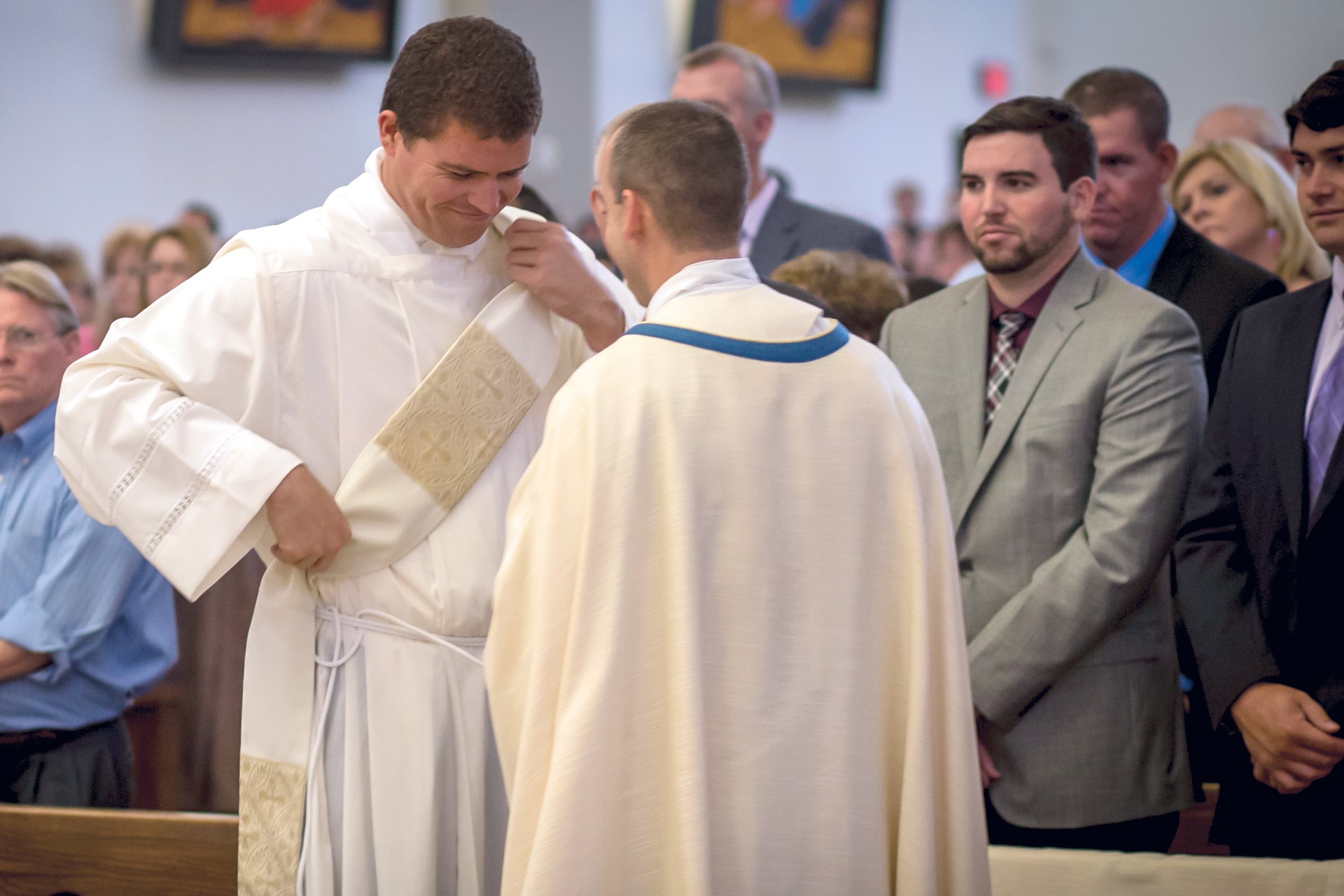
Fr. Dan Connealy removes his deacon’s stoll moments after his ordination June 11 to the priesthood as Vocations Director Fr. Paul Sullivan prepares to vest him with sacerdotal vestments. (Billy Hardiman/CATHOLIC SUN)

See the full story on the ordination:
Four ordained to the priesthood

Meet the other new priests

Fr. Dan Connealy’s first few months as a priest may have him feeling like life came full circle.

It was part way through his years at University of Pittsburg, while keeping campus life afloat, especially the swim team and his cradle Catholicism, when his priestly calling intensified.

He had fleeting thoughts about priesthood growing up. A read through St. John Vianney’s biography as a high school freshman revealed the saint found holiness by hearing confessions, celebrating Mass and visiting the sick.

One day during college, a grad student who was a member of Opus Dei approached him after Mass and asked if he was praying daily.

“It was good because I wanted to know how to pray more, but I didn’t know how to do that.”

Some prayers were formulaic like the Rosary Fr. Connealy, seven siblings — he’s in the middle — and their parents were occasionally able to offer together growing up. Others were through Adoration or simply saying, “Lord, this is what I’ve done today.” He realized prayer schedules are more important than traditional ones.

He began that summer in Phoenix by going to one weekday Mass. He finished it with daily Mass stops at St. Thomas the Apostle on the way home from swimming.

“Little by little the Lord puts things into place,” Fr. Connealy said a day before giving the toast to his seminary in Rome and 59 fellow members of the ordination class.

He described seminary as a chance to learn to love the person God created you to be because “that’s where you’re going to find holiness.” By August, the freshman priest will find himself among young adults at Northern Arizona University in Flagstaff in search of the same thing. Fr. Connealy will be the associate director of the Holy Trinity Newman Center in addition to parish work at San Francisco de Asís.

Renee, his mother, sees a desire in her son to draw God’s people closer to Christ. Fr. Connealy does so from an important starting point, she said, by “reaching out and really connecting with people and meeting them where they are instead of bringing them to where he is.”

She is humbled at the miracle that her second eldest son can now change the bread and wine into the Body and Blood of Christ. He is excited to be back in the local Church.

Several semesters at the Pontifical North American College in Rome — under two popes and with classmates from six continents — plus summer assignments in several Valley parishes and within a missionary community in Honduras showed him how big but also small the Church is.

Seminary also reminded him of the Catholic view of death. A Honduran child died midweek during his time there and the priest recalled watching 30 kids crowd around the open casket. He compared that to the U.S. view, often hidden in hospitals.

“Death is there. It’s not something to be feared, to be put away because we weren’t meant for this world,” Fr. Connealy said.

Martyrs’ relics to visit Phoenix as part of Fortnight for Freedom tour

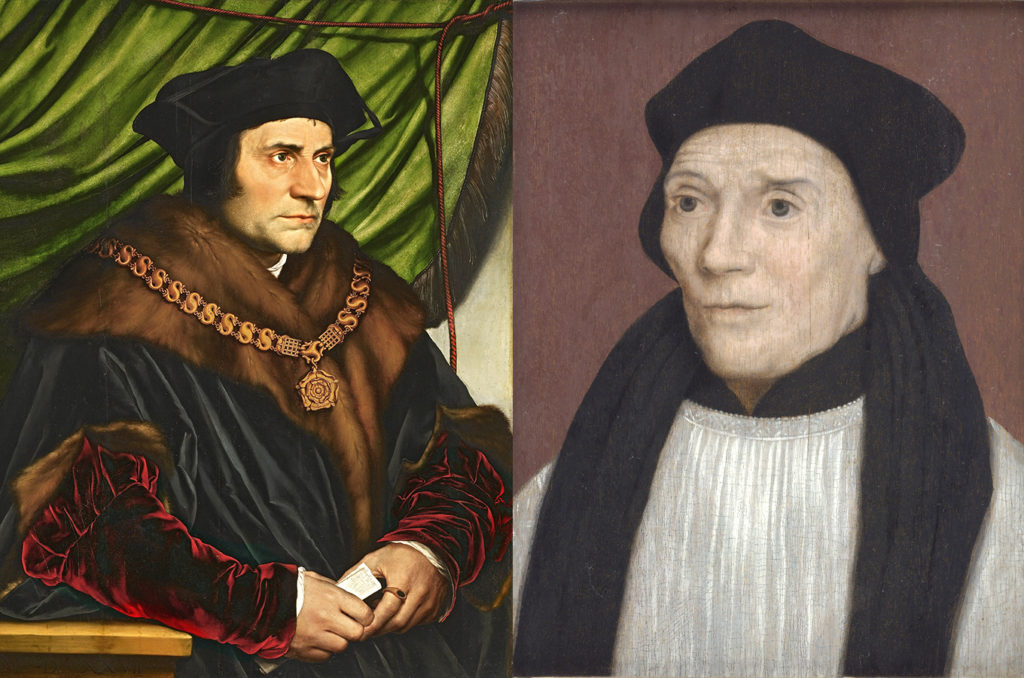
St. Thomas More (left) and St. John Fisher (right), are depicted in these two paintings by 16th-century artist Hans Holbein the Younger. St. More, a politician and royal adviser, and St. Fisher, a bishop, were martyred for refusing to submit to King Henry VIII’s assertion that he was the head of the Church in England. Considered heroes of religious freedom, the relics of both saints will be touring through the United States during the Fortnight for Freedom, including a stop in Phoenix June 30.

FORTNIGHT FOR FREEDOM

Relics of Ss. Thomas More and John Fisher Tour, June 30
Independence Day Prayer for America, July 4

“I die the King’s good servant; but God’s first.” These were the last words spoken by St. Thomas More, a 16th-century politician and martyr, who died defending the Catholic faith. The life of St. Thomas More and his close friend St. John Fisher, like many other saints, illustrates the necessity of having courage when religious freedom is attacked.

As part of the Fortnight for Freedom — an annual period of fasting and events celebrating religious freedom during the two weeks leading up to our nation’s Independence Day — the relics of these two saints, whose martyrdom has come to represent the struggle for the freedom to practice faith without the interference of the state, will be on display in the Diocese of Phoenix June 30.

The relics will be displayed at St. Mary’s Basilica as part of a nationwide tour that coincides with this year’s fortnight theme – “Witnesses to Freedom.” The USCCB has highlighted 14 individuals or groups who exemplify courage in the face of persecution, including Ss. More and Fisher.

Mike Phelan, director of the diocese’s Office of Marriage and Respect Life affirmed that modern-day Catholics also have a duty to safeguard religious freedom.

“Religious liberty is terribly important because the interior part of every person, the heart of every person, is made in the image of God. It’s free,” he said.

The two saints understood this well. Thomas More served as one of King Henry VIII’s trusted advisers as Lord Chancellor, while John Fisher served as bishop of Rochester. After the king declared himself the head of the Church in England, they both refused to take the Oath of Supremacy, and they were charged with treason and martyred in 1535.

Catholics in the U.S. today are not faced with such direct attacks as these saints were, but they must still be vigilant and loyal to Church teachings, Phelan said.

“Right now, we have to be aware of the issues and face the threats that are out there in clear and unified ways as a Church, so that we don’t end up facing that kind of dramatic circumstance.”

Nik Nikas, a local attorney and co-founder and president of the Bioethics Defense Fund, also stated that every person has a right to religious liberty and that right must be protected.

“The sad fact is that today in America the Little Sisters of the Poor and others, who want simply to live out fully the Gospel command to love our neighbor as we love the Lord Jesus, must go to court and hope that the secular legal system will protect their right to religious liberty,” Nikas said, referring to the recent Zubik v. Burwell Supreme Court case. It forced the sisters into a position to defend their right to uphold Church teaching in their insurance policies against the federal government’s contraceptive mandate. The Supreme Court ordered the lower courts to re-hear the case May 16.

“To force anyone to violate his or her conscience by providing abortifacient contraceptives is, I believe, both unconstitutional and an outrage against human dignity,” he said.

The court’s decision was a moment of victory for those who defend religious liberty, Mike Phelan said.

“Our own ability to be people of faith in the workplace, to own a business and not be forced into situations that violate the business owner’s faith is under threat. Our ability as Catholics to insist that there is male and there is female, both made in the image of God, to be able to run a business in that way and schools in that way, there’s no guarantee in the future that those freedoms will be respected.”

Catholics can pray for such a guarantee during a special Mass and Rosary being celebrated on the Fourth of July at Ss. Simon and Jude Cathedral with Auxiliary Bishop Eduardo A. Nevares.

“My [business] partner Jack and I decided in 2012 that we needed to pray this Rosary on the Fourth of July,” said Manny Yrique who launched the annual Rosary for the United States of America in the Diocese of Phoenix. Bead by bead, Catholics will then pray the Rosary for all 50 states.

“American Catholics make up about 1 in 5 of the American population, so 20 percent of Americans are actually Catholic,” Yrique said. “It’s important for Catholics to be a voice politically and to truly vote with our Catholic conscience.”

Nikas also encouraged Catholics to persevere in protecting religious liberty. “The Church must continue to call the government to respect the genuine religious liberty of all. May St. Thomas More intercede for the Church in this time of crisis.”

With decision on Texas law, women across U.S. ‘just lost,’ says pro-lifer

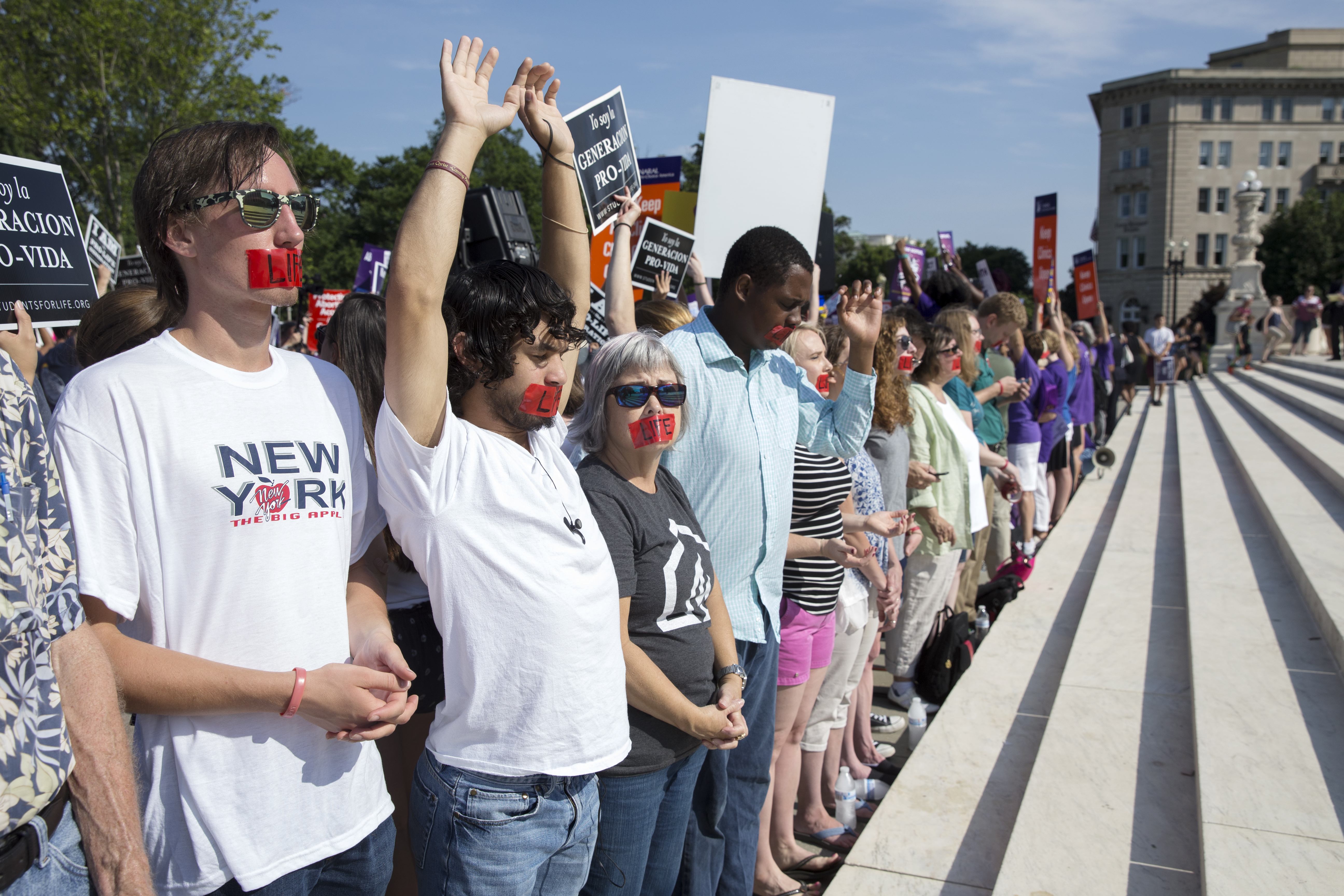
Pro-life supporters pray at the steps of the U.S. Supreme Court June 27 during protests in Washington. In a 5-3 vote that day, the U.S. Supreme Court struck down restrictions on Texas abortion clinics that required them to comply with standards of ambulatory surgical centers and required their doctors to have admitting privileges at local hospitals. (CNS photo/Michael Reynolds, EPA)

By Kurt Jensen
Catholic News Service

WASHINGTON (CNS) — Just after 10 a.m. East Coast time June 27 in Washington, Kristan Hawkins, director of Students for Life, made an announcement to her small rally in front of the Supreme Court: “Women across America just lost!”

Her comments followed the high court issuing its 5-3 decision in Whole Woman’s Health v. Hellerstedt. The court struck down restrictions on Texas abortion clinics that required them to comply with standards of ambulatory surgical centers and required their doctors to have admitting privileges at local hospitals.

The case challenged a 2013 state law, H.B. 2, placing the requirements on the state’s abortion clinics. Opponents of the law claimed the requirements were aimed at closing abortion clinics. But the state and many pro-life advocates maintained that the law protected women’s health.

Justice Stephen G. Breyer wrote the majority opinion, joined by Justices Anthony M. Kennedy, Ruth Bader Ginsburg, Sonia Sotomayor and Elena Kagan. The same five had issued an earlier ruling allowing abortion clinics in Texas to remain operational until a final decision was handed down in the case.

The ruling was met with a sense of resignation by the few who were able to make speeches to barely 100 at Hawkins’ pro-life rally before being drowned out by the adjacent rally. Numbering more than 2,000 in support of legal abortion, that group celebrated the decision as its loudspeakers blared Queen’s “We Are the Champions.”

“Reasonable people know that Texas law H.B. 2 was in the best interest of women’s health,” said Jeanne Mancini, president of March for Life.

“Today, women and women’s health are the real losers. Because of this decision today, beauty parlors, public pools and veterinary clinics will have higher health standards than abortion clinics.”

Said Hawkins, “It is within the rights of the states, indeed, it is the duties of the states, to protects its citizens from predatory businesses, which is exactly what the abortion industry is.”

“What we’ve seen today is another win for special interests in Washington, D.C.” said Genevieve Wood, a communications fellow at the Heritage Foundation. “Women did not win — the abortion industry did.”

Evangeline Bartz, a lawyer for Americans United for Life, said: “The Supreme Court has accepted the argument that the abortion industry should keep its profits high and their standards low.”

Hawkins sensed when she arrived that the numbers and noise level weren’t going to work in her favor. “They’re pretty aggressive today,” she told Catholic News Service about groups in favor of legal abortion gathered in front of the court.

She also claimed “they paid a bunch of people to show up,” explaining that before the rally at the court, she had seen many of those demonstrators organizing at nearby Union Station and receiving packets of materials on the abortion issue.

Fr. Sheunesu Bowora: Sacramental life on radar for former pilot

Fr. Sheunesu Bowora offers one of his first blessings following his June 11 ordination at St. Thomas Aquinas Parish in Avondale. (John Bering/CATHOLIC SUN)

See the full story on the ordination:
Four ordained to the priesthood

Meet the other new priests

Fr. Sheunesu Bowora’s first year of priesthood will tangibly seal his religious vocation.

It was while attending both St. Mary in Chandler and a nearby Protestant church with a friend that the one-time airline pilot grappled with the existence of God. He spent last summer preaching and serving St. Mary’s 5,000 families as a transitional deacon.

Effective July 1, Fr. Bowora will officially begin serving as parochial vicar in the same sacred space. His last days as a seminarian had him eager to say Mass, hear confessions and anoint the sick.

“What’s not to look forward to?” Fr. Bowora said a day after moving into the rectory following his final drive from Denver’s St. John Vianney Theological Seminary. He was among 14 from there ordained for their respective home dioceses.

The new priest spent the last nine years discerning and preparing for a lifetime of administering sacraments, offering pastoral counsel and other duties. Now, all of the practical knowledge he gleaned going from course to course becomes a reality.

Fr. Bowora likened his time in seminary to the seed of a bamboo plant. Growth may not be evident for a good five or six years.

“You’re being given the roots that you need to actually survive later,” Fr. Bowora explained. “Then it grows very, very tall in a short amount of time.”

He ensured that his human, spiritual, intellectual and pastoral pillars of formation are very well rooted. That’s much different from a good 10 years earlier when the middle child — and only son — questioned God’s existence.

A novena to the Holy Spirit revealed to the future priest that he questioned his faith and labeled church as boring simply because he didn’t understand. He prayed through the Sorrowful Mysteries he found on a card tucked into a Bible and realized God’s personal love for each of His children.

“Well, maybe God wants me to help other people understand these things,” he thought.

Fr. Bowora became one of the original members of Phoenix’s Serra House of Discernment. The private space allows men a deeper level of spiritual living as they discern applying to seminary or if they have sold their possessions and await the new semester.

Fr. Bowora used that time to test the waters via further immersion in parish life. By this time, he settled at Most Holy Trinity and once served on core team when his fellow ordinand, Dan Connealy, was in high school.

Around the same time, a visiting priest at St. James Parish in Glendale, upon a first encounter after Mass, said, “So, when are you going to go to seminary?” Fr. Bowora’s reversion for the faith left a special fondness for encountering fallen-away Catholics. He met some via a unique door-to-door ministry he observed during a summer at St. Vincent de Paul Parish. The priest learned that their reasons for staying away by and large were not grave ones. The evangelization team gently tried to invite them back.

“You’re actually able to encounter people where they are,” Fr. Bowora said.

Even some of the non-Catholics would say, “You’re Catholic? Praise the Lord!”

#Krakow2016 countdown

_MG_4068
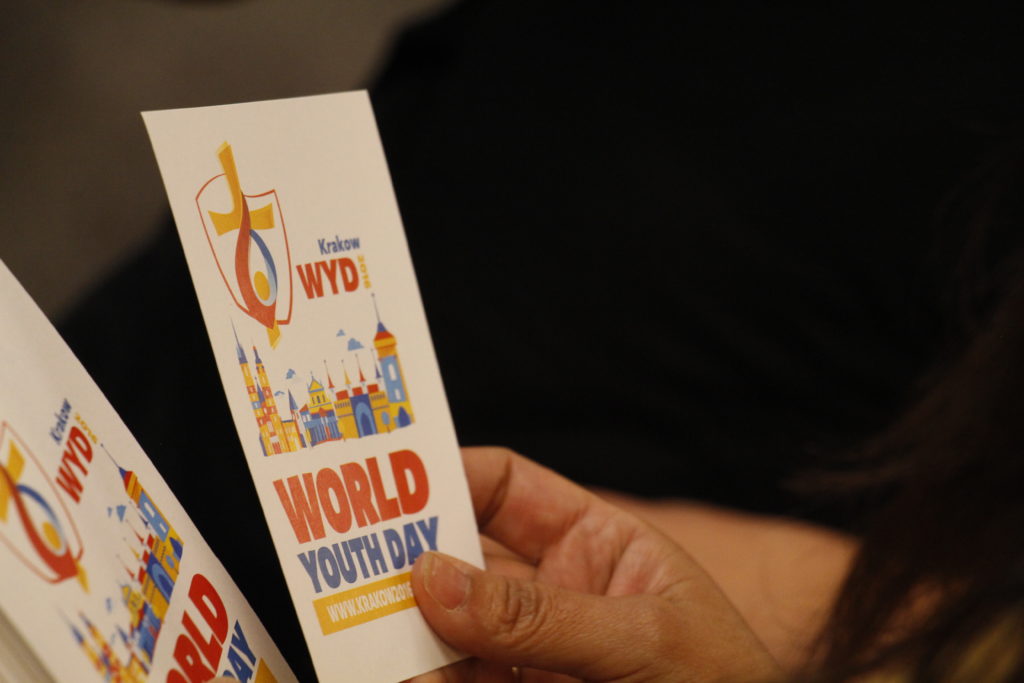
An unidentified person hands out reminders of the official website for World Youth Day #Krakow2016 to pilgrims at St. Andrew the Apostle in Chandler. The global gathering of Catholic teenagers and young adults is July 25-31 in Krakow, Poland.

[quote_box_right]

Pray for the #PhxPilgrims
  • Bourgade Catholic High School
  • Holy Trinity Newman Center in Flagstaff
  • Our God Spot Valleywide young adult ministry
  • St. Andrew the Apostle in Chandler
  • St. Anne Parish in Gilbert
  • Multi-parish group coordinated through St. Luke (and its Polish pastor!)
  • Multi-parish group headed by a layperson
  • Young adults from St. Timothy Parish in Mesa
  • Xavier College Preparatory
  • They might be part of a group above, but there are also pilgrims from Our Lady of Perpetual Help in Scottsdale, St. Gregory, St. Thomas the Apostle and from the Neocatechumenal Way at Blessed Sacrament in Tolleson
  • a 2015 alumna from Notre Dame Preparatory in Scottsdale will finish a service immersion in Poland and then join the thousands of pilgrims

[/quote_box_right]

The countdown til World Youth Day 2016 is officially on. xt3.com, a social media platform out of the Archdiocese of Sydney in Australia, will unlock one screen each day to help teenaged and young adult pilgrims prepare their hearts and minds.

An unidentified person hands out reminders of the official World Youth Day site for #Krakow2016 to pilgrims at St. Andrew the Apostle in Chandler. The global gathering of Catholic teenagers and young adults is July 25-31. (Ambria Hammel/CATHOLIC SUN)
Rob Corwin wraps up the “City of Saints” series at St. Andrew the Apostle in Chandler May 31. The series educated pilgrims and others about patron saints of Poland. (Ambria Hammel/CATHOLIC SUN)

The Diocese of Phoenix, which is sending at least 10 groups of pilgrims, have spent many months preparing for their pilgrimage. There has been fundraisers galore, including a multi-parish benefit concert in December, and teaching nights. At least 14 parishes will reportedly be represented in Poland.

Pilgrims from St. Andrew the Apostle in Chandler wrapped up a City of Saints four-part series May 31. They spent one night each week becoming more familiar with the patron saints of World Youth Day.

Here are some other resources for pilgrims:

Many local pilgrim groups will also go to Auschwitz, Rome or the Holy Land.

Man who survived Holocaust as child prepares WYD participants for Auschwitz


Local missionaries bring Totus Tuus day camps to diocese

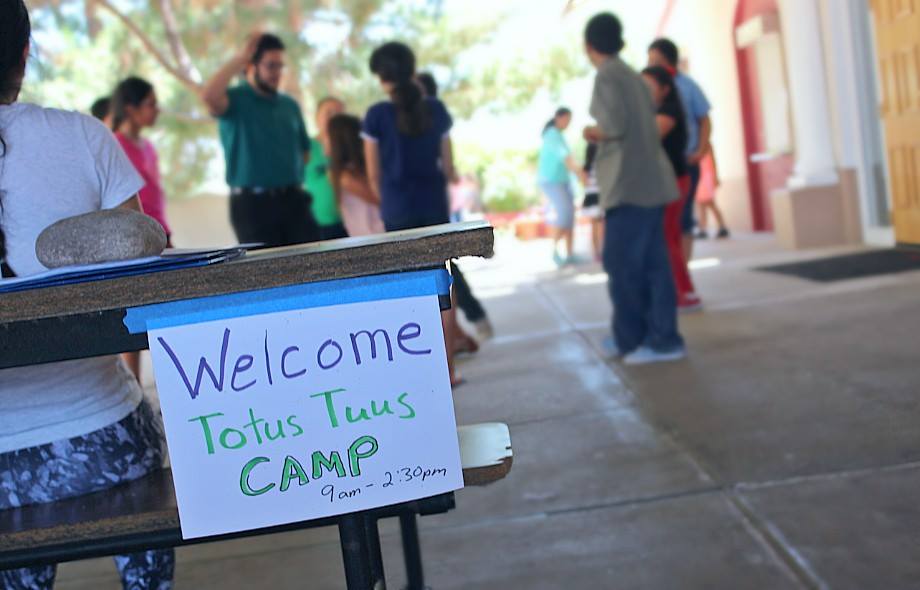
week-long Totus Tuus Camp at Sacred Heart Parish in Phoenix that wrapped up June 4. (photo courtesy of Atri Zen)
 week-long Totus Tuus Camp at Sacred Heart Parish in Phoenix that wrapped up June 4. (photo courtesy of Atri Zen)
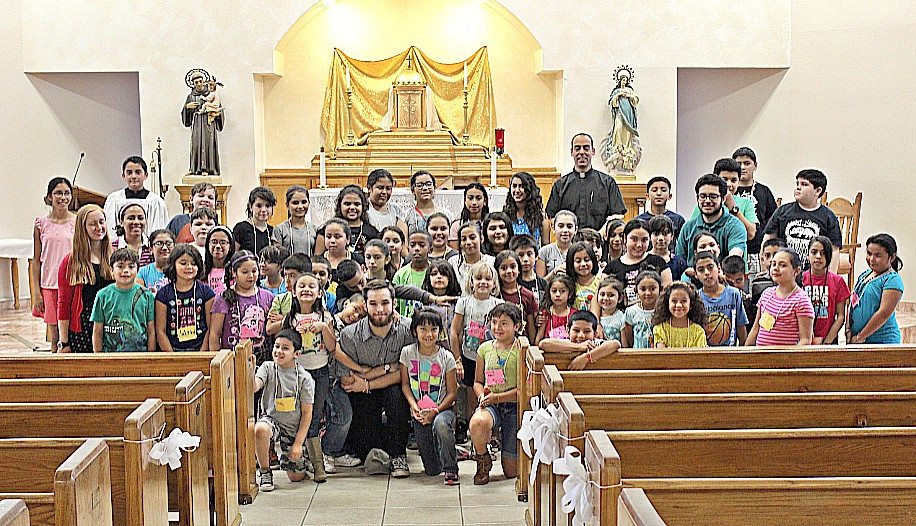
Elementary-aged campers gather outside of Sacred Heart Parish in Phoenix for a week-long Totus Tuus Camp that wrapped up June 4. The campers focused on the sacraments, catechesis and building community. (photo courtesy of Atri Zen)

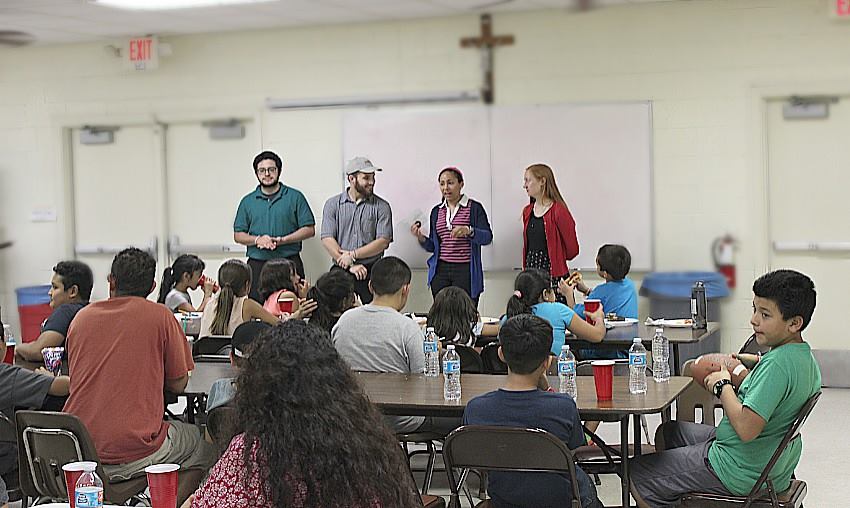
Secure two seminarians, add two young adult missionaries, throw in some 40 to 80 elementary-aged children, Marian devotion, catechesis, the Eucharist and fun. Then simmer.

Five-and-a-half hours later, the children emerge with smiling faces, affirmed in who they are as a child of God and with obvious roots of true friendship both in Christ and in one another. At night, substitute the younger learners for anywhere from 15 to 50 teenagers, simmer for two hours and the results are the same.

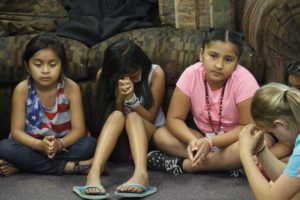
Girls join in closing prayer during "Mary's Mantle," a brief time of prayer and discussion for the girls involved with Totus Tuus at Most Holy Trinity June 17. (Ambria Hammel/CATHOLIC SUN)
Girls join in closing prayer during “Mary’s Mantle,” a brief time of prayer and discussion for the girls involved with Totus Tuus at Most Holy Trinity June 17. The boys had a separate “Man Cave” gathering. (Ambria Hammel/CATHOLIC SUN)

It’s a faith-filled recipe for growth — spiritual, intellectual and personal — that both children and their parents want to try again and again, even beyond the standard five-day format. It’s not a new initiative, but Totus Tuus is finishing its five-week trial run at as many parishes in the Diocese of Phoenix July 1.

Totus Tuus

A day camp program based in scripture and the Catechism and led by trained missionaries. Separate sessions are available for children and teens.

The Diocese of Phoenix finished a trial run this summer. Learn more or becoming a missionary:

• Angela Gaetano, director of parish leadership support
[email protected] or (602) 354-2321

• Totus Tuus in the Diocese of Nashville, Wichita; Archdiocese of Denver, Chicago, Toronto

Local leaders and those in about 30 other dioceses nationwide describe the Catholic youth program as a way to bridge faith formation through the summer months. More importantly, they say its design leaving young adult leaders in charge gives the program a more youthful, energetic flare to which campers can both relate and aspire.

“Our mission first and foremost is to strive for growing in our own holiness with Christ. From that, everything else has to come forth,” Octavia White said about life as a missionary.

White, whose home parish is Most Holy Trinity, jumped on board to help bring Totus Tuus to the diocese  after learning about it through a Catholic group at Vanderbilt University. She spent last summer as a Totus Tuus missionary in Nashville and served as the lead contact in Phoenix this year.

“We’re able to show them our faith is not just for older people and life with Christ is really full of joy,” White said.

week-long Totus Tuus Camp at Sacred Heart Parish in Phoenix that wrapped up June 4. (photo courtesy of Atri Zen)
Phoenix seminarians Miguel Soto and Noah Minton teamed up with Octavia White and Morgan Morano as missionaries leading Totus Tuus camp at five Valley parishes throughout June. (photo courtesy of Atri Zen)

The academic lessons this year focused on prayer and the “Our Father” as well as the Glorious Mysteries. Next summer, following the program’s six-year cycle, would likely focus on the mystery of salvation and a different set of mysteries of the Rosary.

The lessons, introduction to Adoration and silly songs/skits are important, but the missionaries are prepared for a shorter staying power. What’s more memorable, they say, is how the kids were treated.

“What they will remember is, ‘Wow, this person was in love with the Lord and because of that, this person loves me,’” White told The Catholic Sun the night before starting the fourth week of Totus Tuus camp.

That phrase, translated from Latin, means “Totally Yours” and mirrors St. John Paul II’s apostolic motto. The second camp session in the Diocese of Phoenix was at St. Thomas Aquinas Parish in Avondale, steps away from the future St. John Paul II High School. Some 60 children and 20 teens at Phoenix’s Sacred Heart Parish blazed the trail as the first set of campers.

Most Holy Trinity, providentially, was third, followed by St. Henry in Buckeye before finishing at Corpus Christi in Ahwatukee. That’s where Anthony Janus serves as coordinator of youth evangelization. He got the ball rolling to bring Totus Tuus to the area and White connected with him on outreach.

An attempt to run the camp at a parish outside of the Valley didn’t work out in the scheduling this year. Leaders would like to make that a reality next summer and ideally have two missionary teams in order to reach at least 10 parishes.

(Above: a glimpse into Totus Tuus in Chicago)

“It’s really beautiful because we don’t just talk about Christ… but we also bring them to this direct encounter with God” through Adoration, Reconciliation and the Mass, White said.

The children and the teens have responded favorably. They were still during Adoration and the group at St. Thomas Aquinas was genuinely disappointed that Mass wasn’t available one day due to the ordination rehearsal.

Pedro Ramirez, a father of three at Most Holy Trinity, enrolled all three of his children ranging in age from 4 to 8 years old. Totus Tuus is geared toward first-graders and older, but leaders were able to work with some younger children and families for the trial year. His kids eagerly told them about their camp experience each day or tried to sing a song they learned.

Ramirez said he registered his kids so they’d avoid long periods of screen time at home. At the same time, they’re learning about the Church, he said. The only down side: camp was just one week long.

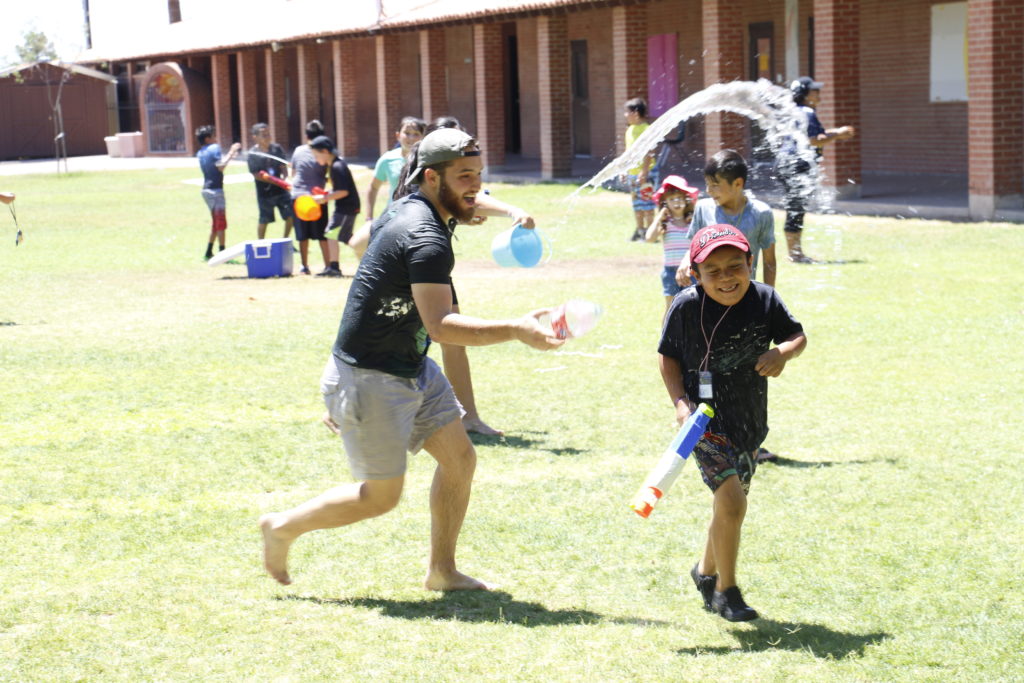
Noah Minton, a seminarian for the Diocese of Phoenix, participates in a Water Day that concluded the Totus Tuus Camp at Most Holy Trinity June 17. (Ambria Hammel/CATHOLIC SUN)

Ten-year-old Rachel Ciarametaro enjoyed learning about girl saints and stories Jesus told His disciples. Short sessions brought the girls together for “Mary’s Mantle” and the boys together in an undisclosed “Man Cave.”

Nine-year-old Angie Lopez Rico summed up Totus Tuus as “Fun, fun fun!” She especially enjoyed the ice breaker skits.

With every simple encounter, Noah Minton hoped to show his campers how to live out God’s joy, love and mercy and inspire them to live in a similar manner. Minton was one of two seminarians serving as missionaries.

Don’t want to wait until next summer?

Explore some free online Catholic summer camps

Catholic Answers hosts Summer Talk Series

Screen Shot 2016-06-24 at 1.15.19 PMTrent Horn, who once worked for the Diocese of Phoenix, is temporarily returning to the Valley to present Catholic Answers’ Summer Talk Series. Each Wednesday or Thursday night session will be held at one of five Phoenix-area parishes.

Horn holds a graduate degree in theology, is pursuing one in philosophy and has served as a staff apologist for Catholic Answers since 2011. He co-hosts “Hearts and Minds,” a weekly radio program that discusses timely issues from an eternal perspective.

He is also the author of three books. Horn’s upcoming talks cover a variety of topics from marriage and same-sex unions to Jesus to apologetics to atheism and pro-life. Each talk begins at 7 p.m.

At Our Lady of Perpetual Help in Scottsdale

At St. Andrew the Apostle in Chandler

At St. Timothy in Mesa

At Corpus Christi

At St. Joan of Arc

Info: [email protected] or (619) 387-7200

Brophy teacher ordained, sent to Rome for further study

Fr. Mark Valadao, SJ

Many young men claim their time at Brophy College Preparatory was a formative one. The same goes for a newly ordained priest.

Mark Valadao was among 20 men ordained a priest for the Society of Jesuits in a series of Masses held throughout the U.S. and Canada May 26-June 11. Fr. Valadao was among seven men from the California and Oregon provinces ordained as Jesuit priests at St. Aloysius Gonzaga Parish in Spokane June 11 — the same day four men were ordained in the Diocese of Phoenix.

Recent Brophy alumni knew him as a seminarian when the freshly-vested priest spent the 2011-12 and 2012-13 school years at the Jesuit high school. Fr. Valadao taught Scripture, sacraments and philosophy. Outside of academics, Fr. Valadao moderated the Broncos for Life club, coached junior varsity soccer and journeyed with pilgrims to World Youth Day in Brazil.

Fr. Valadao, 36, is the only child of Portuguese immigrants, according to his Jesuit bio. He is headed to Rome to work toward a Licentiate in Sacred Scripture. That will be on top of his bachelor’s degree in foreign service and master’s degree in international relations the priest earned before he entered the seminary.

Although a rookie priest, Fr. Valadao has already conquered tough ministry including outreach at San Quentin State Prison while serving as a transitional deacon.

Related

New Jesuit priests enjoy bonds of brotherhood (National Catholic Register)