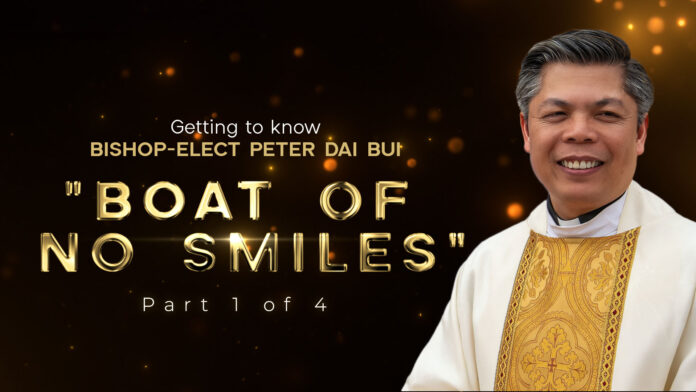
“Boat of No Smiles”; Getting to know Bishop-elect Peter Dai Bui, Part 1 of 4
Christ in our Neighborhood: 6th Sunday in Ordinary Time (Cycle A)
NOTE: Christ in Our Neighborhood is a parish-based program consisting of small Christian communities that gather in the home weekly to prayerfully discuss the upcoming Sunday Mass readings. It’s easy to form a community and you can find out more by visiting the Diocese of Phoenix website: https://dphx.org/Christ-in-our-neighborhood.
This coming Sunday, we celebrate the Sixth Sunday in Ordinary Time. The Christ in Our Neighborhood commentary asks us: What more does God expect of you beyond merely following His commandments?
As the commentary for this week’s Gospel reminds us, “If we live only by the letter of the law, we can get by through life without a loving relationship. God expects more!”
Being a disciple of our Lord Jesus Christ means so much more than checking a box. It means surrendering our hearts and wills to Him and trusting that He has something good in mind for us, even when it doesn’t feel like it or the evidence we see doesn’t seem to support that. God in His loving providence, has a plan to use our difficulties, disappointments and heartaches for His mysterious purposes.
To completely surrender to this Providence and to trust in God brings us freedom of soul and peace of mind.
Rather than doing the bare minimum that is required of us, let us try this week to open ourselves to a deeper, more loving relationship with God.
If you haven’t joined a Christ in Our Neighborhood small group yet, perhaps you are being called to start one yourself. Check out our website today to find out more: dphx.org/Christ-in-our-neighborhood.
To sign up for our weekly Christ in Our Neighborhood newsletter that has everything you need for your next meeting, visit: https://phoenixdiocese.flocknote.com/CION
Christ in our Neighborhood: Fifth Sunday in Ordinary Time: Cycle A
NOTE: Christ in Our Neighborhood is a parish-based program consisting of small Christian communities that gather in the home weekly to prayerfully discuss the upcoming Sunday Mass readings. It’s easy to form a community and you can find out more by visiting the Diocese of Phoenix website: https://dphx.org/Christ-in-our-neighborhood.
This coming Sunday, we celebrate the Fifth Sunday in Ordinary Time. The Christ in Our Neighborhood commentary asks us: How are you a light for the world?
In this Sunday’s Gospel, we’ll hear about how Jesus calls us to be the salt of the Earth and light to the world. What exactly did He mean by that?
Salt has been used for centuries as a way to preserve food and prevent decay. Salt also gives flavor to food. In the same way, our Christian faith is meant to strengthen and enliven the faith of those around us by bringing the hope, joy and love of God into everyday life.
We’re also called to bring the light of Christ into every encounter we have with others, sharing His hope and peace. How will you accomplish that this week? How will you bring the light of Christ to the world? Ask Jesus to show you the way and lean on Him for your strength.
If you haven’t joined a Christ in Our Neighborhood small group yet, perhaps you are being called to start one yourself. Check out our website today to find out more: dphx.org/Christ-in-our-neighborhood.
Watch the video of the weekly podcast segment featuring Christ in Our Neighborhood with Bishop Dolan by clicking HERE.
To sign up for our weekly Christ in Our Neighborhood newsletter that has everything you need for your next meeting, visit: https://phoenixdiocese.flocknote.com/CION
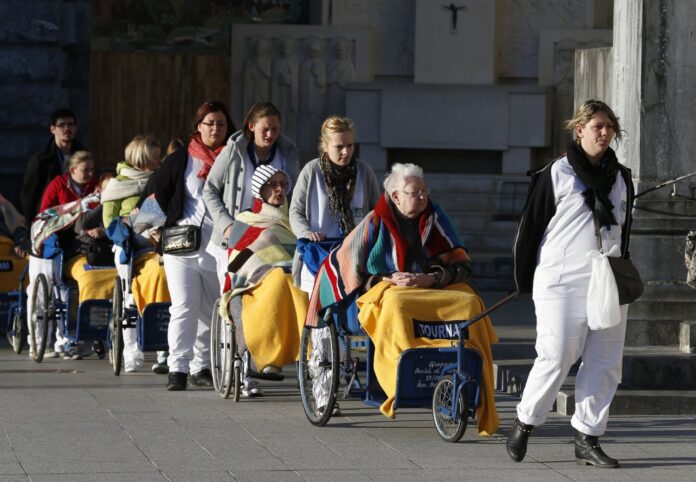
Everyone can be a good Samaritan, pope says in message for world’s sick

By Carol Glatz
VATICAN CITY (CNS) — People of faith and goodwill need to take time to acknowledge the needs and suffering of those around them and be moved by love and compassion to offer others concrete help, Pope Leo XIV said.
“To love one’s neighbor — whom Jesus identifies as anyone who has need of us — is within everyone’s reach,” he wrote in his message for the 34th World Day of the Sick, observed by the church Feb. 11, the feast of Our Lady of Lourdes.
“The pain that moves us to compassion is not the pain of a stranger; it is the pain of a member of our own body, to whom Christ, our head, commands us attend, for the good of all,” the pope wrote in the message released Jan. 20.
The theme chosen for the 2026 observance is inspired by the parable of the good Samaritan and Pope Francis’ encyclical on human fraternity, “Fratelli Tutti.”
Titled, “The compassion of the Samaritan: Loving by bearing the pain of the other,” the message focuses on the importance of: encountering and listening to others; being moved by compassion; and loving God through concrete action in solidarity with others.
While traditionally addressed to Catholic health care and pastoral workers, this year’s message is offered to everyone, Cardinal Michael Czerny, prefect of the Dicastery for Promoting Integral Human Development, said at a Vatican news conference to present the message Jan. 20.
The message is offered to everyone because “we’re one body, one humanity of brothers and sisters, and when someone’s sick and suffering, all the other categories — which tend to divide — fade away into insignificance,” the cardinal said.
Asked to comment about how people in the United States should best respond when witnessing violence toward immigrants, Cardinal Czerny said, “I don’t know what to say about the larger picture,” but he said it would be helpful to focus on “the underview” or what should or is happening on the ground.
“There are many situations in which the individual Christian, the individual citizen, can extend their hand or lend their support. And that’s extremely important,” he said. “I suppose we could all hope that those many gestures, many Samaritan gestures, can also translate into better politics.”
The Catholic “struggle for justice,” he told Catholic News Service, gets “its real depth and its real meaning” from daily lived experience helping real people.
Advocacy work, for example, should “evolve out of real experience,” he said. “When, let’s say, your visits to the sick reveal, for example, the injustice of inaccessibility to health care, well then you take it up as an issue, but on the basis of your lived — and indeed pastoral and Christian — experience.”
The good Samaritan shows that “we are all in a position to respond” to anyone in need, he said. “And the mystery, which you can discover whether you are a Christian or not, is that by responding, in a sense, your own suffering is also addressed.”
“Since the major suffering for so many today, young and not so young, is loneliness and hopelessness, by worrying about it less and reaching out to someone who needs you, you will discover that there’s more life than you imagined,” he added.
In his message, Pope Leo said, “To serve one’s neighbor is to love God through deeds.”
In fact, the “true meaning of loving ourselves,” he wrote, involves “setting aside any attempt to base our self-esteem or sense of dignity on worldly stereotypes — such as success, career, status or family background — and recovering our proper place before God and neighbor.”
“I genuinely hope that our Christian lifestyle will always reflect this fraternal, ‘Samaritan’ spirit — one that is welcoming, courageous, committed and supportive, rooted in our union with God and our faith in Jesus Christ,” Pope Leo wrote.
“Enkindled by this divine love, we will surely be able to give of ourselves for the good of all who suffer, especially our brothers and sisters who are sick, elderly or afflicted,” he wrote.
©2026 Catholic News Service/United States Conference of Catholic Bishops
Christ in Our Neighborhood: Third Sunday of Ordinary Time (Cycle A)
NOTE: Christ in Our Neighborhood is a parish-based program consisting of small Christian communities that gather in the home weekly to prayerfully discuss the upcoming Sunday Mass readings. It’s easy to form a community and you can find out more by visiting the Diocese of Phoenix website: https://dphx.org/Christ-in-our-neighborhood.
This coming Sunday, we celebrate the Second Sunday in Ordinary Time. The Christ in Our Neighborhood commentary asks us: Is there an area of my life where Jesus is calling me to follow Him in a more radical way?
I love this Gospel because it takes us right to the beginning of Jesus’ ministry where He’s gathering His followers as He calls them by name, right where they are.
Jesus is always calling us to follow Him more faithfully by turning away from sin and turning toward His mercy. For those who are trapped in fear and shame, Jesus offers liberation and healing.
The deep wounds, the ones we each carry, are areas of our life that Jesus longs to enter into with us. Just as when we visit the doctor, we have to allow him or her to see our broken body in order to offer the correct remedy, Jesus wants us to open our hearts and our minds to the power of His unfathomable love, the remedy of our souls. We encounter that divine love in the sacraments, particularly in the Eucharist.
In His mercy, Christ also established the sacrament of reconciliation as a means of healing from the wounds caused by sin. With Lent less than a month away, it’s a good time to think about following Jesus in a more radical way. The sacraments offer a promising starting point for that journey.
If you haven’t joined a Christ in Our Neighborhood small group yet, perhaps you are being called to start one yourself. Check out our website today to find out more: dphx.org/Christ-in-our-neighborhood.
Watch the video of the weekly podcast segment featuring Christ in Our Neighborhood with Bishop Dolan by clicking HERE.
To sign up for our weekly Christ in Our Neighborhood newsletter that has everything you need for your next meeting, visit: https://phoenixdiocese.flocknote.com/CION
Cardinal Gregory calls faithful to beloved community
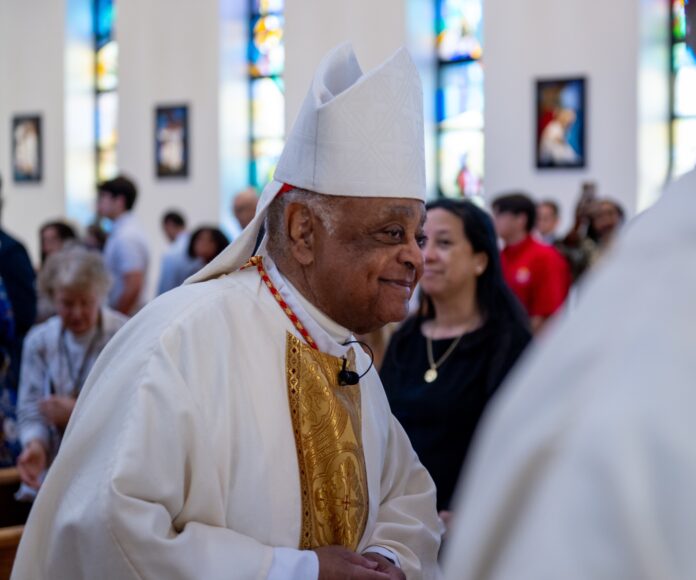
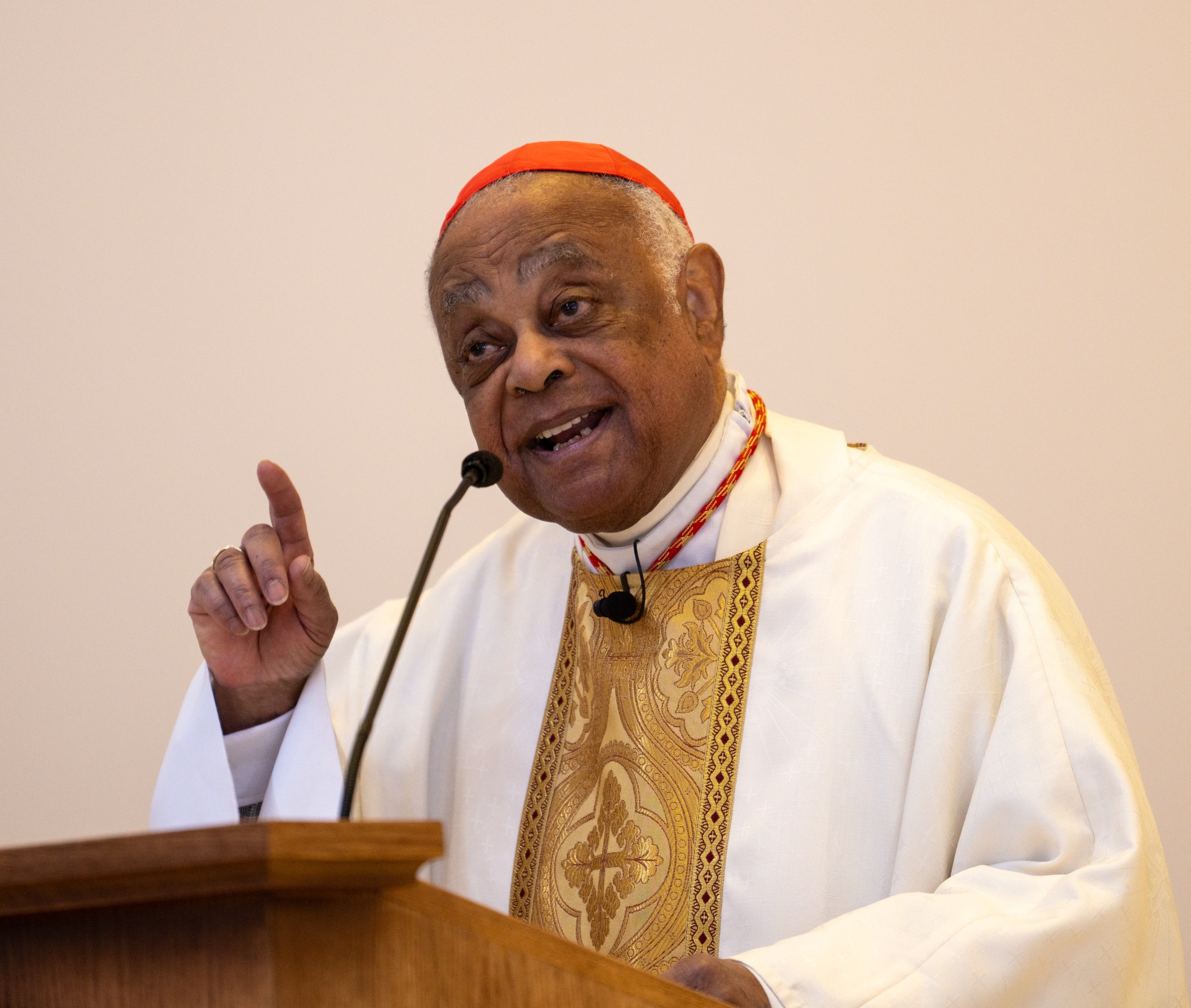
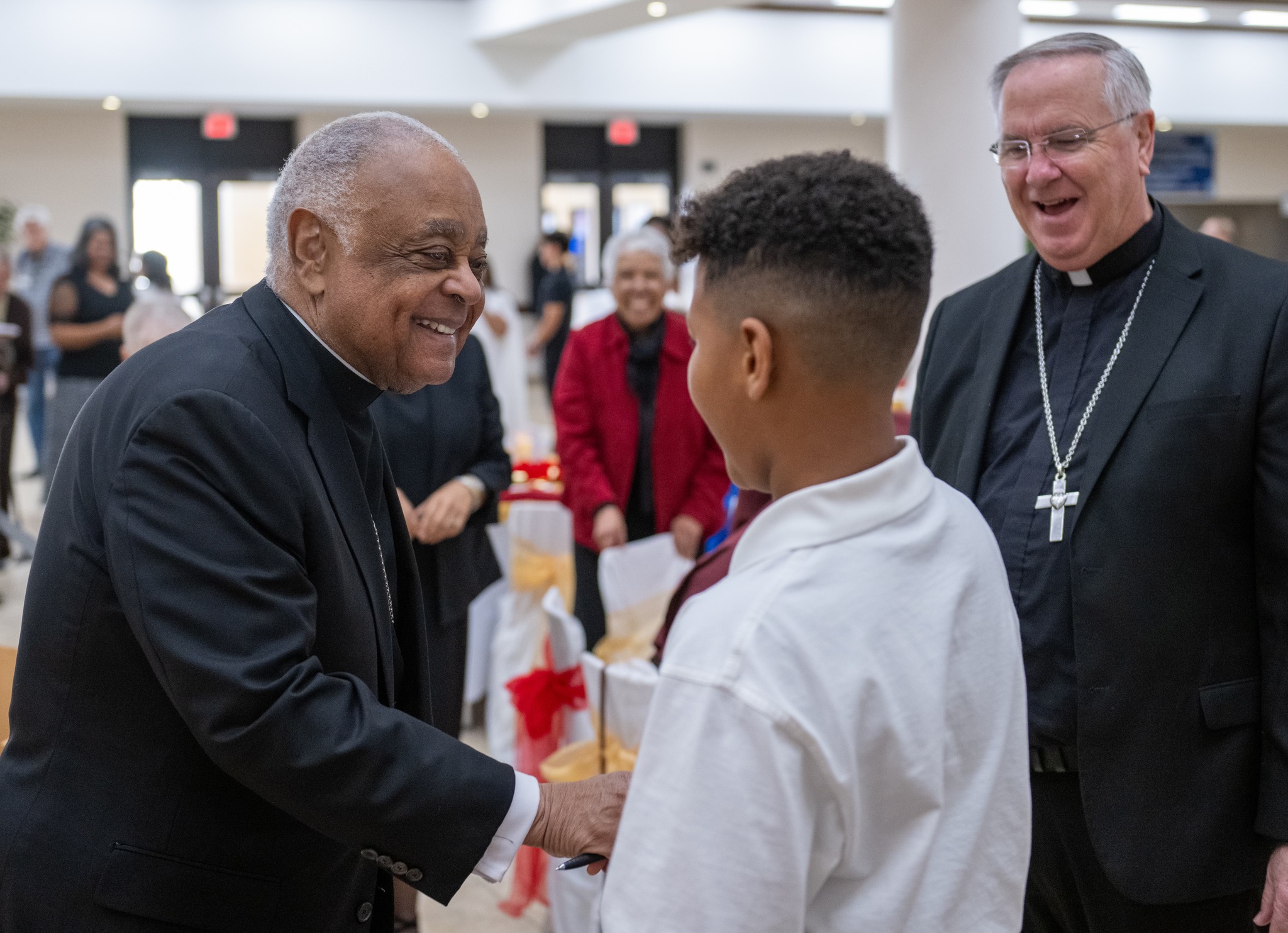
The Rev. Dr. Martin Luther King, Jr., reminded us that there is no “faking our life in Christ,” said Cardinal Wilton D. Gregory, archbishop emeritus of Washington, D.C., at the annual diocesan Mass honoring the slain Civil Rights leader Jan. 17.
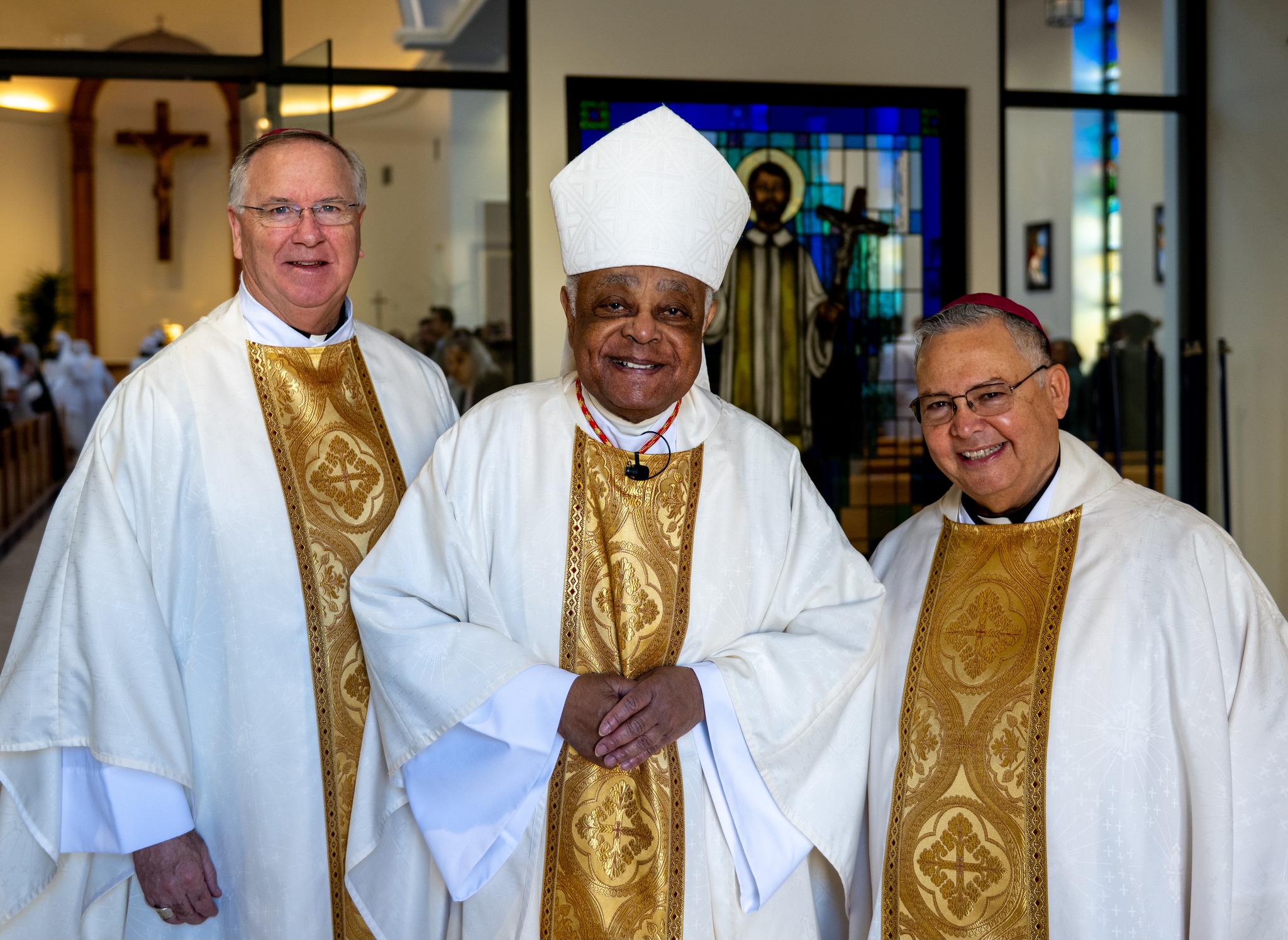
Cardinal Gregory, the nation’s first black cardinal and the Church’s first African American cardinal, served as the guest homilist at the annual Diocese of Phoenix Rev. Dr. Martin Luther King, Jr., Mass at Xavier College Preparatory Catholic High School’s Chapel of Our Lady in Phoenix. He was joined by Bishop John Dolan and Auxiliary Bishop Eduardo Nevares.
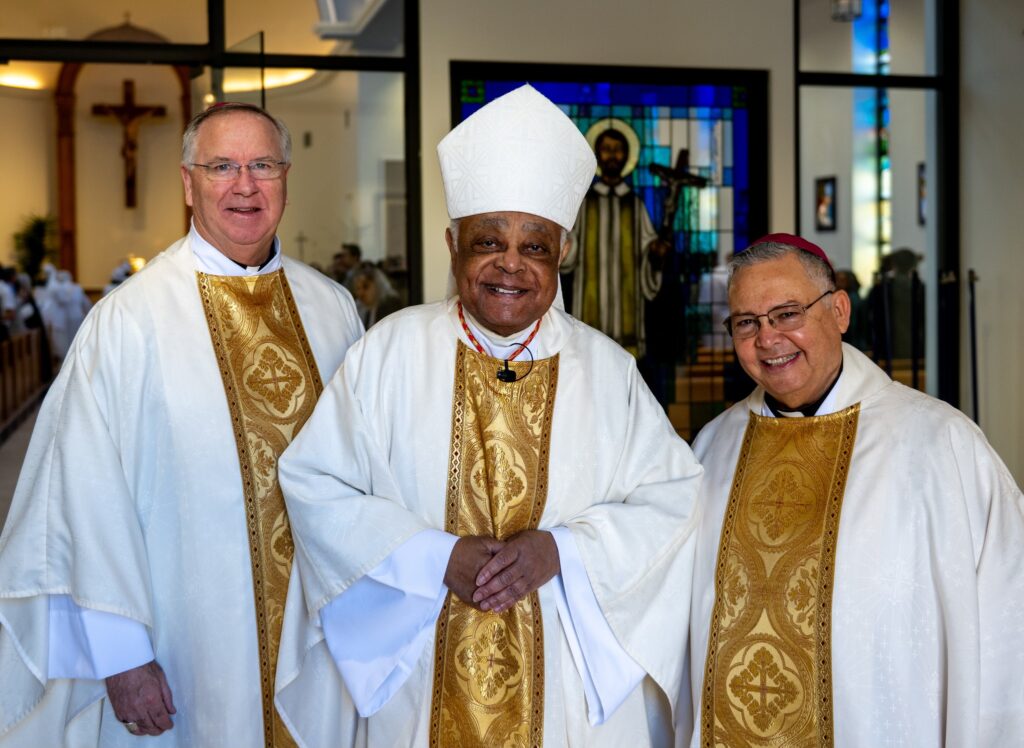
Call to heroism
Reflecting on the day’s Gospel passage taken from the parable of the good Samaritan, Cardinal Gregory described the titular Samaritan as an “unlikely hero” that would not have been expected to help a Jewish man, connecting his story to those of African American heroes.
“African American heroes have an important lesson to offer all Americans, because they exhibit a determination and a moral integrity that enriches our nation and perfects the human spirit,” Cardinal Gregory said.
“The secret to human greatness and to spiritual excellence is not to be found in marketing of an individual but in having a person live up to the highest spiritual qualities within himself or herself, living proudly according to the ‘content of their character,’” he added, referencing Rev. King’s 1963 “I Have a Dream” speech.
The parable doesn’t simply offer guidelines or suggested life patterns for Christian heroes, he said, but a way of life for all.
“What is important for all of us during these days dedicated to the memory of Dr. Martin Luther King, Jr., is to discover that he — along with all the men and women who joined with him in the Civil Rights struggle — realized their potential in the crucible of discrimination,” said the cardinal. “They achieved greatness when many people thought they were not worthy of human respect or dignity. That is the way to greatness in any society and among all people.”
Lifting every voice
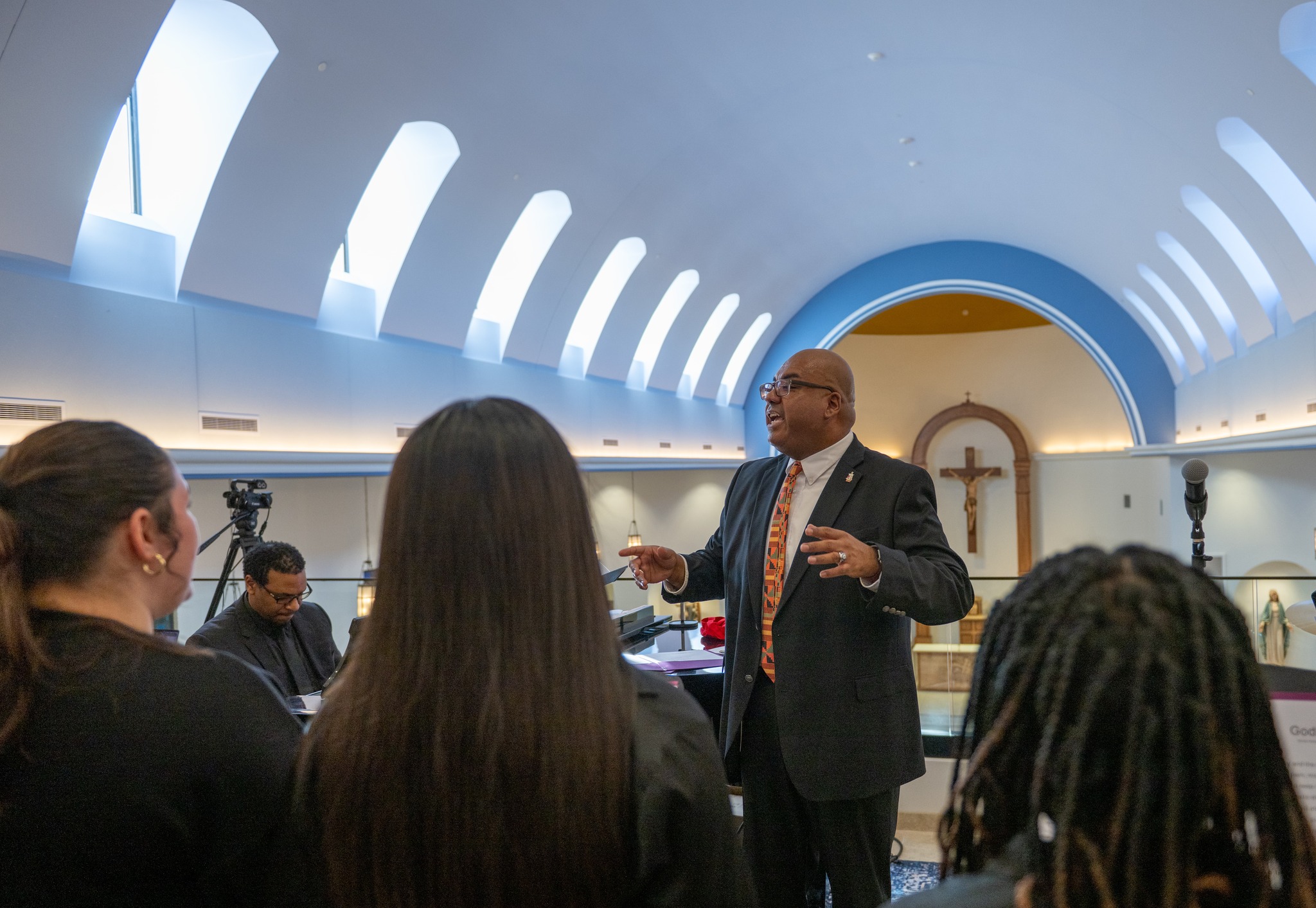
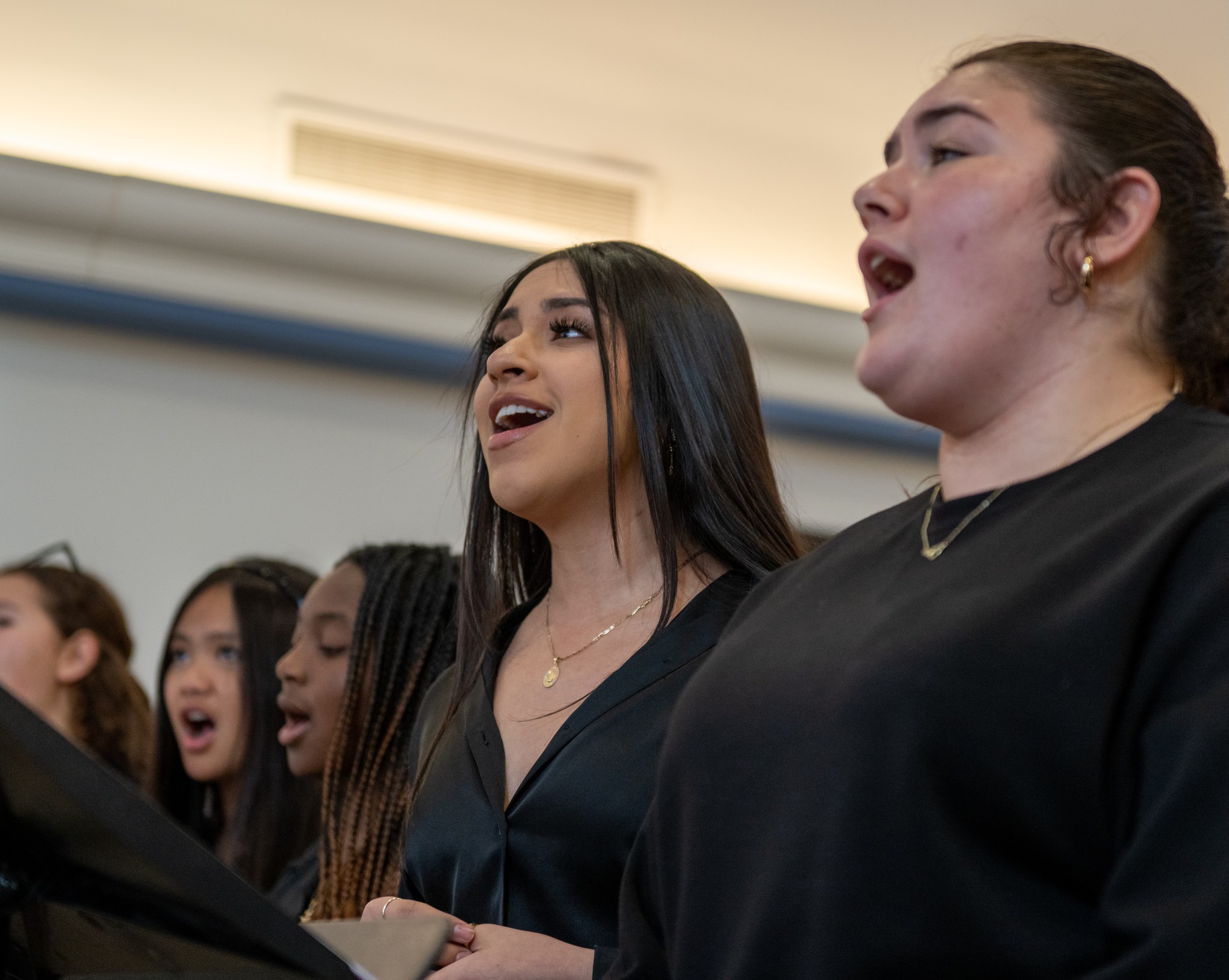
During the liturgy, students from Xavier and the adjacent Brophy College Preparatory Jesuit Catholic High School led the congregation in singing as members of the diocese’s new Imani Choir. The name comes from the Swahili word for “faith,” Diocese of Phoenix Assistant Superintendent of Schools Dr. Anthony Garibay said.
“We wanted the name to represent what this choir is about, and that is really deepening one’s faith and one’s relationship with God through the ministry of music,” Garibay said. “I’m always grounding them in prayer and reminding them that it’s not to glorify the choir but we’re here to praise God, and I think they did that today.”
Garibay co-leads the choir with music teacher and pianist Dr. Cory Dugar from Bourgade Catholic High School in Phoenix. The pair had wanted to give interested high schoolers an opportunity to widen their experiences of liturgical music through Gospel music.
“The only Gospel Mass experience would be at St. Josephine Bakhita [Mission Parish in Phoenix], so this is something that most of our students won’t get at their parishes, and they don’t get that at the school level,” he said. “We wanted to make sure that we had something — a ministry — that was representative of our high schools that was inclusive of all students who really wanted to do this.”
As the faithful approached the sanctuary for Holy Communion, Xavier senior Niyellie Vital sang the words: “I love You, Jesus. I worship and adore You. Just want to tell You — Lord, I love You more than anything.”
Vital, who attends St. Vincent de Paul Parish in Phoenix, said she initially felt nervous to sing the solo during the liturgy before the rest of the Imani Choir joined her.
“Once I just started singing, my fingertips got all cold, and I just felt the Holy Spirit just going through me,” she said.
King’s global impact
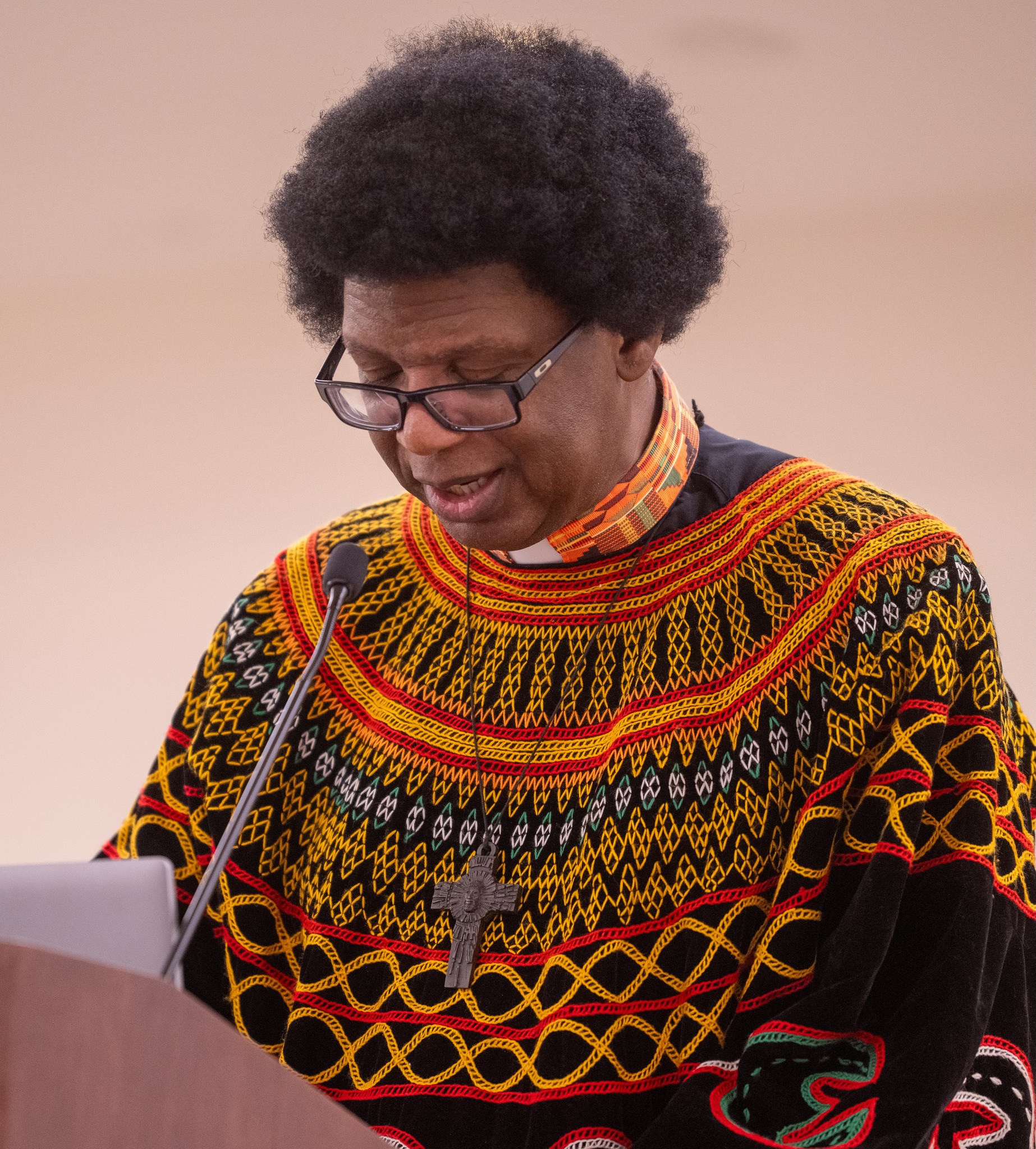
Wearing traditional African dresses featuring images of Jesus and Our Lady, native Cameroonians Kinner Atekwane and Lilian Laimo also wanted to honor Rev. King.
“We have learned how to honor and celebrate together — no discrimination — and celebrate people who have gone to great miles to fight for unity together,” said Atekwane, a parishioner at St. Thomas Aquinas Parish in Avondale, Ariz.
Both women attended the annual celebration for the first time and are members of the Catholic Women’s Association, a Cameroonian organization that’s being expanded to the U.S.
Courageous sacrifice
Following the Mass, attendees gathered in Xavier’s Founders Hall for a brunch and awards ceremony honoring Catholic high school students’ efforts to build what Rev. King referred to as “Beloved Community” — “a community in which everyone is cared for, absent of poverty, hunger and hate.”
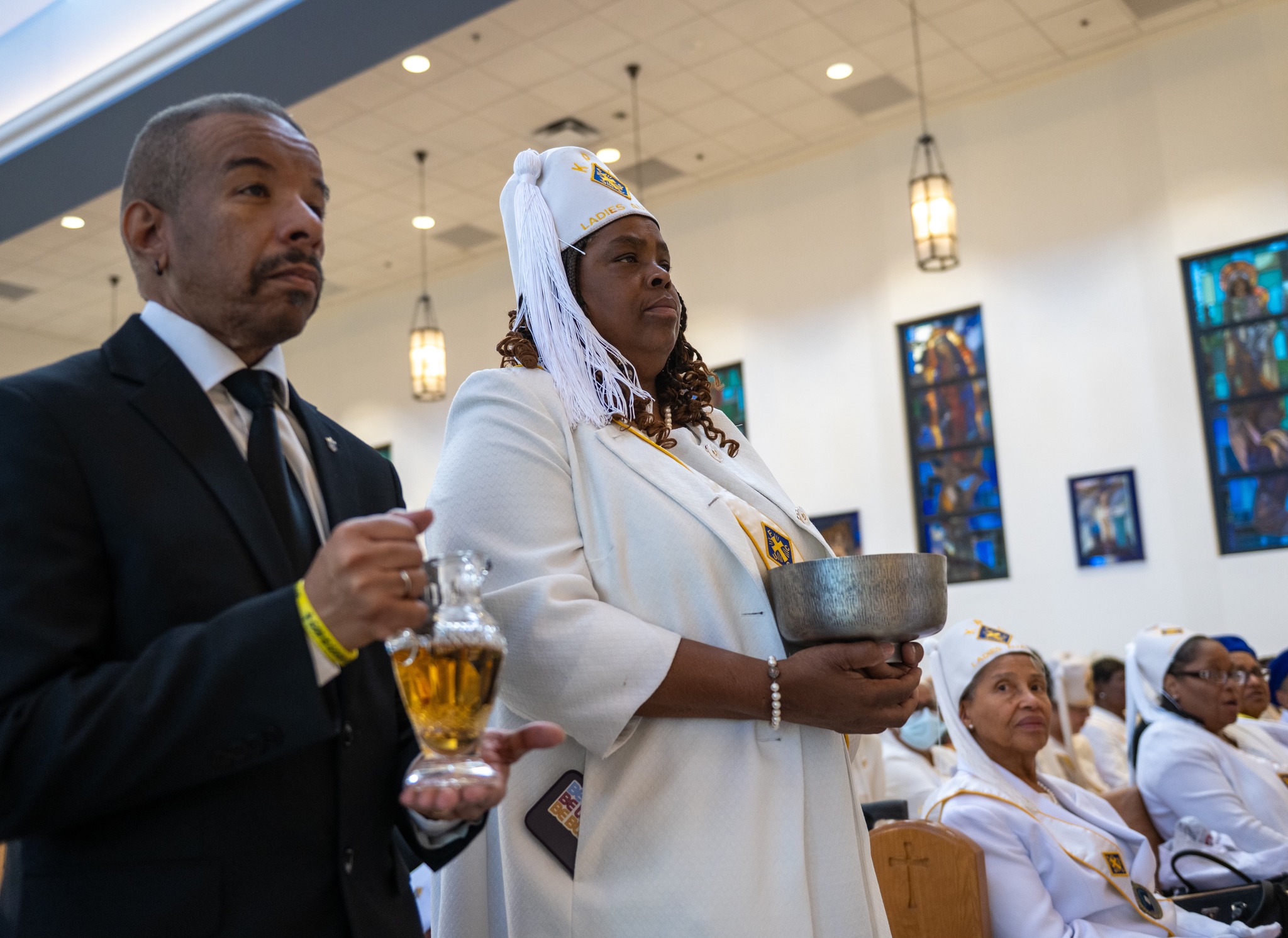
In his keynote address, Knights of Peter Claver Supreme Knight Dr. Christopher Pichon described beloved community as not simply a method of protest but a way of life.
“The beloved community above all is about embracing diversity. Dr. King understood that our differences do not divide us; rather, they can serve as the threads that weave us together in a stronger, more resilient whole,” Pichon said. “In this beloved community, there’s a space for our voices, for our backgrounds and for our dreams. It is a space where we do not simply coexist, but we uplift, we learn and we grow together.”
Pichon said despite Rev. King’s human flaws, he served as a beacon of hope and champion of justice. He recalled his parents saying how the Civil Rights leader often spoke of sacrifice.
“I would always hear parents and adults say, ‘Dr. King didn’t march for himself, he marched for you and me.’ Those words stayed with me, and it reminded me that every opportunity that I have today was paid by someone else’s courage,” Pichon said. “Who am I not to exhibit that same type of courage? Dr. King’s life continues to be celebrated because of the profound impact and work that he displayed.”
He discussed the work of the Knights and Ladies of Peter Claver, noting the five pillars of social justice on which the organization focuses: eliminating racism, domestic violence, human trafficking, criminal justice reform and the dignity of black lives.
“Do not leave this room unchanged. Commit or recommit to living the life of Dr. King’s vision, not tomorrow but today,” said Pichon, challenging his audience. “His dream of the beloved community remains a bold commitment. It still demands that we embrace nonviolence, that we become stronger advocates for social justice.”
Building beloved community
During the summer, Brophy junior Gavin Reddy volunteered at the Native Health Community Center and noticed health disparities among the Native Americans in Arizona, particularly the obesity crisis. This led him to establish EMPWR Arizona, which aims to promote healthy food choices while honoring Native food traditions. Reddy’s organization received an award at the brunch.
“That sparked this passion for me where I decided that we need to bring tangible skills back to these communities so that way we can fight the obesity crisis because it comes with education and resource access,” Reddy said. “EMPWR does cooking classes with Native chefs who teach the tangible skills that these students will take home, and then they get produce bags so that way they can carry out healthy eating for the weeks up until the next class.”
The other award recipient, Notre Dame Preparatory Catholic High School in Scottsdale, Ariz., provides a Christmas experience for underprivileged children throughout the Valley. The annual tradition includes 30 tons of snow as the students buddy up with a guest to play games, earn prizes and get a gift from Santa Claus.
“My favorite part of this project we have going on is just I see Christ in all these kids. I just love seeing the smiles and pure joy from all these kids,” said Notre Dame senior Mateo Gigena, a parishioner of Our Lady of Joy in Carefree, Ariz. “It really takes me back from when Christmas was as magical as it was for me, as it is for them.”
Bringing back the message
Carmen Acosta, a senior at Seton Catholic Preparatory High School in Chandler, Ariz., and president of the school’s Pro Life and Diversity clubs, said she wanted to attend a Mass with Cardinal Gregory.
“It was important for me to be here today because of the cardinal being the first African American cardinal of the United States, to be able to be in his presence to celebrate Mass,” she said. “It was a very important piece of history, and I’m very excited that I was given the opportunity to be here.”
Acosta, who is a parishioner at St. Timothy in Mesa, Ariz. also said that Rev. King’s values matter not just for African Americans or people of other colors but for all Americans. Victor Wairimu, a senior at St. Mary Catholic High School in Phoenix echoed the sentiment, saying that his legacy opened doors for people like himself.
“I probably wouldn’t have the same opportunities as I do now,” said Wairimu, a parishioner at St. Mary in Chandler, Ariz. He added that he carries this forward through the school, where he and his classmates are challenged to “always help others.”
Seton Dean of Students Cynthia Kubasak, also a parishioner of St. Mary in Chandler, Ariz., said she hopes students return to their campuses with more courage to stand up for others.
“Our Church reminds us that we can’t just sit back. We need to be active members in our society to speak for the most vulnerable in our society, for the marginalized,” she said. “I hope that the more that they listen and have experiences, the more their courage grows to do what they can do when they hear things that are not just, or language that dehumanizes.”
Putting into practice
Phoenix Vice Mayor Kesha Hodge Washington — the first black woman to hold the position — had attended Catholic schools as a child and appreciated seeing the efforts being done by Catholic school students.
“It is always refreshing to see young people having such a committed spirit to their community and serving and coming up with solutions to problems they see in our community. To me, that’s true leadership,” she said.
The vice mayor noted the importance of growing the beloved community and that the holiday isn’t just for a person but for the ideals [Dr. King] stood for.
“It’s not just about honoring one person, but it’s honoring the ideals and the promise that this country holds,” she said. “Especially with everything that’s going on in this country right now, it holds a greater significance at this time.
“It’s one thing to have a day to celebrate Dr. King but it’s another thing to put into practice every day what he stood for,” said Pastor Rev. Warren Stewart, pastor emeritus for the historic First Institutional Baptist Church in Phoenix, who attended the event Saturday.
Diocesan Director of the Office of Black Catholic Ministry Father Andrew McNair, who also serves as pastor of St. Josephine Bakhita Mission Parish — a personal parish mission serving the Black Catholic community — also emphasized the importance of the beloved community.
“That’s what we’re trying to build — a community where there is respect, where there is love, where there is peace, a community where everybody is thinking about each other, serving each other,” he said.
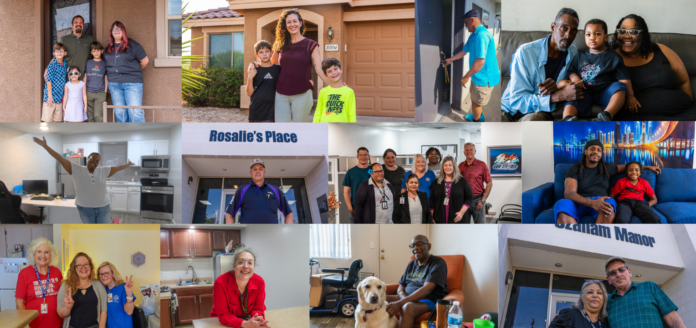
We prevented homelessness for over 39,000 Arizonans in 2025
SVdP surpassed its Housing 2025 goal, more than doubling its impact with a prevention-first approach designed to stop homelessness before it starts.
Thousands of individuals saved from homelessness — that’s the impact of St. Vincent de Paul having achieved its Housing 2025 initiative.
A Bold Goal With a Main Focus: Prevention First
In early 2025, SVdP committed to a bold goal: It would prevent homelessness for 12 people for every person it rehoused who was experiencing homelessness. The 12:1 goal set a prevention-first approach designed to stop homelessness before it starts.
The Results Exceeded the Goal
By the end of 2025, SVdP exceeded its goal by more than doubling its prevention impact
- 39,231 individuals prevented from experiencing homelessness through bill assistance and stabilization services
- 1,173 individuals rehoused into permanent housing after experiencing homelessness
That calculates roughly to a 33:1 ratio, meaning SVdP prevented homelessness for 33 people for every one person rehoused.
Housing 2025 asked us to think bigger — not just about rehousing, but about prevention,” SVdP’s Rob and Melani Walton Endowed CEO Shannon Clancy said. “Homelessness is traumatic, and every person we can keep safely housed is a trauma prevented. At the same time, every person we move into permanent housing is a life stabilized. This milestone recognizes that both approaches matter, and that together, they work.
Addressing a Growing Local Crisis
SVdP came up with the 2025 goal in an effort to reverse an alarming homelessness trend in Maricopa County.
According to a 2024 report from Maricopa Association of Governments, more people entered homelessness than exited. The report showed that for every 10 people rehoused, approximately 19 people entered homelessness (roughly a one to two ratio). SVdP’s goal ratio aimed to more than reverse the Maricopa County trend.
Our Housing 2025 initiative challenged us and our partners to intervene faster, more creatively, and collaborate more deeply,” SVdP’s Chief Program Officer Jessica Berg said.
How SVdP Achieved Their Prevention and Rehousing Goal
SVdP’s success was driven by a combination of prevention and rehousing strategies, including:
- Emergency financial assistance to prevent evictions
- Landlord negotiation and mediation
- Ongoing case management and stabilization services
- Emergency shelters and interim housing communities
- Coordinated permanent housing placements
- Expanded collaboration with funding partners and service providers
- Exploration of non-traditional housing options
Most importantly, SVdP saw how crucial just $2,000 or less is in ending a crisis that could have resulted in a loss of housing.
The Evolution of Housing 2025
SVdP’s Housing 2025 initiative was born out of response to Arizona’s homelessness crisis in October 2022, with the original goal set to rehouse 2,025 people by the year 2025. That goal was achieved a year ahead of schedule, giving SVdP the opportunity to reimagine a goal that prioritized both homelessness prevention as well as response in the final calendar year. Overall, SVdP rehoused a total of 3,758 individuals experiencing homelessness from October 2022 through December 2025.
What Comes Next
While Housing 2025 has reached its formal conclusion, SVdP will continue its homelessness prevention and rehousing work at the increased rate it has proven possible.
Meeting our goal doesn’t mean the need has ended,” Clancy said. “As long as people in our community are at risk of losing their homes or living without one, SVdP will continue to strive to rehouse people and prevent homelessness. The Housing 2025 campaign concluded, but it showed all of us what’s possible when a community comes together to put our love into action, and that spirit and collective action continue.
Church leaders must listen to abuse victims, those who suffer, pope tells cardinals
VATICAN CITY (CNS) — Every level of Church leadership must strengthen and improve its ability to listen to everyone, especially to victims of sexual abuse and those who suffer, Pope Leo XIV said.
The problem of sexual abuse in the Catholic Church “is truly a wound in the life of the Church in many places,” and “we cannot close our eyes or our hearts” to the crisis and its victims, he said at the conclusion of an extraordinary meeting with the world’s cardinals at the Vatican.
“I encourage you to share this with your bishops: often the pain of the victims has been made worse by the fact that they were not welcomed and listened to,” he said Jan. 8. The Vatican published the remarks Jan. 10.
“The abuse itself causes a deep wound that may last a lifetime, but often the scandal in the Church is because the door was closed and the victims were not welcomed and accompanied by authentic pastors,” he said.
And so, he said, “listening is profoundly important” in this and all areas. “Formation in listening, formation in a spirituality of listening” is needed in seminaries, “but also for bishops” and all levels of church leadership, including laypeople working for the Church.
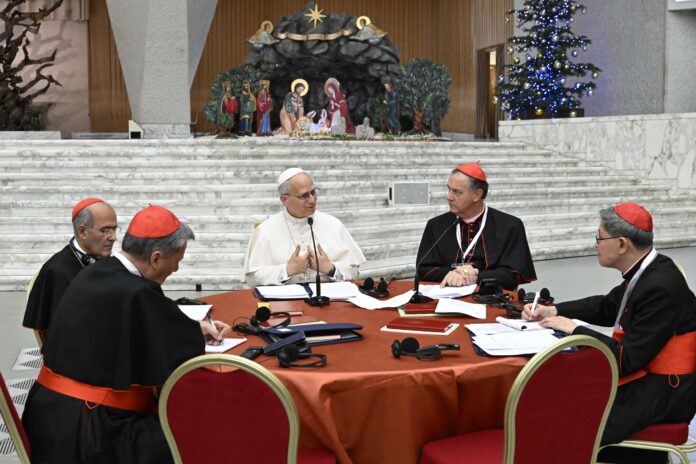
The pope’s remarks came at the conclusion of an extraordinary consistory Jan. 7-8.
The overarching aim of their encounter was to grow in communion and discern together “what the Lord is asking of us for the good of his people.”
After convening the international group of cardinals in Rome, the pope decided to make the gathering an annual event, however, with an additional meeting later this year, it will be a kind of synodal journey for Pope Leo and members of his College of Cardinals.
It marked an approach that vastly expanded on what Pope Francis established after his election in 2013. Wishing for a more decentralized and listening Church, the late pope created a nine-member Council of Cardinals to help and advise him on several critical matters facing the Church, particularly the reform of the Roman Curia, by meeting at least quarterly in Rome.
Pope Leo decided he would be inviting all the world’s cardinals to Rome every year for a few days, Matteo Bruni, director of the Vatican press office, told reporters at a news conference after the consistory ended Jan. 8.
College members will meet with the pope again for at least three days sometime in June, possibly around the feast of Sts. Peter and Paul, June 29, and then the gathering will be held over three to four days once a year in the following years.
The College of Cardinals is made up of 245 cardinals from all over the world. About 170 of them — about 69% — made it to Rome after the pope’s invitation Dec. 12 that they come together again for the first time since the conclave that elected him May 8.
Cardinal Timothy Radcliffe, a Dominican theologian, offered a reflection Jan. 7 to help the cardinals understand their role not just as advisers to the pope, but as much-needed companions along life’s way.
He recalled St. Mark’s account of Jesus making his disciples go out ahead of him by boat, which encountered a “great storm.”
Jesus does not want Peter or any of the disciples to go into the storm alone, he said. “This is our first obedience, to be in the barque of Peter, with his successor, as he faces the storms of our times.”
Some of the storms shaking the Church, he said, include “sexual abuse and ideological division. The Lord commands us to sail out into these storms and face them truthfully, not timidly waiting on the beach. If we do so in this consistory, we shall see him coming to us. If we hide on the beach, we shall not encounter him.”
However, Cardinal Radcliffe said, “If the boat of Peter is filled with disciples who quarrel, we shall be of no use to the Holy Father. If we are at peace with each other in love, even when we disagree, God will indeed be present even when he seems to be absent.”
Pope Leo emphasized the essential element of love in his opening remarks to the cardinals in the Vatican’s Synod Hall Jan. 7.
“To the extent that we love one another as Christ has loved us, we belong to him, we are his community, and he can continue to draw others to himself through us. In fact, only love is credible; only love is trustworthy,” he said.
“Therefore, in order to be a truly missionary Church, one that is capable of witnessing to the attractive power of Christ’s love, we must first of all put into practice his commandment … ‘Just as I have loved you, you also should love one another,'” the pope said. Jesus underlined that it will be by a Christian’s love that the world will know “that you are my disciples.”
The “collegial journey” that they have begun with their first consistory, he said, would be an opportunity to reflect together on two themes of their choice out of the following four themes: the mission of the Church in today’s world, especially as presented in Pope Francis’ “Evangelii Gaudium”; the synod and synodality as an instrument and a style of cooperation; the service of the Holy See, especially to the local Churches; and the liturgy, the source and summit of the Christian life. The cardinals voted with “a large majority” to discuss the first two themes — mission and synodality, Bruni told reporters.
Following a synodal structure, the cardinals were broken into 21 groups, but nine of those groups, made up of cardinals under 80 years old, who were not resident in Rome, were asked to submit reports based on their small group discussions, which followed the Synod on Synodality’s “conversation in the Spirit” method.
“I am here to listen,” Pope Leo told the cardinals before they began their two days of reflection and dialogue.
“We must not arrive at a text, but continue a conversation that will help me in serving the mission of the entire Church,” he said. Specifically, he wanted the groups to look at the next one or two years and consider what “priorities could guide the action of the Holy Father and of the Curia regarding each theme?”
The pope further encouraged the cardinals the next day in his homily during an early morning Mass in St. Peter’s Basilica.
Their task, he said, was to discern what “the Lord is asking of us for the good of his people,” not “to promote personal or group ‘agendas.'”
Through prayer, silence, listening and sharing, he said, “we become a voice for all those whom the Lord has entrusted to our pastoral care in many different parts of the world.”
Speaking to reporters at a news conference after the consistory, Cardinal Luis José Rueda Aparicio, archbishop of Bogotá, Colombia, said the experience “strengthened us” individually and as a group as they got to know each other better.
The pope underlined how important hope was in the life and mission of the church, he said. When Christ is at the center of one’s life, proclaiming his word “fills us and the world with hope.”
Cardinal Stephen Brislin, archbishop of Johannesburg, South Africa, told reporters the vast differences between cardinals — with their different perspectives and needs — proved to be “very enriching” and interesting, and not a source of contention.
Cardinal Pablo Virgilio David, bishop of Kalookan, Philippines, told reporters the synodal format and style of the consistory “was familiar” to those who had taken part in the synodal assemblies in Rome in 2023 and 2024.
When asked if it seemed the pope was going to use their sessions to inform or contribute to any kind of papal document, Cardinal David said, “I don’t know,” but the pope was “taking notes very seriously so he must be up to something.”
Cardinal Brislin said there is no indication that a document was the aim of the gathering, and it was more a concrete response to the cardinals’ request that they meet.
Cardinal Aparicio said by listening to all the world’s cardinals, the pope “listens to the different parts of the world.”
Christ in our Neighborhood (Second Sunday of Ordinary Time: Cycle A)
NOTE: Christ in Our Neighborhood is a parish-based program consisting of small Christian communities that gather in the home weekly to prayerfully discuss the upcoming Sunday Mass readings. It’s easy to form a community and you can find out more by searching “Christ in Our Neighborhood at the Diocese of Phoenix website, dphx.org.
This coming Sunday, we celebrate the Second Sunday in Ordinary Time. The Christ in Our Neighborhood commentary asks us: What are the areas in my life where I need to decrease so that Jesus can increase?
It’s been said that if people don’t worship God, they often end up worshipping themselves. Even for those who are Christian disciples and active Catholics, it can be tempting to want to be in the spotlight or be in control in our various ministries and apostolates.
We only have to look to the example of the humility of the Blessed Virgin Mary who bore the Savior of the world. Notice what she says just before the miracle at the wedding feast in Cana: “Do whatever He tells you.” Mary points the way to her divine Son, not herself. She gives us a model of how to entrust everything to Jesus and let the focus be on Him.
For those who lead ministries, empowering others to lead is one way to take the focus off of ourselves while simultaneously encouraging the growth of the ministry. If you lead a Christ in Our Neighborhood group, that means encouraging others to begin groups of their own.
The Christ in Our Neighborhood movement is growing and expanding thanks to this vision of empowering others to lead.
If you haven’t joined a Christ in Our Neighborhood small group yet, perhaps you are being called to start one yourself. Check out our website today to find out more: dphx.org/Christ-in-our-neighborhood.
Watch the video of the weekly podcast segment featuring Christ in Our Neighborhood with Bishop Dolan by clicking HERE.
To sign up for our weekly Christ in Our Neighborhood newsletter that has everything you need for your next meeting, visit: https://phoenixdiocese.flocknote.com/CION