

Historic Together Let Us Go Forth campaign comes to a close

The Diocese of Phoenix’s historic Together Let Us Go Forth ~ Juntos Sigamos Adelante campaign officially came to a close March 31, after nearly nine years of impact.

The $100 million initiative, which launched in 2017 under the visionary leadership of Bishop Emeritus Thomas Olmsted, emphasized discipleship and evangelization through building, renovation, beatification and development projects across a myriad of parishes, schools and ministries within the nearly 44,000-square-mile diocese.

What started as a diocesan-wide study indicating the need for a new high school in the West Valley, soon turned into a full-fledged campaign, which carried the potential for a much broader impact.

“One of the big things [was] listening to our pastors because they’re the ones who really know what’s happening,” said Bishop Olmsted, who served as the Bishop of Phoenix from 2003-2022. “And then also, we’re blessed to have a good Catholic school board who had a good sense of what’s happening in Catholic education … as we listened to them, we knew this [would become] more than just a Catholic school.”

The listening bore fruit.

As the campaign was developed, eight case components, or areas of focus, came to the forefront: direct parish support, Newman Centers, Catholic school growth and development, Francis Mercy Fund, St. John Paul II Catholic High School, ministry support, seminary support and tuition assistance.

Bishop Olmsted invited all 94 parishes and 24 missions in the diocese to participate — extending a particular invitation to each parishioner and family to discern the sacrificial gift the Lord may be calling them to give. Over the length of the campaign, the $100 million goal was met through the generosity of the faithful and a partnership with the Virginia G. Piper Charitable Trust.

Abundant growth and development 

Every parish and mission opted in, and 35-percent of funds raised went directly back to the parish’s needs, such as the new roof, pews, bathrooms and gathering space at Our Lady of Perpetual Help in Glendale, Ariz., and the improved and expanded Gordon Hall at St. Gregory Parish in Phoenix.

“The pastor, along with their pastoral counsels and financial council members, came up with their own case components,” said Fr. Greg Schlarb, who served as the vicar of stewardship on the project. “And that could be anything from school renovations to new programming for the parishes to beautification of churches. Even bringing together a new building for Eucharistic adoration as seen at Immaculate Heart of Mary [in Phoenix].”

New AC-units, revamped gymnasiums, additional meeting spaces, tuition assistance and even entirely new buildings — like the 76,000 square-foot, three-story structure with a basement at St. Thomas the Apostle in Phoenix, a project that the Together campaign played a foundational role in — were some of the case components seen across many of the diocese’s 31 Catholic preschools, 29 Catholic elementary schools and seven Catholic high schools.

JPII High School students celebrate graduation

Thanks to the Together Let Us Go Forth campaign, among those seven high schools now stands St. John Paul II High School in Avondale, Ariz. — the once-hoped-for new school in the West Valley. Run by the Dominican Sisters of St. Cecelia of Nashville, the high school opened in 2018. The 23 acres of land include an academic building, gymnasium, football stadium, baseball and softball fields, a theater and room for the growth of up to 1,000 students. The facility has also been used for the post activities of large-scale diocesan events including the Installation Mass of Bishop Dolan in August 2023 and the Ordination Mass of Bishop Peter Dai Bui in February 2026.

Flourishing vocations

Another major component of the campaign was support for the diocese’s three Newman Centers — All Saints Catholic Newman Center at Arizona State University in Tempe, Ariz., Holy Spirit Newman Center at Grand Canyon University in Phoenix and Holy Trinity Newman Center at Northern Arizona University in Flagstaff, Ariz. — which collectively support more than 1,175 students annually through faith formation, community events and personal accompaniment.

Bishop Olmsted gives credit to the priests who are leading the Newman Centers, the lay people who support them and the response of the students.

“Our pastors really get new students when they arrive in the fall engaged right away. And as a result of that, we’re getting vocations from there,” said Bishop Olmsted. “Not only to marriage, but also to priesthood. So, [the Newman Centers] are becoming great blessings for the whole diocese but meeting the needs of our college-age students at the same time.”
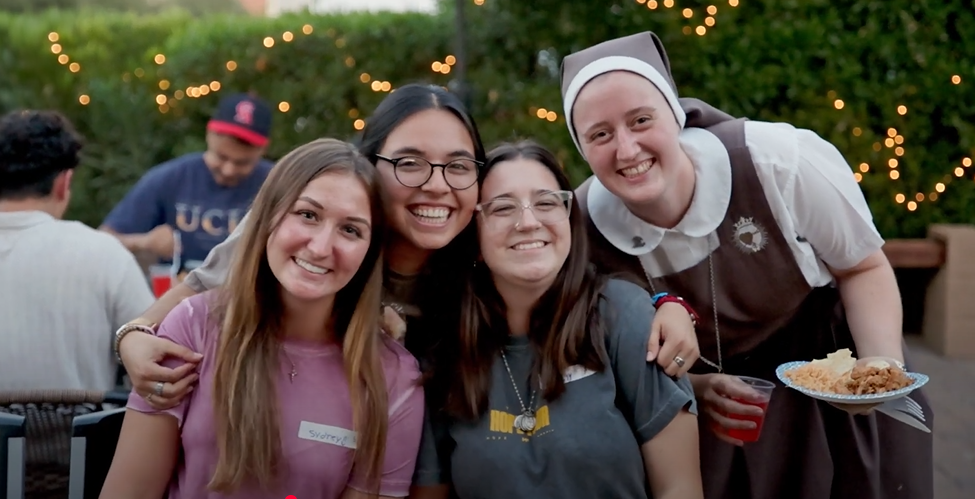
GCU Newman Center students with Sr. Lucy Clare, SCTJM, the assistant director of evangelization at Holy Spirit Newman Center | courtesy of GCU Newman Center

Additional fostered vocations are feeding into the Diocese of Phoenix’s Nazareth Seminary, an unexpected, yet major case component of the Together Let Us Go Forth campaign.

“[The seminary] wasn’t really part of the initial thinking. However, as we began to see it grow, the interest in seminarians was growing as well,” continued Bishop Olmsted.

The vision began with Nazareth House, which was established in 2019 in Phoenix. The local one-to-two-year formation program was developed for young seminarians to begin discernment before they were sent to Colorado, Texas or Michigan to continue their priestly formation. The program expanded into the full-blown Nazareth Seminary, a household model of formation and education that allows full priestly discernment to take place locally.

“Not only is this a great program for our guys as we are moving away from an institutional model to more of a homestyle model — where seminarians and their formators live, pray,
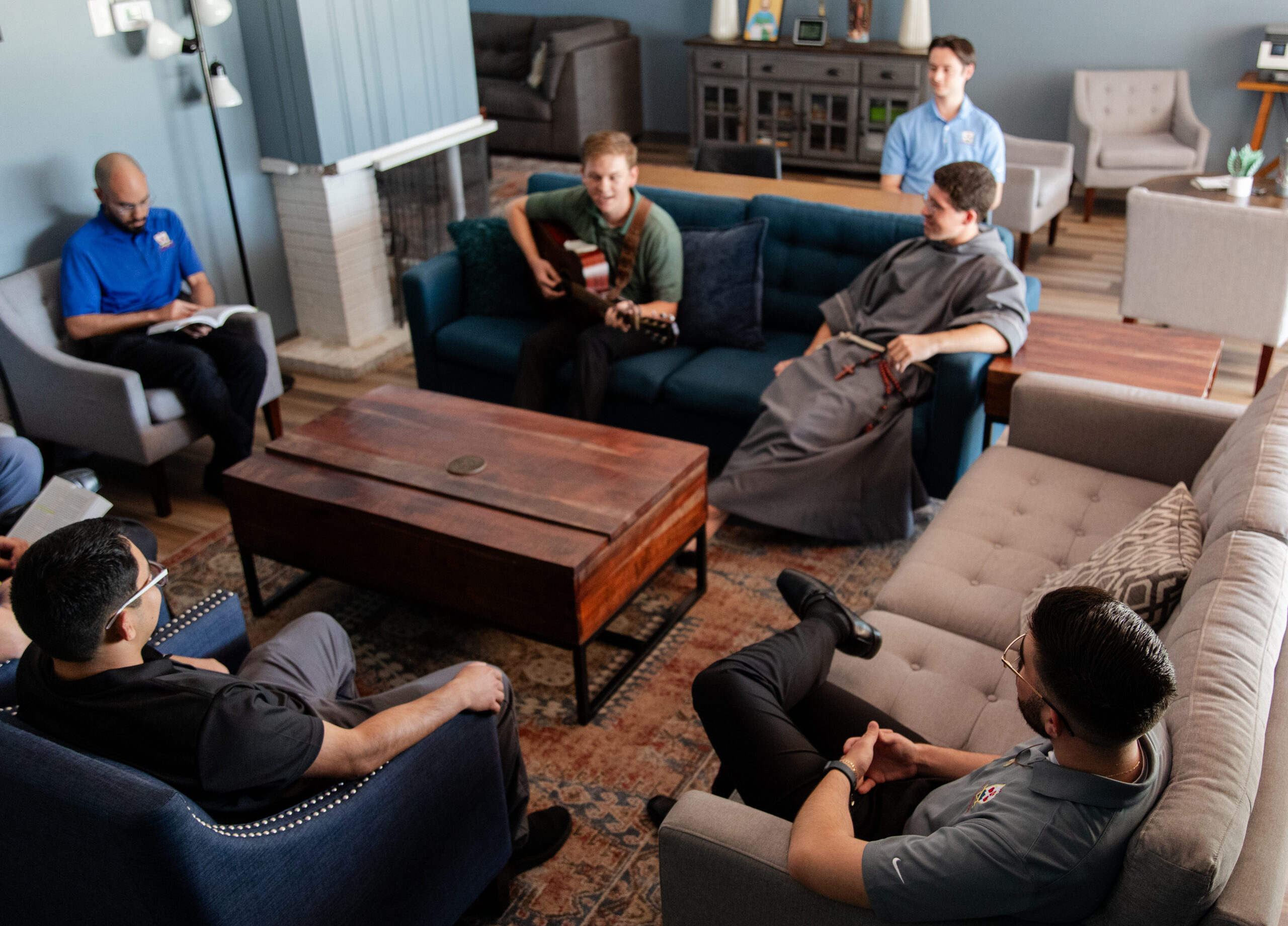
Local seminarians play guitar and hang out together at St. Gregory House in Phoenix | Alyssa Greif

​study, cook and care for the home together,” said Bishop John Dolan, the current Bishop of Phoenix, “but a local seminary also allows our guys to really get to know the cultures, parishes and people they may one day serve as priests.”

The Nazareth Seminary program is still being built, and the final formation house is expected to open in fall 2026. In 2025, there were a record number of 55 seminarians for the Diocese of Phoenix, and in 2030 the priests being ordained will have received their full formation locally.

In giving we receive 

The campaign’s impact expanded even further through the Francis Mercy Fund case component, which focused on supporting substantial, local charities that share God’s love and mercy by serving the poor, the marginalized and the elderly.

Fr. Schlarb said the idea first came about when listening to priests.

“[We heard] the need to, as we always tell kids … ‘spend a little, give a little, save a little.’ And so, it was really important that as we embarked on this campaign, there [was] a charitable arm to it as well,” said Fr. Schlarb.
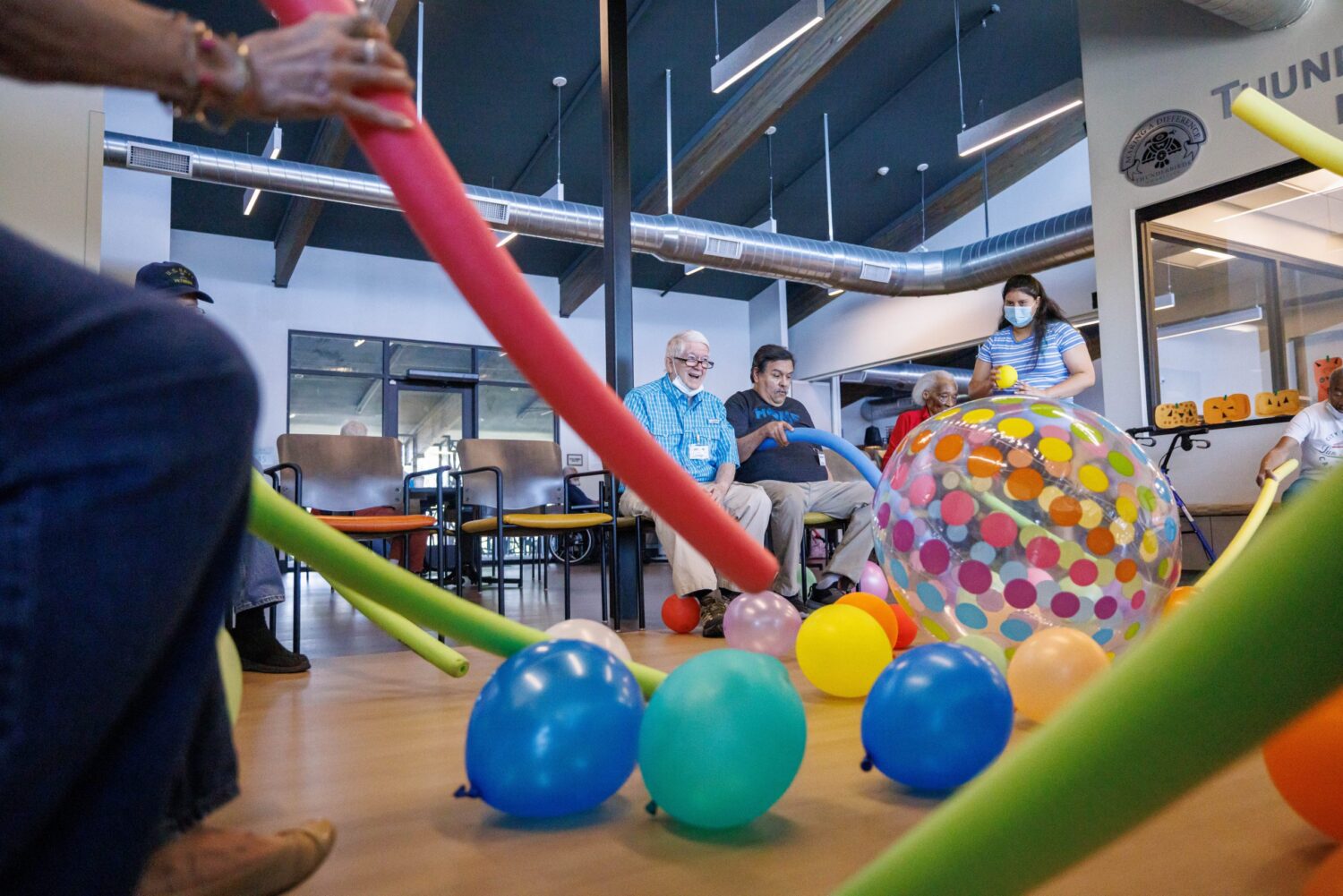
Campaign funds supported AllThrive 365’s new adult day health center in Glendale, Ariz., which provides safe, supportive spaces for adults to engage, grow and pursue a purposeful, independent lifestyle with care tailored to their needs | Billy Hardiman

Bishop Olmsted named this aspect of the campaign the Francis Mercy Fund after Pope Francis. In describing the purpose of this case component, Bishop Olmsted reflected on Padre Eusebio Kino, a Jesuit priest who founded dozens of missions in Arizona, and how he evangelized to particular groups who in turn went on to share the good news with others.

In the same way, Bishop Olmsted hand-picked The Society of St. Vincent de Paul (SVPD), Catholic Charities Community Services and AllThrive 365 (formerly known as the Foundation for Senior Living) as recipients of substantial campaign funds to carry out the work of bringing the good news through healing, comfort and hope in intentional ways throughout the diocese. The funds were used specifically for major, planned projects such as the completion of SVDP’s Ozanam Manor, a transitional shelter for veterans, seniors and adults with disabilities.

A lasting impact 

The timing of the Together Let Us Go Forth campaign was nothing short of Providential.

When it began as a seed of an idea in 2017, there were 1.1 million Catholics in the Diocese of Phoenix. As the campaign came to full fruition in March 2026, more than 2 million Catholics call the diocese home.

“These were little seeds that were planted, and then the wonderful gifts and prayers that people brought to the campaign … We’re benefitting from this,” said Bishop Dolan, as he spoke about Bishop Olmsted’s actions over the years of the campaign. “I can’t tell you how incredible this campaign has been for our diocese.”

He went on to applaud Bishop Olmsted for his approach in this bold endeavor.
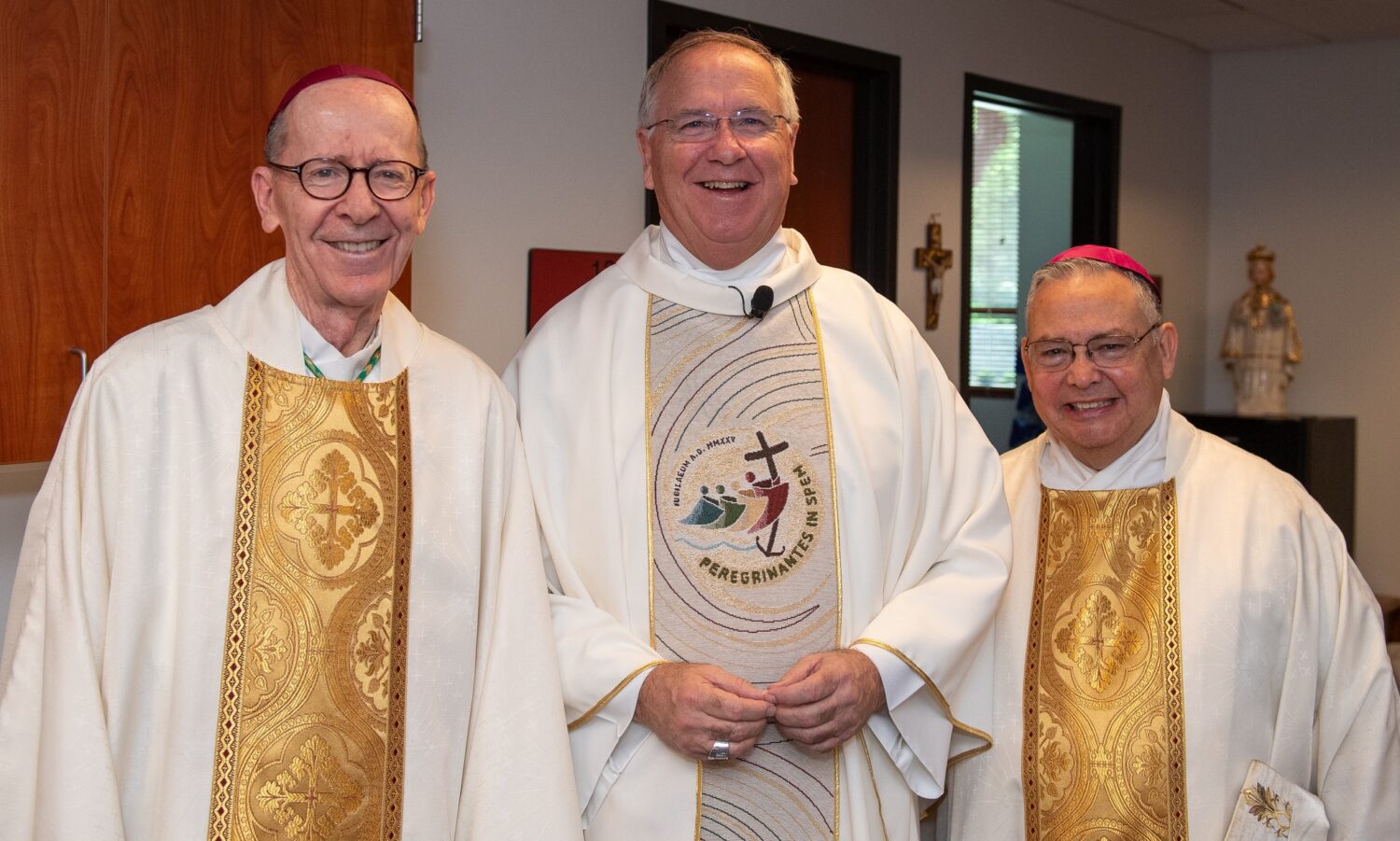
Bishop Emeritus Thomas Olmsted (left) and Bishop John Dolan (center) pictured with Auxiliary Bishop Eduardo Nevares at the Diocese of Phoenix’s priestly ordinations in 2025 | Brett Meister

“One of the things that I think is unique and very powerful  about that campaign is that it wasn’t just one and done. In essence, [Bishop Olmsted was] able to create, from my perspective, a culture of philanthropy with engagement as the center point,” he said.

Bishop Dolan is continuing Bishop Olmsted’s legacy of evangelization through his seven-year pastoral plan, TILMA. He hopes to continue fostering the seeds of discipleship and evangelization that were planted in a particular way in the Diocese of Phoenix nearly nine years ago.

“It didn’t matter how much people were able to give,” continued Bishop Dolan. “What mattered was that they knew they felt engaged and that they had a place in the Church and the mission of the Church … I believe that [Bishop Olmsted] set out to engage people and invite them into this mission, and I think they responded so beautifully. It’s been fantastic.”

Watch a special episode of “The Catholic Sun” below, where Bishop John Dolan, Bishop Emeritus Thomas Olmsted and Fr. Greg Schlarb delve into the highlights of the historic Together Let Us Go Forth ~ Juntos Sigamos Adelante campaign:
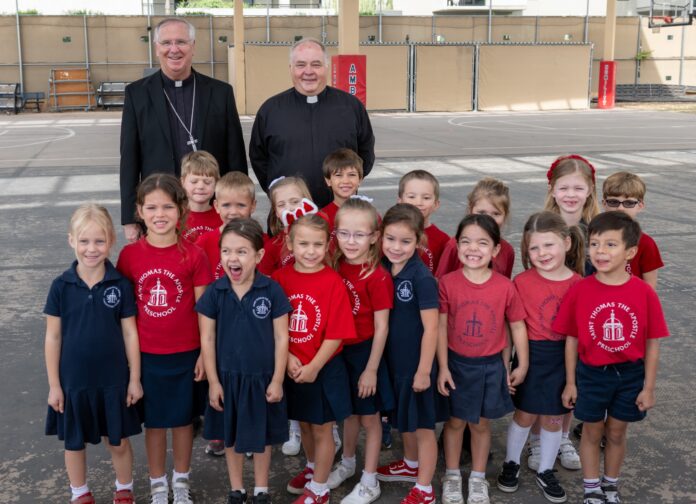
St. Thomas the Apostle constructs top-tier academic building

Bishop John Dolan visited the new construction site of St. Thomas the Apostle (STA) grade school in Phoenix on Tuesday (March 31). The $25 million project will provide a brand-new K-8 academic building — a 76,000 square-foot, three-story structure with a basement. In addition to classrooms, the build will include a cafeteria, theater stage, science lab and collaborative common spaces for group learning and projects. 

Bishop Dolan was joined by Fr. Steve Kunkel, pastor of St. Thomas the Apostle Parish, Fr. Shia Reh Marino, parochial vicar of the parish, Chancellor and Vice Moderator of the Curia Dr. Maria Chavira, Superintendent of Schools Domonic Salce and Debbie DiCarlo, executive director of the Office of Mission Advancement for the Diocese of Phoenix. Katie Zeches, the incoming principal, Annemarie Mansour, the incoming vice principal, and Mary Coffman, who has been STA’s principal since 2008 and is retiring after 28 years with the school, were also in attendance. Zeches, Mansour and Coffman have been part of the building design and fundraising for the past decade. 

Prior to the tour of the new facility, Bishop Dolan took part in morning prayer with the student body, which included a performance by two choirs. The bishop was also presented with art from the students, and afterward he visited several classrooms. 

Groundbreaking for the project took place in November 2024 following more than a decade of planning and fundraising, and STA launched a capital campaign entitled “Under One Roof” for the continuation of the project. The construction is taking place in phases, and the first floor will open for the start of the upcoming school year, welcoming the kindergarteners, first grade and second grade students into the new building. STA anticipates welcoming all students into the fully completed building by August 2027 — bringing the entire student body together “under one roof.” 

For monthly video updates on the progress of construction, visit the school website here. 

SEE FACEBOOK PHOTO GALLERY

“Lay down your weapons,” pope says in Palm Sunday call for peace

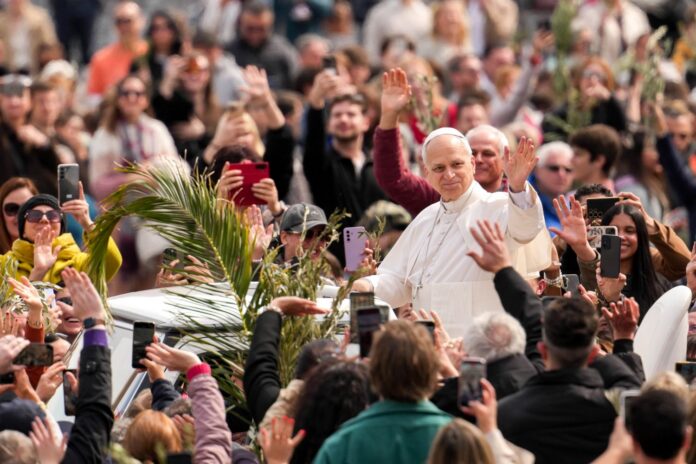
Pope Leo XIV greets the faithful from the popemobile as he rides past people holding palm fronds and olive branches after Palm Sunday Mass in St. Peter’s Square at the Vatican March 29, 2026. (CNS photo/Lola Gomez)

By Josephine Peterson

VATICAN CITY (CNS) — Marking the start of Holy Week, Pope Leo XIV used his first Palm Sunday Mass to issue a forceful plea for peace, urging an end to war as he reflected on Christ’s Passion.

During his homily opening Holy Week at St. Peter’s Square, the pope said the faithful must follow Jesus, as he embraced humanity “even as others raise swords and clubs.”

“We turn our gaze to Jesus, who reveals himself as King of Peace, even as war looms around him,” he said March 29. “He remains steadfast in meekness, while others are stirring up violence.”

Pope Leo continued, recounting Jesus’ final words to God, saying that in that moment we can see a “crucified humanity.”

“Above all, we hear the painful groans of all those who are oppressed by violence and are victims of war,” he said. “Christ, King of Peace, cries out again from his cross: God is love! Have mercy! Lay down your weapons! Remember that you are brothers and sisters!”

In his appeal at the close of the Mass, he went on further to press for peace, especially in the Middle East. He called on prayers for Christians in the Middle East, whose “ordeal challenges all our consciences,” as the conflict between the United States, Israel and Iran enters its fifth week.

“Just as the Church contemplates the mystery of the Lord’s Passion, we cannot forget those who today are truly sharing in his suffering,” he said. “Let us raise our prayer to the Prince of Peace that he may sustain the peoples wounded by war and open concrete paths to reconciliation and peace.”

On a sunny and windy day, thousands attended the Mass, which began with a solemn procession of hundreds of people carrying green palm branches, followed by about 60 cardinals and bishops, carrying “palmurelli,” pale green palm branches that were woven and braided.

In the center of the square, the procession circled the ancient obelisk, brought to Rome by Emperor Caligula in 37 AD and later erected in St. Peter’s Square, traditionally marking the site of early Christian martyrdom, including that of St. Peter.

Dressed in red vestments, the color of the Passion, Pope Leo followed, opening Mass underneath the obelisk. After the opening prayer and hymns, the procession made its way through the crowd to the altar in front of St. Peter’s Basilica.

Palm Sunday marks the solemn beginning of Holy Week, commemorating Jesus’ entry into Jerusalem and leading to his passion, death and resurrection. The liturgy includes the reading of Christ’s suffering and crucifixion, setting the tone for the days leading to Easter.

In closing, the pope ended his Palm Sunday homily recalling the words of the late Bishop Tonino Bello, who was known as a pacifist and social justice advocate.

“‘And grant, finally, that the tears of all the victims of violence and pain will soon be dried up like frost beneath the spring sun,'” the pope said.

Bishop Bello died in 1993, and Pope Francis recognized him as venerable as his sainthood cause was advanced in 2021.

©2026 Catholic News Service/U.S. Conference of Catholic Bishops.

Holy oils blessed at annual Chrism Mass

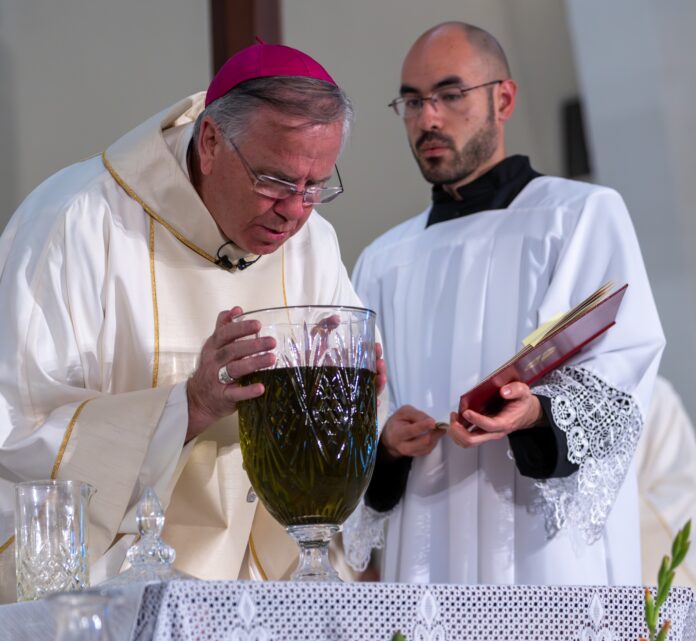
Nearly 200 priests from around the Diocese of Phoenix — the largest turnout in more than a decade — gathered with Bishop John Dolan, Auxiliary Bishop Eduardo Nevares, Auxiliary Biship Peter Dai Bui and Bishop Emeritus Thomas Olmsted at Ss. Simon and Jude Cathedral in Phoenix on Monday (March 30) to concelebrate the annual Chrism Mass. The liturgy drew a standing-room-only crowd.

The Chrism Mass revolves around a rich tradition of blessing oils dating back to the year 200 AD. In the modern-day celebration, the bishop blesses the oils that will be used for baptisms, confirmations, anointing of the sick and holy orders throughout the diocese this year.

One of the highlights of the liturgy takes place when the bishop breathes over the glass container that holds the chrism oil, symbolizing the Holy Spirit coming down to consecrate the oil to be used in administering the sacraments.

The celebration began with a procession of numerous deacons, seminarians, men and women religious and representatives from the Knights of Columbus, the Order of Malta and the Equestrian Order of the Holy Sepulchre of Jerusalem.

SEE FACEBOOK PHOTO GALLERY

Creation Summit to address dignity and peace

An avid hiker and member of the creation care team at her parish, Sacred Heart in Prescott, Ariz., Charlene Hoffman has nurtured a longtime love for the earth. So when she heard about the Creation Summit hosted by the Diocese of Phoenix, she knew she had to get involved.  

“It was like an answer to prayer,” she said.   

Hoffman was one of nearly 100 attendees at the inaugural Creation Summit in January 2025, at St. Francis Xavier Parish in Phoenix. Through panels and small group discussions, the interfaith event invited participants to reflect on topics such as spirituality and climate challenges.  

“I really loved all of the speakers. The water and climate challenge workshop was just terrific,” Hoffman shared. “We talked about human impacts. But I think really my favorite part was the guys from Brophy who came and talked about an action plan.”  

At the summit, three students from the Brophy College Preparatory Student Climate Coalition discussed the importance of environmental stewardship. Participants were then asked to develop action plans to share with their parish communities. The diocese’s Pilgrimage of Hope for Creation at the Chapel of the Holy Cross in Sedona, Ariz., and the Interfaith Walk for the Earth at Yavapai College in Prescott, Ariz., were two of the developed action plans at the 2025 Creation Summit. 

Emilio Rodriquez Izquierdo, another attendee at the 2025 Creation Summit, brought his action plan — a new care for creation committee — to his home parish, St. Francis Xavier. 

“The first time we met was during the Creation Summit,” said Rodriquez Izquierdo. “We sat there with our pastor and then the idea was that we would continue meeting. We have been meeting continuously since the first summit.”  

The committee holds monthly meetings at St. Francis Xavier and tracks environmental activities at the parish, such as energy use. The committee members, which include the pastor and five or six parishioners, actively work to improve the sustainability of the parish facilities. 

“I feel very blessed because sometimes you will struggle to find people to do things, but here people naturally want to participate in service to the Church,” Rodriguez Izquierdo noted.  

With the support of the committee, the parish is undertaking a major project: installing a solar canopy over the parking lot this July.  

Inspired by the fruits of the first Creation Summit, Rodriguez Izquierdo decided to participate again in this year’s summit, this time as a planning committee member. 

This year’s Creation Summit will take place on April 11, at the Diocesan Pastoral Center in downtown Phoenix in tandem with the 63rd anniversary of Pacem in Terris, an encyclical by Pope John XXIII on peace, human rights and international relations. The theme of the summit is “Addressing Human Dignity and Peace on Earth” and will include topics such as creation and migration, and local efforts addressing poverty and the environment.  

Rodriguez Izquierdo feels particularly drawn to this year’s theme.  

“We don’t see why peace on earth, migration and asylum seekers might be connected with the actions we take every day. So, seeing what the diocese was doing, and also the theme for the event, is why I decided to join this year.”  

The Creation Summit seeks to draw people together from across the diocese. The event welcomes people of all faiths, ages and backgrounds.  

“It’s the possibility for us to organize something that is feasible here in the diocese. It helps to foster participation and allows us to be together,” Rodriguez Izquierdo said.  

Likewise, Hoffman, who participated on the planning committee for both the 2025 and 2026 Creation Summits, values the intergenerational component of the event.  

“I loved it because young people are involved. Most of us that were participants were older, but we need to have the people that are in the generations to follow for whom we’re trying to raise this awareness.”  

At its heart, the Creation Summit is an opportunity to see God in the beauty of creation. Hoffman believes it is important to share this beauty with others.  

“I want to help people create for themselves this deep affection and love for the earth and awaken that love and desire in others.”  

For more information and to register for the 2026 Creation Summit, click here. 

Paving the way; Creative accompaniment helps seekers become Catholic

The surge in the number of those seeking to become Catholic is catching the attention of parish staffs across the Diocese of Phoenix. 

Whether it’s disappointment with the empty promises of secularism, a deep hunger for something authentic, the election of the first U.S.-born pontiff or a combination thereof, parishes have seen a strong uptick in inquiries. 

Not everyone fits in the standard model for the Order of Christian Initiation of Adults (OCIA), the process by which men and women become Catholic. From nurses and police officers who work nights to truck drivers and those in hospice care, a welcoming, flexible approach is helping hundreds become Catholic. 

We checked in with parishes in four corners of the Diocese of Phoenix to see how creative OCIA leaders are adapting in order to welcome more people into the Catholic Church. 

St. Bernard of Clairvaux 

Deacon Phil LoCascio leads a burgeoning OCIA at St. Bernard of Clairvaux in North Scottsdale, Ariz. “We turn no one away,” Deacon Phil said. 

The parish doesn’t actually call it OCIA, though. Instead, it’s been dubbed “Quest,” since those who are seeking to learn more about the Catholic faith are, in fact, on a quest, Deacon Phil said. Rather than confining the process to the academic year as in many parishes, Quest runs all year long at St. Bernard’s. 

“I get calls from people every week.” 

That syncs with data collected by the Diocese of Phoenix. During the period of Nov. 30, 2025, through March 5, 2026, there were 42 inquiries made through the “Become Catholic” page at dphx.org. 

Many of those who approach St. Bernard’s seeking initiation into the Catholic faith are professionals who travel frequently for work and are unable to attend regular OCIA sessions. 

“We’re flexible with that,” Deacon Phil said. He gives out a book and a calendar that lists which chapters go with which week. He said he expects them to read it and then he follows up. 

Last year, for example, there was a man who was in police training and also coaching hockey on the side to make a living. Tournaments sometimes conflicted with OCIA sessions. Just like others who are traveling salesmen or nurses, Deacon Phil worked with him. 

“I meet with them once a month on the side for a coffee or something and for a two-hour session and we’ll go through the fundamentals of stuff that was missed. It’s not set up to be a PhD class, but to reach that experience of conversion where there’s real change and the Spirit is moving in that.” 

Then there are those who are nearing the end of their earthly journey and want to become Catholic or complete their sacraments of initiation. 

“We’ve had a few people in hospice care that we have gotten confirmed,” Deacon Phil said. “Their heart is in the right place and they’re desperate for the sacraments. We make sure they get the classes that they need for that. In those cases, it would probably be a more shortened version of the classic OCIA.” 

With Notre Dame Preparatory High School within the parish boundaries, students who want to become Catholic or who are seeking to complete their sacraments are also part of the OCIA process at St. Bernard’s. 

“Last year we had 50 adults brought into the Church,” Deacon Phil said. “We had another 40 or 50 high school students.” 

Deacon Phil credits Father Fred Adamson, pastor of the parish, with the sizable OCIA cohort. 

“He promotes it and he makes it clear that we’re proud of this and we want to be a Church that is inviting people and embracing and engaging with people.”   

Most Holy Trinity 

At Most Holy Trinity Parish in Sunnyslope, Ariz., many of those who aspire to become Catholic are Hispanic. The parish offers formation in both English and Spanish, with some of those in the English formation courses being bilingual. 

Imelda Flores, who leads OCIA at Most Holy Trinity, said the parish is committed to welcoming people into the Church. 

“We have tried to engage and walk with the people so that they do not feel rejected and so they do not feel that right now there is no space for you,” Flores said. 

“Everyone is welcome, and we try to fit them in with the team we have according to the needs of the people, as long as we see that the person who needs the sacraments has a real interest and commitment.” 

Flores said she’s had inquiries from those in the military and people who are studying and working at the same time, making the normal OCIA preparation problematic. The priests at the parish, who belong to the Society of Our Lady of the Most Holy Trinity, make time to meet with inquirers individually, as does Flores. 

Last year, Flores said, a young man lost his father and needed to go to work but wanted to continue high school. He also wanted the sacraments. With such a demanding schedule and in the midst of grief, it seemed a daunting prospect to also take on OCIA. 

“Then one of the nuns at the parish asked him to participate in the 8 a.m. Mass and then met with him afterward to provide catechesis,” said Flores. 

Most Holy Trinity Parish welcomes others who are also experiencing some of life’s harsher realities. The door to the Catholic Church swings wide open for them, too. 

Flores told of a case in which a young man who had received a citation for driving under the influence wanted a letter of recommendation from the parish. “But we didn’t know him or anything,” Flores said. One of the priests on staff found out the man had not yet received his sacraments and invited him to join OCIA. That bit of encouragement bore fruit: He’s attending the sessions and also getting service hours volunteering at the parish. 

The man was faithful coming to the classes, Flores said, and is on his way to full initiation into the Catholic Church. 

St. Clare of Assisi 

At St. Clare of Assisi in Surprise, Ariz., OCIA formation takes place all year long. On the parish’s website, the homepage has an inviting tab dubbed “Let’s Connect.” Under that, users can select “Become Catholic.” 

That’s where they’ll find a head shot of Deacon Jim Brett, the OCIA coordinator, with an upbeat description of the program and a broad invitation to participate: 

“We are here to answer all your questions and more. The first step is to reach out to the Becoming Catholic coordinator to find out how to begin the process, or you can just start attending the inquiry sessions each Sunday after the 9 a.m. Mass, located in the modular offices on the west side of the church.” 

Deacon Jim has only been on staff at St. Clare’s since June of 2025, but he and his wife Jane began working in OCIA back in 1988 at St. Timothy Parish in Mesa, Ariz. He’s dedicated to accompanying those who seek to become Catholic and has seen some very unique circumstances among participants. 

“We had one guy who was a baseball player. When the season was over at the end of September, he went to Florida. So, in essence, he did most of his stuff online. 

“They send stuff back to me as proof that they watched it or read it and answered some of the questions,” Deacon Jim said. 

He meets with people individually but acknowledges “it’s not an ideal situation.” In the case of the man in Florida, he referred him to a parish in the Sunshine State and coordinated with the deacon there. 

It’s not the first time for this interstate cooperation. Another man began his OCIA journey in Montana but finished the process at St. Clare’s. 

And then there are those who come from different Christian faith denominations. 

“We have a surprisingly large number of people from the Baptist church wanting to join. One of them was an ex-minister,” Deacon Jim said. 

Welcoming those who seek to become Catholic and being available to them is key, he said. 

“Sometimes, I say, ‘Just show up to the class. If you can’t meet me on this day or that day or after the meeting on Sunday, just show up and come on in. You all can come on in and start learning.’ 

“We’ll greet you and make you feel at home.” 

St. Steven 

Deacon David Runyan is retired but leads the OCIA process at St. Steven Parish in Sun Lakes, Ariz., in the southeastern corner of the diocese. He cited being available as one of the most important aspects of welcoming people to the Church. 

“When people come forward and they want to talk, they’re limited in when they can talk. I have to be open to their schedule, and it’s very difficult to do that if you’re already working a scheduled staff position.” 

It’s also crucial to recognize the unique nature of each person seeking to become Catholic, he said. 

“Being available is key but so is having a sincere interest in each individual’s journey. I’ve encountered so many different people in different walks of life.” 

He’s been a deacon for 15 years and has worked in four other parishes as well as in various programs across the diocese. 

Those who are seeking entrance to the Church often pose thought-provoking questions, he noted. “You have to have a fairly well-rounded understanding of your faith to even begin to address them,” Deacon David said. 

Typically, the people he chats with are not questioning the existence of God. 

“I’m encountering people that have already accepted the fact that there’s a God in their life. And how do you respond to this Creator of the universe who simply wants to walk with you through your life?” 

Ultimately, those who work in OCIA must be willing to share their faith, Deacon David said. 

“I have to be able to share my relationship with Jesus in an authentic way. I’m not trying to convince them of miracles occurring and things like that but just where I am in my life.” 

Deacon David enjoys ministering to those who are seeking to become Catholic, explaining the Mass to them. 

“It can be very simple things like when you walk into a church, you see all these symbols. Every gesture that the priest makes at the altar, every prayer that’s said — everything has a very deep meaning behind it. 

“As we go through the OCIA lessons and instruction, it’s really fun to share that kind of stuff because here I am, 74 years old, and I still learn from my faith.” 

Deacon David is hopeful about the future and passionate about accompanying those who want to become Catholic or complete their sacraments. 

“I have a sense of people returning to the faith. And I think that parishes need to be open to that and if at all possible, identify those that are associated with the parish, such as myself, a retired clergy, that are simply just available and have a desire to want to walk with people through their faith and life.” 

To learn about becoming Catholic and to watch a welcome video from Bishop Dolan, visit dphx.org/become-catholic/ 

New Photina Center hosts open house

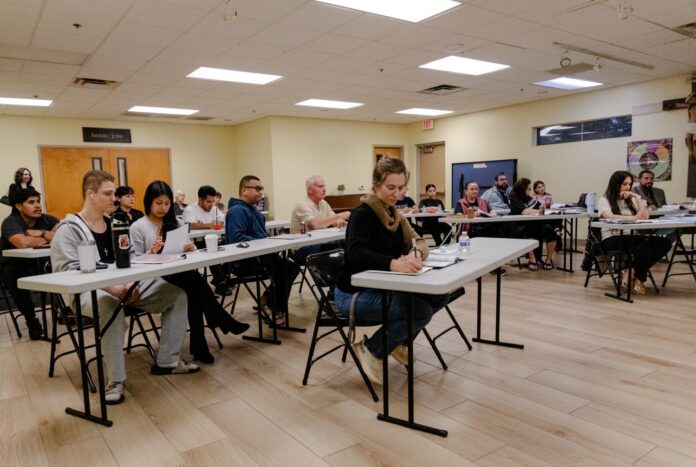
A new collaboration between the Diocese of Phoenix and the University of Mary in Bismark, N.D., welcomed potential students at an open house held at the Diocesan Pastoral Center in downtown Phoenix on Sunday (March 29). Msgr. James Shea, president of the University of Mary and Bishop John Dolan shared their vision with prospective students about the Photina Center and its mission.  In addition, Dr. Christina Jurekovic, a counseling professor for the university, and Mary Permoda, the director for the diocese’s Office of Mental Health Ministry, also spoke.

Located in downtown Phoenix, the Photina Center for Catholic Counseling will provide degree programs, professional development and resources to meet the growing need for mental health professionals rooted in Catholic anthropology.  Beyond academic programs, the Photina Center will also provide professional development and resources for the local community of Catholic mental health professionals, assist with the Diocese of Phoenix’s Office of Mental Health Ministry and co-sponsor an annual conference on Catholic Mental Health Ministry.

Online courses for the Master of Science in Counseling program begin in May 2026, with operations at the Photina Center commencing in fall 2026. The University of Mary’s M.S. in Counseling is fully accredited by the Council for Accreditation of Counseling and Related Educational Programs (CACREP) and is in the process of seeking CACREP authorization for the blended counseling program offered through the Photina Center in Phoenix.

St. Photina is the name in the Eastern Christian tradition ascribes to the Samaritan woman at Jacob’s well (John 4:4-42). The Photina Center draws inspiration from her encounter with Christ, which is the longest conversation Jesus has with anyone in the New Testament. In Jesus, she finds truth, healing and courage for joyful witness. Photina means “light,” embodying the center’s goal to illuminate paths of hope and healing for individuals, families and communities.

For more information about the University of Mary’s Master of Science in Counseling program or the Catholic Anthropology Certificate, visit online.umary.edu/Photina or contact admissions at [email protected].

SEE FACEBOOK PHOTO GALLERY

Christ in our Neighborhood: Fourth Sunday of Easter (Cycle A)

NOTE: Christ in Our Neighborhood is a parish-based program consisting of small Christian communities that gather in the home weekly to prayerfully discuss the upcoming Sunday Mass readings. It’s easy to form a community and you can find out more by searching “Christ in Our Neighborhood at the Diocese of Phoenix website, dphx.org.

This coming Sunday, we celebrate the Fourth Sunday of Easter. The question the Christ in Our Neighborhood commentary asks us is: Which shepherd are we listening to?

We live in a noisy world. Unless we’re very intentional about it, the trap of constant input from news headlines, music, entertainment, social media, text messages and more can dominate our consciousness. It’s almost like we’re afraid of silence.

And yet God speaks to us in the silence. Think of the iconic passage in 1 Kings 19 where Elijah is waiting for the Lord to speak. He’s buffeted by an earthquake, fire and fierce wind — yet the Lord is not to be found in any of that, as powerful as He is.

Instead, our Lord speaks to Elijah in a “still, small voice,” in the quiet. In the silence.

Our Shepherd’s voice can easily be drowned out by the “earthquakes” of our modern life. Let’s take time in the silence today to hear His voice. Let’s put down our phones and turn to the One who brings clarity and peace.

If you haven’t joined a Christ in Our Neighborhood small group yet, perhaps you are being called to start one yourself. It’s easy! Check out our website today to find out more: dphx.org/Christ-in-our-neighborhood. 

Watch the video of the weekly podcast segment featuring Christ in Our Neighborhood with Bishop Dolan by clicking HERE.

To sign up for our weekly Christ in Our Neighborhood newsletter that has everything you need for your next meeting, visit:  https://phoenixdiocese.flocknote.com/CION

Christ in our Neighborhood: Third Sunday of Easter (Cycle A)

NOTE: Christ in Our Neighborhood is a parish-based program consisting of small Christian communities that gather in the home weekly to prayerfully discuss the upcoming Sunday Mass readings. It’s easy to form a community and you can find out more by searching “Christ in Our Neighborhood at the Diocese of Phoenix website, dphx.org.

This coming Sunday, we celebrate the Third Sunday of Easter. The question the Christ in Our Neighborhood Commentary asks us is: Do we recognize Jesus in the breaking of the bread or is it just some ritual we repeat? When was the last time our heart was on fire?

Do we realize that every time we go to Mass, a miracle takes place? As the priest consecrates the bread and wine, they become that Body, Blood, Soul and Divinity of Jesus Christ. In that moment, the sacrifice at Calvary and the words of the Last Supper are made present to us here and now. All that love, hope, healing, goodness and victory over sin and death is right in front of us, if only we open our eyes and our hearts.

It’s easy to get complacent or become indifferent about the Eucharist, particularly when our hearts become hardened by sin. The further we get from God, the less we tend to think about Him. But even there, in our brokenness, God seeks us out and calls us to conversion, ready to bestow His mercy on us.

One way to grow in our love for the Eucharist is to read about those who have truly suffered in order to receive it. With God in Russia, written by Servant of God Walter Cizek, S.J., is a moving account of an American-born missionary priest who was sentenced to 15 years hard labor in the Soviet Union, branded a Vatican spy. Fr. Cizek was accused of years in Siberia, secretly ministering to his fellow prisoners, consecrating small bits of bread taken from their starvation rations. He risked his life to offer Mass in the freezing forest, providing the Bread of Life to others in the labor camps.

When we get too comfortable at church and our hearts grow cold, we need to call to mind the heroic virtue of fellow believers like Fr. Cizek.

If you haven’t joined a Christ in Our Neighborhood small group yet, perhaps you are being called to start one yourself. It’s easy! Check out our website today to find out more: dphx.org/Christ-in-our-neighborhood. 

Watch the video of the weekly podcast segment featuring Christ in Our Neighborhood with Bishop Dolan by clicking HERE.

To sign up for our weekly Christ in Our Neighborhood newsletter that has everything you need for your next meeting, visit:  https://phoenixdiocese.flocknote.com/CION

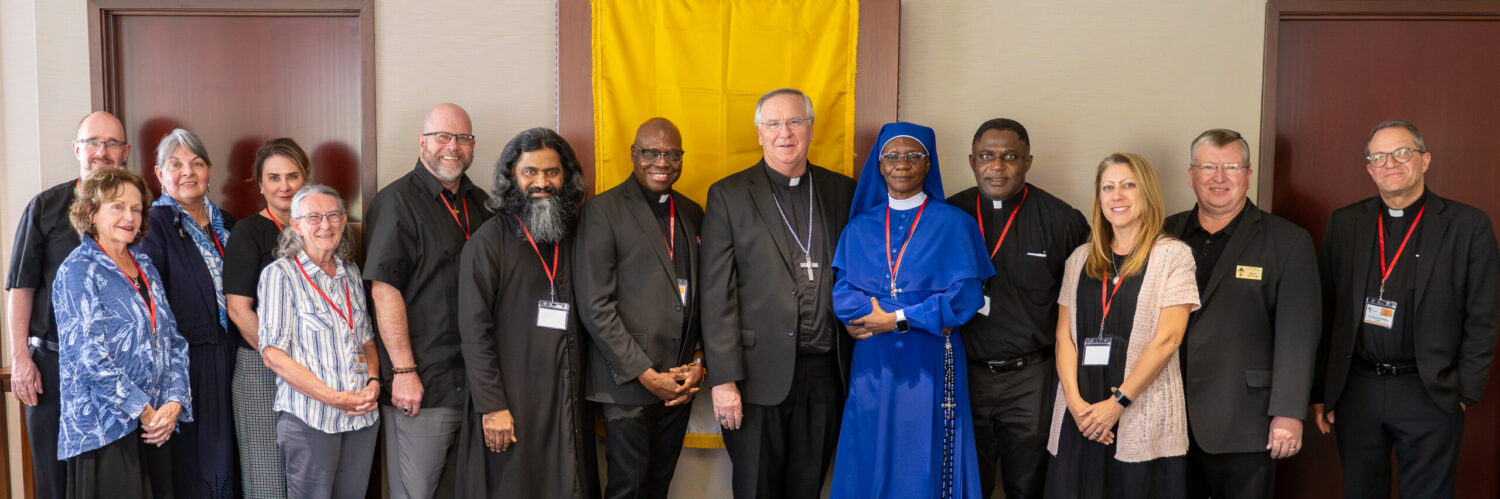
Healthcare ministers foster collaboration

Bishop John Dolan met with more than a dozen members of the National Association of Catholic Chaplains (NACC) and other Catholic chaplains who serve in healthcare settings across the state of Arizona on Tuesday (March 24) at the Diocesan Pastoral Center in downtown Phoenix. The gathering took place to discuss the shared mission of bringing Christ to the sick, suffering and vulnerable.
.
The role of chaplains is to “accompany patients and their families in moments when life is often most fragile,” said NACC Arizona State Liaison Rev. Dr. Fidelis Igwenwanne, BCC.
.
He went on to call these moments of illness, uncertainty, fear and grief “sacred encounters” in which chaplains seek to offer prayer, presence, spiritual support and, when possible, access to the sacraments for those who are suffering.
.
“In this way, we continue the healing ministry of our Lord Jesus Christ, Who always showed special compassion for the sick and the suffering,” he continued.
.
.
The meeting served to build greater awareness about the presence and ministry of Catholic chaplains in hospitals and to foster closer collaboration in supporting the bishop in his pastoral care of the sick in the Diocese of Phoenix.
.