Deacon Jeff Pooley – The Path to Priesthood

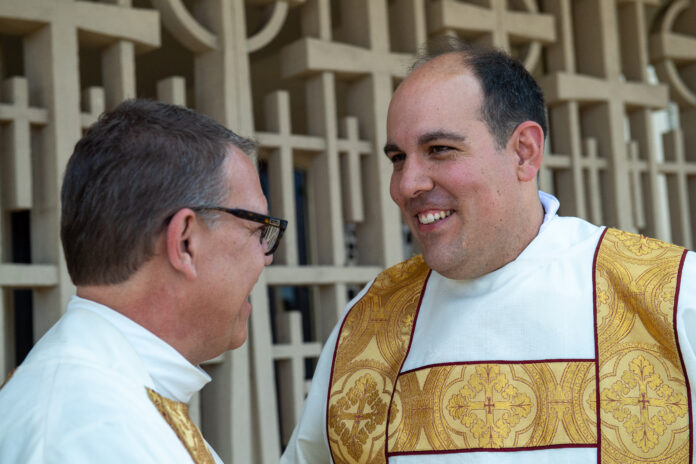
As a pilot, Dcn. Jeff Pooley used to soar through the clouds. Now as a priest, he’ll guide others toward heaven.

Receiving his call to the priesthood at the age of 17, he was initially petrified. But through his journey of studying aeronautical science at Embry-Riddle Aeronautical University in Prescott, Ariz., and volunteering with a youth ministry group, he eventually found great joy in the call he’d had all along. Tune in to learn more about his journey.

Dcn. Jeff will be ordained to the priesthood at St. Thomas Aquinas Parish in Avondale, Ariz., on Saturday, June 6, at 10 a.m., and will be joined by Dcn. Nathan Blanchard, Dcn. Simon Ortiz and Dcn. Paul Graupmann, F.H.S.

To support priests in the Diocese of Phoenix, visit priests.dphx.org

New affordable housing brings hope to Central Phoenix

Photo courtesy of Catholic Charities Community Services

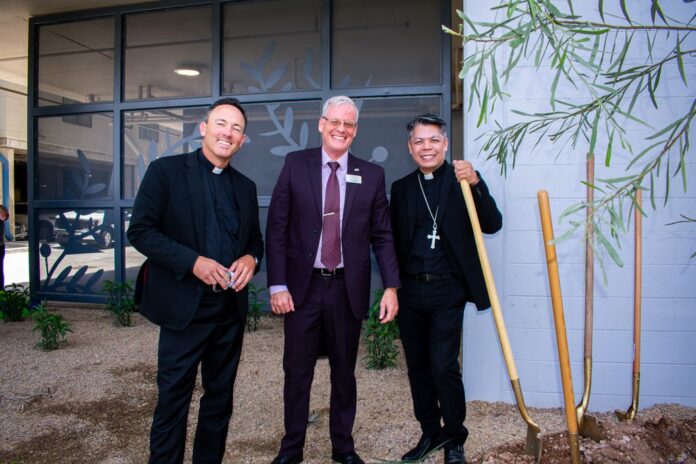
Bishop Peter Dai Bui attended the Housing for Hope — an affiliate of Catholic Charities Community Services — grand opening of the third and final phase of Acacia Heights Apartments, an affordable housing complex near 7th Avenue and Camelback in Central Phoenix. He blessed the newly developed property and took part in the ribbon cutting ceremony on Tuesday (May 19).

Acacia Heights III, the new five-story building, features 35 one-bedroom units, 18 two-bedroom units and 15 three-bedroom units, ranging in size from 596 to 1,231 square feet. The addition of Acacia Heights III expands the complex by 68 units, bringing the total number to 212.

According to the latest 2025 Point-in-Time count, 9,734 people were experiencing homelessness in Maricopa County, marking a three-percent increase over 2024 — the highest total ever recorded in the region. Acacia Heights provides a critical resource for families and individuals in need.

“Through strong partnerships and sustained investment, Acacia Heights reflects a collaborative commitment to stability, dignity and long-term solutions that improve lives,” said Catholic Charities Vice President of Business Development/Housing for Hope Executive Director Steve Capobres.

Designed to be a safe, comfortable home, the entire development was also built with community, connection and well-being in mind. Compassionate team members create a welcoming, community-centered environment by bringing residents together for social gatherings, mobile food pantries, after school activities for children and more. They also help with connecting to critical resources in the community, such as low-cost medical and dental services, medical loan equipment, donated household necessities, among others, so residents can enjoy a healthy, happy and stable life in their homes.

Additionally, Catholic Charities provides resident services specialists in its Phoenix-area communities, who offer resources and referrals so that residents remain housed despite common challenges, such as loss of employment, medical or mental health struggles, lack of support systems and the impact of inflation.

To learn more, visit housingforhopeaz.org/acacia-heights-apartment-complex

Pope explains concerns about AI

The ChatGPT app is seen on a phone placed atop a keyboard in this photo taken in Rome March 8, 2024. (CNS photo/Lola Gomez)

VATICAN CITY (CNS) — Pope Leo XIV said a proposal to create an AI-version of him so people could have a virtual audience with the pope pretty much horrified him.

“If there’s anybody who should not be represented by an avatar, I would say the pope is high on the list,” he said in an interview with Elise Allen, a journalist and author.

Allen’s July 30 interview with Pope Leo is the last chapter of her biography, “Leo XIV: Citizen of the World, Missionary of the XXI Century,” which was published in Spanish by Penguin Peru Sept. 18. The text of the interview, in English and Spanish, was given to reporters.

Pope Leo, who has made his concerns about the potential pitfalls of artificial intelligence clear since immediately after his election in early May, gave some concrete examples about why.

“Someone recently asked for authorization to create an artificial me so that anybody could sign on to this website and have a personal audience with ‘the pope,'” he told Allen. “This artificial intelligence pope would give them answers to their questions, and I said, ‘I’m not going to authorize that.'”

While human creativity can be amazing, and artificial intelligence already has proven its usefulness in some fields, “there’s a danger in this because you do end up creating a fake world and then you wonder, what is the truth?”

At the core of his concern, the pope said, is AI’s impact on human dignity and on jobs.

“Our human life makes sense not because of artificial intelligence,” he said, “but because of human beings and encounter, being with one another, creating relationships, and discovering in those human relationships also the presence of God.”

“The danger is that the digital world will go on its own way, and we will become pawns, or left by the wayside,” particularly when it comes to employment, he said.

“Human dignity has a very important relationship with the work that we do,” the pope said. “The fact that we can, through the gifts that we’ve been given, produce, offer something in the world and earn a living,” is a sign of human dignity.

Pope Leo said he believes there is a crisis looming of not having enough decent jobs for people because of technology and artificial intelligence.

“If we automate the whole world and only a few people have the means with which to more than just survive, but to live well, have meaningful lives, there’s a big problem, a huge problem coming down the line,” he said.

“That was one of the issues in the back of my mind in why I chose the name Leo,” the pope said. His choice honored Pope Leo XIII, author of the encyclical “Rerum Novarum,” which addressed issues of labor and workers’ rights during the Industrial Revolution.

“The church is not against the advances of technology, not at all,” he said, but it also insists on maintaining a relationship between faith and reason, and science and faith.

“I think to lose that relationship will leave science as an empty, cold shell that will do great damage to what humanity is about,” Pope Leo said. “And the human heart will be lost in the midst of the technological development, as things are going right now.”

Diocese of Phoenix joins national Sacred Heart consecration

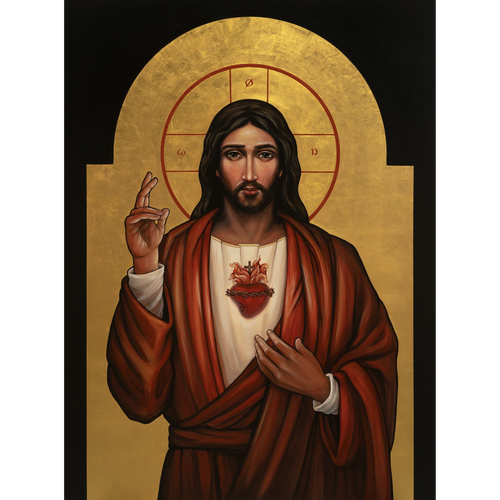
Original art by Ruth Stricklin, newjerusalemstudios.com

As the United States prepares for the 250th anniversary of the nation’s founding, the Diocese of Phoenix joins the broader Church in turning toward the Sacred Heart of Jesus.

In preparation for the Semiquincentennial, the United States Conference of Catholic Bishops (USCCB) will join countries such as Portugal, Spain and Poland in consecrating their nation to the Sacred Heart of Jesus. In anticipation of the U.S. consecration, which will take place on June 11 at the USCCB’s gathering of bishops in Orlando, the bishops have created prayer resources guided by Pope Francis’ encyclical on the Sacred Heart, Dilexit Nos (He Loved Us), and Pope Leo XIV’s apostolic exhortation Delexi Te (I Have Loved You).

Included in the resources is a special novena — a nine-day preparatory prayer — to the Sacred Heart. Each day inspires reflection on a different aspect of Jesus’ Heart, such as “aflame with love for us,” “patient and full of mercy” and “source of all consolation.”

An Invitation to Prayer

Bishop John Dolan invites the faithful of the Diocese of Phoenix to join the USCCB and Catholics throughout the nation in praying the Novena to the Sacred Heart of Jesus from June 3–11, or anytime between now and July 4. On June 11, the eve of the Solemnity of the Sacred Heart of Jesus, the consecration will be livestreamed at 1 p.m. local time on the Diocese of Phoenix YouTube and Facebook platforms.

“This consecration serves as a national act of trust in Christ, who is El Camino Real,” Bishop Dolan wrote in his 2026 pastoral plan, which coincides with year two of TILMA, his seven-year pastoral plan on evangelization.

“The Sacred Heart reminds us that Christ’s love is not abstract or distant,” he continued. “His Heart beats for us.”

Devotion to the Sacred Heart of Jesus gained popularity in the 17th century when Jesus appeared to St. Margaret Mary Alacoque in France, revealing His exposed Heart both physically and symbolically, emphasizing His unconditional love for humanity and inspiring the faithful to receive His blessings and comfort.

“I will bless every place where a picture of My Heart shall be set up and honored,” Jesus said as one of the 12 promises He made during His revelations to St. Margaret Mary.

Bishop Dolan encourages individuals and families to embrace this devotion by placing an image of the Sacred Heart at the entrances to their homes.

“[Placing this image] becomes an outward sign that Christ dwells here, that His mercy abides here and that all who enter are met by the love of His Heart,” Bishop Dolan explained.

An Icon that Speaks to the Heart

The Diocese of Phoenix is also partnering with local sacred artist Ruth Stricklin, whose paintings of the Sacred Heart are being featured locally in tandem with the novena. Stricklin and her husband are co-founders of New Jerusalem Studios, a liturgical arts and design studio in Phoenix that specializes in sacramentally informed liturgical design and hand-painted, large-scale sacred art murals. Their work includes an oil painting of the Holy Family, commissioned by the Diocese of Phoenix to commemorate the diocese’s 50th Anniversary in 2019. They have also collaborated on murals in numerous churches in the diocese including St. Joan of Arc in Phoenix, All Saints Catholic Newman Center at Arizona State University in Tempe, Ariz., and St. Mary Magdelene in Gilbert, Ariz.

Available at a reduced cost for the faithful to purchase, Stricklin’s Sacred Heart images depict Christ’s His heart aflame and surrounded by a crown of thorns. True to the vision of St. Margaret Mary, the images portray Jesus’ total love and the personal relationship into which He invites humanity.

Love That Beats for Us

On Sunday May 24, Bishop Dolan will host Stricklin and Fr. Estevan Wetzel, pastor of Sacred Heart Parish in Phoenix, on “TILMA” — his monthly video podcast that delves into all aspects of his seven-year pastoral plan on evangelization, from community events around the diocese to a deep-dive into the topics related to this year’s theme: El Camino Real.

The episode, entitled “Love That Beats for Us,” will feature Fr. Wetzel speaking about the Sacred Heart devotion and the special celebrations taking place at his parish. Stricklin will also discuss her painting of the Sacred Heart of Jesus and what it is like to create an image of such a personal and integral part of Jesus’ love for us. In addition to Sacred Heart Parish in Phoenix, Sacred Heart Parish in Prescott, Ariz., will also be hosting a special celebration for the consecration. Events at both parishes will take place on Friday, June 12.

Bishop Dolan plans to extend a personal invitation to all viewers to join in the novena leading up to the historic consecration of the United States to the Sacred Heart of Jesus.

“From this Heart flows every sacrament, every grace and the very life of the Church.”

For more information and assets on the Sacred Heart of Jesus and TILMA, visit dphx.org/tilma/novena-to-the-sacred-heart-of-jesus/

To purchase a print of “Christ the King – Sacred Heart” by Ruth Stricklin at reduced cost, click here.

Diocese of Phoenix celebrates newest transitional deacon

Photos courtesy of Hartnett Productions

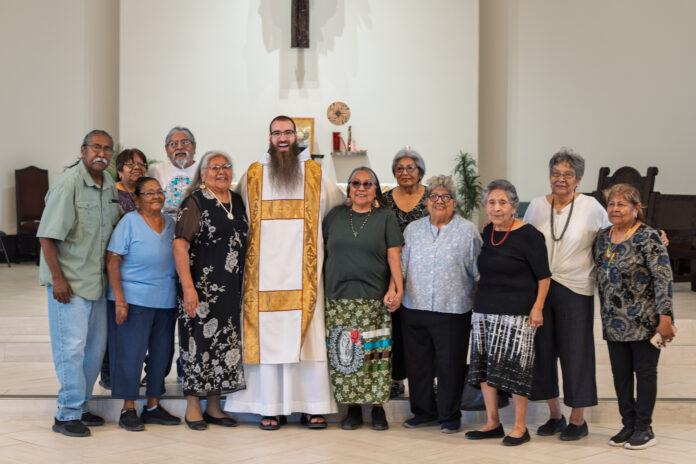
Bishop John Dolan celebrated the ordination to the transitional diaconate of Dcn. Lawrence Hogue, F.H.S., on Saturday (May 16) at St. Anthony Catholic Mission Church in Sacaton, Ariz.

“I really feel like the Lord has called me here to serve this beautiful community.” Dcn. Lawrence said. As a Franciscan Friar of the Holy Spirit, he is entrusted with the pastoral and spiritual care of the Native American communities in the Diocese of Pheonix, on which he has already made a positive impact.

Bishop Dolan said Dcn. Lawrence has “the greatest gift that he is going to create”, which is joy.

“I think he’s probably one of the best examples of what, when a deacon says at the end of Mass, ‘go and announce the Gospel with your lives,’” Bishop Dolan continued.

After struggling for a time to let go of their son due to living in Pennsylvania, Dcn. Lawrence’s parents, Steve and Monica Hogue, are happy that he is called to serve the people of Arizona.

“There is nowhere else in the world that he should be other than here, and we freely give him to these people and his calling,” Steve said.

Through Dcn. Lawrence and the formation he has received, his parents have grown in their own spiritual lives over the past several years.

“He’s been formed, but through him we’ve been formed,” Monica said.

Br. Damien Van Amerongen has been a Franciscan seminarian with Dcn. Lawrence for over four years and was happy to enjoy the moment of ordination with his fellow brothers.

“As Franciscans we share all things in common, so we get to share this ordination in a special way just through grace,” Br. Damien said.

Br. Damien is looking forward to seeing Dcn. Lawrence’s joy pour over into the sacraments he will be able to celebrate. “I’m really excited to see him baptize some babies.”

On Saturday morning, after becoming a transitional deacon, Dcn. Lawrence can now serve the people in additional ways, such as administering baptisms and presiding over weddings and funerals. As a deacon, he can also prepare the chalice for the Blood of Christ at the Mass, a tradition which dates back to St. Lawrence himself, who was born in AD 225.

However, the excitement for Dcn. Lawrence extends beyond his new role, as he looks forward to his ordination to the priesthood in 2027.

He had first heard the call to the priesthood when he procrastinated doing his math homework during freshman year of college and decided to pray instead. “I felt like the Lord said to me, I need to be a priest,” Dcn. Lawrence said.

His parents described how growing up they never knew what his vocation would be, but they did have moments of insight.

“He had a towel wrapped around him, and I thought he was going to say he looks like a king,” Monica said. “But I said, ‘who are you dressed up as?’ He said, ‘a priest.’”

Bishop Dolan says as a deacon, Dcn. Lawrence will be a blessing and his radiating joy “is probably the great gift that we can celebrate here in our diocese, what we can celebrate with this community, his brothers in the community, but also here in the Gila River zone of Arizona.”

SEE FACEBOOK PHOTO GALLERY

St. Rose Philippine Duchesne opens new church after 22 years

“Let us not become weary in doing good, for at the proper time we will reap a harvest if we do not give up.” (Gal 6:9)

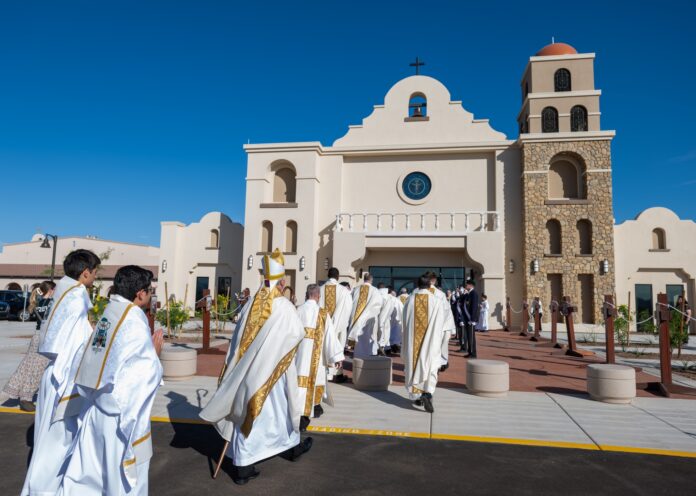
Nearly 2,000 years after St. Paul wrote those words to believers in Galatia, they are ringing true — along with the bells of a brand-new church — at St. Rose Philippine Duchesne Parish in Anthem, Ariz.

Over two decades after its first gathering in the home of Bob and Alana Bush, the parish opened its new building of worship with a dedication Mass celebrated by Bishop John Dolan Wednesday (May 13).

“Congratulations to all of you on this historic and grace-filled day,” St. Rose’s pastor, Fr. Francisco “Bing” Colasito beamed, crediting parishioners and staff for the completion of the project that includes a new perpetual adoration chapel and a chapel for daily Mass.

“This sacred milestone is the fruit of years of prayer, sacrifice and tremendous generosity; a testament of faith, perseverance and unwavering commitment to building a spiritual home,” Fr. Bing said.

The Bushes were among more than 1,000 worshippers who filled the church for the dedication Mass.

“It’s unbelievable; just amazing,” smiled 22-year parishioner and choir member Teri Clein.

Laid out in a cruciform shape, with a nave intersected by side areas, or transepts, the Spanish mission-style structure boasts a sanctuary punctuated by detailed gold carvings and dark wood. Its altar sides and front are adorned with retablo figures of the 12 apostles. Its dark wood pews and massive ceiling beams contrast with its white walls and floor, and large arch transept windows. A total of 44 colorful stained-glass windows depicting saints, including St. Rose, the Blessed Virgin Mary and others, dot the interior walls’ upper portions. A large stained-glass depiction of the Last Supper highlights the perpetual adoration chapel.

Fr. Bing and Bishop Dolan compared the building’s physical nature with the spiritual identity of its occupants and the universal Church.

“My brothers and sisters, this church is not ultimately about concrete or wood; glass or stone,” the bishop said in his homily. “It is about Christ, the capstone, and you, the living stones joined together into a holy temple where God is worshipped in spirit and in truth.

“Today, we give thanks for all who carried this parish through those years: founding families, volunteers, benefactors and priests, especially Fr. Bing, who continues to shepherd this community with fidelity,” the bishop continued.

“May St. Rose pray for this parish community, that you continue to be missionaries of hope here in the desert; gathering people not merely into a building but into the very household of God here in Anthem.”

Pilgrims in the desert

The parish’s story began around 2001.

Catholics living in the then-3-year-old master-planned community of Anthem, about 35 miles north of downtown Phoenix, came together under Good Shepherd Mission in neighboring New River, Ariz. They worshipped and fellowshipped with one another that way until 2004, when the Diocese of Phoenix established the parish, naming it after a young Frenchwoman who became a nun and eventually ministered in the United States along the Missouri frontier. As the Anthem area grew and more Catholics arrived, the parish’s faithful met and worshipped in a local school gymnasium, then a parish office and eventually in its multipurpose Spirituality Center that opened in 2010.

The parish yearned for a permanent church building, and with the arrival of Fr. Bing as parochial administrator in 2015, those plans began to coalesce.

“Our journey beautifully reflects the living stones of the Church: the people of God, who first built a community of faith before raising walls of brick and stones,” Fr. Bing said Wednesday.

The parish also needed to pay its construction debt.

By 2021, the bills for building the Spirituality Center were paid, and planning as well as fundraising for the new church ramped up, its pastor leading the parish development council and local donors toward their financial goal.

“We asked the parishioners to storm heaven with the bishops, trusting that if God desired this church to be built, He would provide the way,” Fr. Bing recalled.

The project began September 1, 2024, and culminated Wednesday, the Feast of Our Lady of Fatima, with principal designer Christine Naiman of Adaptive Architects in Mesa, Ariz., handing the building keys to Bishop Dolan, who opened the doors. Once worshippers had filed in, the bishop blessed the church, sprinkling holy water across each of its walls.

Before the offertory, he continued the time-honored Church process of placing a holy relic — in this case, a relic of St. Rose — inside the base of the altar and anointing its top with holy chrism oil. He poured the oil over its center and four corners, symbolizing Jesus’ five wounds on the cross. He, Fr. Bing and Parochial Vicar Fr. Charles Ouemenga then anointed the church walls with oil. The bishop concluded the ceremony by swinging a lit thurible of incense, allowing its smoke to waft over the altar and congregation, praying along the way.

Parishioners felt God’s hand and His presence in their new worship home.

“It’s surreal,” said John Isbrandt, a 22-year parishioner who attended both the first and final Masses in the Spirituality Center. “It’ll help people realize their time, sweat, blood, tears and money went into something that is really worth it.”

Jack Evans, who produced the parish’s video construction reports, said the project will encourage church involvement.

“You can’t help but be impressed and overwhelmed,” he said.

Gaye Rose, whose husband’s new job brought them from Houston to Anthem seven months ago, agreed. She said the couple hopes to dive into ministries there.

“The crucified Lord is so realistic. When you’re surrounded by the saints and Marian images; to be part of something they built for so long. I can’t wait,” Rose said.

Patroness of perseverance

Parish Project Manager Paul Novak said pursuit of the new church reflects their patroness.

Born to a wealthy French family in 1769, St. Rose Philippine Duchesne, RSCJ, became a nun in 1788. When the Visitation Order was dispersed during the French Revolution, she turned the convent over to the newly founded Society of the Sacred Heart. In 1818, the order sent St. Rose and four other nuns to the United States, where she opened a boarding school for daughters of pioneers near St. Louis and launched the first free school west of the Mississippi River. The nuns founded orphanages and engaged in missionary work among Native Americans.

Canonized by Pope St. John Paul II in 1988, St. Rose’s feast day is Nov 18.

A patroness of Catholic schools, educators and Native American rights, St. Rose also is regarded as a saint of perseverance amid adversity.

“We hope all the work, prayers and effort will last for the next several generations, and they will feel the love that was the foundation of building this,” Novak said.

The new church comes as the area is poised for further residential growth. Home to 1,700 registered families, the parish is ready to welcome more.

“May this church stand as a visible sign of God’s abiding presence in our midst,” Fr. Bing said. “… a place where the Gospel is proclaimed with conviction and charity, where the sacraments are celebrated with reverence, where the weary find comfort and where all who enter encounter the love and mercy of Christ,” he concluded.

“When people drive by this parish,” Bishop Dolan said, “they should not merely see architecture, they should see hope.”

SEE FACEBOOK PHOTO ALBUM

Catholic Bishops of Arizona: Statement on Scheduled execution of Leroy McGill

CATHOLIC BISHOPS OF ARIZONA 

STATEMENT ON SCHEDULED EXECUTION OF LEROY MCGILL 

 May 15, 2026 

We deeply regret that the State of Arizona has now set a date of May 20 for the execution of Leroy McGill.   

The Bishops of the Arizona Catholic Conference (ACC) remain steadfast in our opposition to the death penalty, especially in this modern era where a life sentence for those who are a threat to society is an alternative.  In doing so, we are united with Pope Leo XIV who has advocated for a global end to capital punishment. 

In discussing capital punishment, however, it is first critical to never forget the horrible crimes committed and the terrible loss experienced by the families of victims.  Our concern is for all who are victims of such heinous crimes, and we support the provision of compassionate and professional assistance to the families and loved ones of victims.  We fervently pray for their healing and that the grief of their loss is never forgotten! 

As bishops, our primary opposition to the death penalty is rooted in the teaching of the Catholic Church that every person is created in the image and likeness of God.  For this reason, we are compelled to uphold the sacred dignity of all human life. 

We are also mindful of the many problems associated with the death penalty that are in conflict with the concepts of human dignity and equal application of the law.  Specifically, across the nation, including in Arizona, the use of the death penalty is troublesome because it is often influenced by factors such as geography and is disproportionately imposed on people of color and of limited economic means.   

Furthermore, the risk of executing an innocent person is not illusory.  At least two hundred people in the United States have been wrongfully convicted and sentenced to death only to be later exonerated.  In Arizona alone, eleven people have been released from death row after evidence was later found to exonerate them. 

The execution of prisoners can also be problematic in that it may deny them a final chance at redemption and salvation.  As Catholics we believe that all of us, including even the worst sinner, has a chance at forgiveness and to reconcile themselves with God as long as they live.  While some inmates on death row do seek forgiveness, the execution of others permanently closes this door. 

 We are fortunately living in a time where modern prisons create an environment that does not require the death penalty to keep us safe.  Our society is able to achieve justice and protect its population from harm. 

 As the Bishops of the Arizona Catholic Conference, we, therefore, encourage all people of goodwill to join us in praying and advocating for an end to the death penalty and for the soul of Leroy McGill as his scheduled execution date approaches. 

Most Rev. John P. Dolan
Bishop of Phoenix

Most Rev. James A. Misko
Bishop of Tucson

Most Rev. James S. Wall
Bishop of Gallup

Most Rev. Artur Bubnevycch
Bishop of the Eparchy of Phoenix

Most Rev. Eduardo A. Nevares
Auxiliary Bishop of Phoenix

Most Rev. Peter Dai Bui
Auxiliary Bishop of Phoenix

Most Rev. Gerald F. Kicanas
Bishop Emeritus of Tucson

Most Rev. Thomas J. Olmsted
Bishop Emeritus of Phoenix


DECLARACIÓN DE LOS OBISPOS CATÓLICOS DE ARIZONA

 SOBRE LA EJECUCIÓN PROGRAMADA DE LEROY MCGILL

15 de mayo de 2026

Lamentamos profundamente que el Estado de Arizona haya fijado la fecha del 20 de mayo para la ejecución de Leroy McGill.

Los obispos de la Conferencia Católica de Arizona (ACC, por sus siglas en inglés) permanecemos firmes en nuestra oposición a la pena de muerte, especialmente en esta era moderna en la que la cadena perpetua para quienes representan una amenaza para la sociedad es una alternativa. Al hacerlo, estamos unidos al Papa León XIV, quien ha abogado por un fin global de la pena capital.

Al hablar de la pena capital, sin embargo, es fundamental no olvidar nunca los terribles crímenes cometidos y la enorme pérdida experimentada por las familias de las víctimas. Nuestra preocupación es por todos los que son víctimas de crímenes tan atroces, y apoyamos la provisión de asistencia compasiva y profesional a las familias y seres queridos de las víctimas. ¡Oramos fervientemente por su sanación y porque el dolor de su pérdida nunca sea olvidado!

Como obispos, nuestra principal oposición a la pena de muerte está enraizada en la enseñanza de la Iglesia Católica de que toda persona ha sido creada a imagen y semejanza de Dios. Por esta razón, nos vemos impulsados a defender la sagrada dignidad de toda vida humana.

También somos conscientes de los muchos problemas asociados con la pena de muerte que entran en conflicto con los conceptos de la dignidad humana y aplicación equitativa de la ley. En particular, en todo el país, incluyendo Arizona, el uso de la pena capital es preocupante porque a menudo está influenciado por factores como la geografía y se impone de manera desproporcionada a personas de color y con recursos económicos limitados.

Además, el riesgo de ejecutar a una persona inocente no es ilusorio. Al menos doscientas personas en los Estados Unidos han sido condenadas injustamente y sentenciadas a la muerte, solo para ser posteriormente exoneradas. Solo en Arizona, once personas han sido liberadas del corredor de la muerte después de que se encontraran pruebas que demostraban su inocencia.

La ejecución de prisioneros también puede ser problemática en cuanto que puede negarles una última oportunidad de redención y salvación. Como católicos creemos que todos nosotros, incluso el peor de los pecadores, tenemos la oportunidad del perdón y de reconciliarnos con Dios mientras vivamos. Aunque algunos reclusos en el corredor de la muerte buscan el perdón, la ejecución de otros cierra permanentemente esta puerta.

Afortunadamente, vivimos en una época en la que las prisiones modernas crean un ambiente que no requiere la pena de muerte para mantenernos seguros. Nuestra sociedad es capaz de alcanzar justicia y proteger a su población del daño.

Por lo tanto, como Obispos de la Conferencia Católica de Arizona, animamos a todas las personas de buena voluntad a unirse a nosotros en la oración y en la defensa del fin de la pena de muerte y por el alma de Leroy McGill a medida que se acerca la fecha programada de su ejecución.

Reverendísimo John P. Dolan 
Obispo de Phoenix

Reverendísimo James A. Misko
Obispo de Tucson

Reverendísimo James S. Wall 
Obispo de Gallup

Reverendísimo Artur Bubnevycch
Obispo de la Eparquía de Phoenix

Reverendísimo Eduardo Nevares 
Obispo Auxiliar de Phoenix

Reverendísimo Peter Dai Bui
Obispo Auxiliar de Phoenix

Reverendísimo Gerald F. Kicanas
Obispo Emérito de Tucson

Reverendísimo Thomas J. Olmsted
Obispo Emérito de Phoenix

Deacon Simon Ortiz – The Path to Priesthood

Dcn. Simon Ortiz never thought he was going to be a priest when he grew up — he had his eye on becoming a sports reporter. But a retreat during his sophomore year of high school changed everything.

Press play to hear Dcn. Simon’s journey to the priesthood, and ultimately how he can’t wait to serve the people of God, sharing in their joys and sorrows of life.

Dcn. Simon will be ordained to the priesthood at St. Thomas Aquinas Parish in Avondale, Ariz., on Saturday, June 6, 2026 at 10 a.m., and will be joined by Dcn. Nathan Blanchard, Dcn. Jeff Pooley and Dcn. Paul Graupmann, F.H.S.

To support priests in the Diocese of Phoenix, visit priests.dphx.org

Diocese of Phoenix hosts national Child & Youth Protection Catholic Leadership Conference

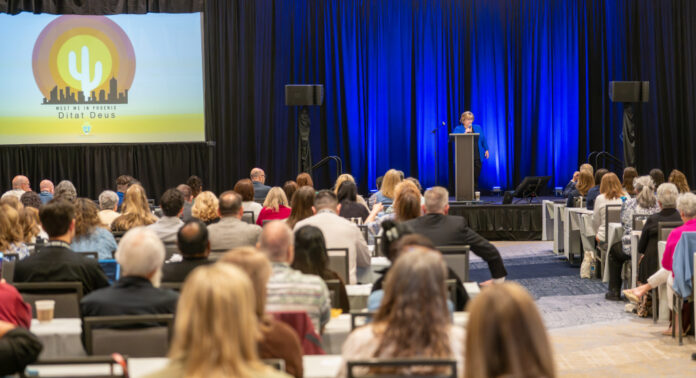
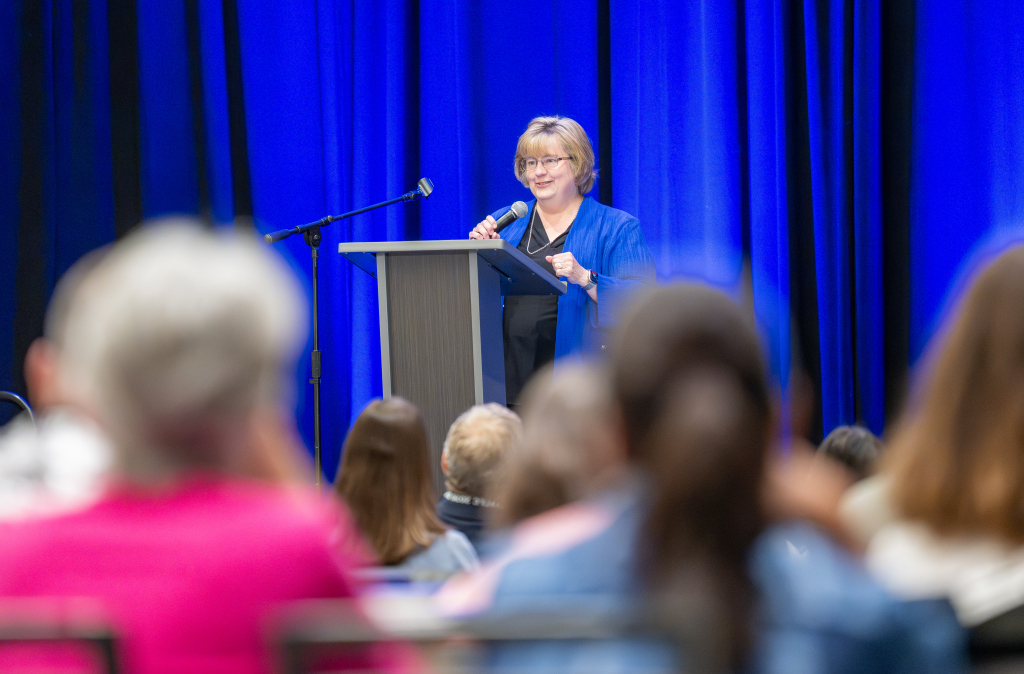
This week hundreds of Catholic faithful from across the country — including bishops, diocesan leadership and those directly involved in child and youth protection — are gathered in downtown Phoenix for the Child & Youth Protection Catholic Leadership Conference 2026. Running from May 10-13, the annual gathering serves as a platform for networking and sharing best practices on safe environment ministry across the country.

This is the first time the Diocese of Phoenix has organized and hosted the event, which was first held in 2006.

Dr. Anna Pecoraro is among the speakers this year. As a licensed clinical psychologist, she specializes in trauma therapy for children and youth. Her experience working with youth who have experienced various forms of abuse will offer attendees practical tools and approaches to better support and protect vulnerable populations.

Another highlighted speaker is Maricopa County Attorney Rachel Mitchell, a legal expert who has been at the forefront of advocating for child protection laws and policies. Her session will focus on legal obligations and responsibilities in ensuring the safety and wellbeing of children and youth.

Additionally, cyber security expert Mike Landeck shared the latest research on AI, Internet and social media, and what the current trends and dangers are to youth. His session focused on how routine technologies, such as web tracking, can inadvertently retraumatize survivors.

“This year’s conference gathers leaders from across the nation to share a single, essential mission: to ensure that the Church remains a place of safety, healing, compassion and hope,” said Bishop John Dolan of Phoenix.

“Each one of you [in attendance] reminds us that safeguarding is not merely a program or policy. It is a ministry, a moral responsibility and a lived expression of our baptismal call,” he continued. “Together, we form a community committed to ensuring that every child knows the safety, love and dignity that Christ desires for them.”

Catholic Teaching Regarding Nuclear Weapons

Courtesy of Focolare Media

There is confusion among Roman Catholics about what the Church teaches

I write to you as a pastor and as a fellow disciple of Jesus Christ, one who shares your concern for the moral challenges of our time. As Archbishop of Santa Fe, I have prayed deeply about the continued existence of nuclear weapons and what our faith requires of us in response. I am convinced that this issue is not peripheral to our Catholic life—it goes to the very heart of who we are as a people committed to the Gospel of peace.

The Church teaches, and has always taught, that every human person is created in the image and likeness of God (cf. Catechism of the Catholic Church [CCC], 1700). From this foundational truth flows the absolute dignity of human life. Nuclear weapons, by their very nature, stand in direct contradiction to this dignity. Their destructive force is indiscriminate, incapable of distinguishing between combatant and noncombatant. As the Catechism reminds us, “every act of war directed to the indiscriminate destruction of whole cities… is a crime against God and man” (CCC, 2314). Nuclear weapons represent the extreme embodiment of this moral disorder.

For a time, the Church tolerated nuclear deterrence as a provisional measure. Pope John Paul II acknowledged in 1982 that deterrence might be morally acceptable “as a step on the way toward a progressive disarmament.” Yet even then, this acceptance was conditional and temporary, never an endorsement of the indefinite possession of such weapons. Today, we must recognize that this “step” has become a stumbling block. Deterrence has not led us to disarmament; instead, it has entrenched a system built on fear.

Pope Benedict XVI warned that peace cannot be founded on the threat of mutual destruction. True peace, he insisted, must be rooted in truth, justice, charity, and freedom—the very pillars articulated by Pope John XXIII in his landmark encyclical Pacem in Terris. In that document, written in the shadow of the Cuban Missile Crisis, Pope John XXIII spoke with prophetic clarity: in an age of nuclear weapons, it is irrational to believe that war can be used as an instrument of justice. He called for a complete ban on such weapons, grounded in a recognition of our shared humanity and our common destiny.

More recently, Pope Francis has developed this teaching further, declaring not only the use but also the possession of nuclear weapons to be morally unacceptable. This marks a significant and Spirit-led development in the Church’s moral reflection. The Holy Father reminded us that the resources devoted to nuclear arsenals are resources denied to the poor, the marginalized, and the care of our common home. In this way, nuclear weapons are not only a threat to peace; they are an affront to justice and to the stewardship entrusted to us by God.

Pope John XXIII spoke with prophetic clarity: in an age of nuclear weapons, it is irrational to believe that war can be used as an instrument of justice.

Even in our own time, the voice of the Church continues to call us forward. Pope Leo XIV has emphasized the moral urgency of multilateral disarmament and the need for renewed international cooperation. His teaching underscores that peace is not merely the absence of war, but the presence of right relationships—among nations, among peoples, and with God.

This vision is not new. It echoes the witness of the early Church Fathers, who lived in a world marked by violence and empire, yet proclaimed a radically different way. Writers such as Tertullian and Origen rejected participation in violence, emphasizing instead the call to live as peacemakers in imitation of Christ. While the Church’s understanding of just war developed over time, this early witness continues to challenge us to examine whether our reliance on weapons of mass destruction is compatible with the Gospel.

Archbishop Wester at the Mass of Episcopal Ordination & Installation of Bishop Misko in 2026.

In light of this rich tradition, we must confront a difficult truth: the continued possession of nuclear weapons is not morally sustainable. It reflects a failure to trust in the ways of peace to which Christ calls us. It perpetuates a global system of fear, where security is sought not through solidarity, but through the capacity for annihilation.

For those of us in the United States, this teaching carries particular weight. As citizens of a nation with a vast nuclear arsenal, we bear a special responsibility. Conversion, as I have often said, is not only personal but social. It requires us to examine the structures of sin in which we participate, often unknowingly.

What, then, are we called to do?

First, we must form our consciences in light of the Church’s teaching. This means engaging deeply with Scripture, the Catechism, and the social teaching of the Church. It means taking seriously the words of the popes and allowing them to challenge our assumptions.

Second, we must advocate for change. The Catechism teaches that citizens have both the right and the duty to contribute to the good of society (cf. CCC, 2239). This includes supporting policies that move us toward verifiable nuclear disarmament, strengthening international agreements, and promoting diplomatic solutions to conflict.

Third, we must pray. Peace is ultimately a gift from God, but it is a gift that requires our cooperation. Through prayer, we allow God to transform our hearts, freeing us from fear and opening us to the possibility of reconciliation.

Finally, we must bear witness to hope. The task before us is daunting, and progress may seem slow. Yet our hope is not in human effort alone, but in the God who makes all things new. As Christians, we are called to live as if peace is possible—because, in Christ, it is.

The question we face is not simply political or strategic; it is profoundly spiritual. Will we continue to rely on weapons that threaten God’s creation, or will we embrace the path of peace laid before us by Christ and his Church? Guided by the wisdom of the Magisterium, inspired by the witness of the saints, and strengthened by God’s grace, let us choose the way of life.

Notes (Magisterial References):

  1. Catechism of the Catholic Church, §§1700, 2308–2314, 2239. 
  2. John Paul II, Address to the United Nations, 1982. 
  3. John XXIII, Pacem in Terris (1963). 
  4. Francis, Address in Hiroshima, 2019. 
  5. Benedict XVI, World Day of Peace Messages. 
  6. Early Church Fathers: Tertullian, De Corona; Origen, Contra Celsum.