
Jesus is close by, just open your eyes, Pope Leo tells young people

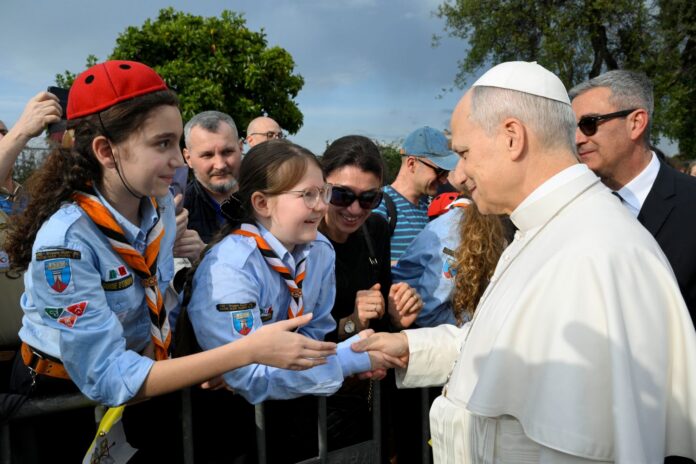
Pope Leo XIV greets young scouts, known as "Coccinelle" or "Ladybugs" in Italian, during a parish visit to the Church of St. Mary of the Presentation in Rome, Italy, March 8, 2026. (CNS photo/Vatican Media)

By Carol Glatz

ROME (CNS) — Every Catholic parish needs to show that Jesus, who promises a just, true and full life, is always near, Pope Leo XIV said.

“I encourage you to ensure that parish activities are a sign of a Church that — like a mother — takes care of her children, without condemning them, but rather welcoming them, listening to them, and supporting them in the face of danger,” he told parishioners at the Church of St. Mary of the Presentation in Rome in his homily March 8.

“As a good and caring Shepherd, the Lord always waits for us and accompanies us, wherever we live and however we are. He mercifully heals our wounds and gives himself as a gift to us, enabling us in turn to become a gift for our brothers and sisters,” he said.

Pope Leo XIV greets those gathered to pray the Angelus in St. Peter’s Square at the Vatican March 8, 2026. (CNS photo/Vatican Media)
Earlier in the day, before praying the Angelus at midday with people gathered in St. Peter’s Square, the pope urged Catholics to be men and women of peace and charity, which the world is thirsting for.

“Let us ask Mary, Mother of the Church, to be able to serve, with Jesus and like Jesus, those men and women thirsting for truth and justice,” he said. “This is not the time for opposition between one church and another, between ‘us’ and ‘them’: those who worship God seek to be men and women of peace, who worship him in Spirit and in truth.”

Later in the early evening, Pope Leo made his fourth visit to a parish in Rome in the run-up to Easter. As bishop of Rome, he has been celebrating Mass and meeting with the faithful and priests in different parts of his diocese, most often in neighborhoods that face a variety of difficulties, such as poverty, violent crime and drug dealing.

Pope Leo XIV arrives at the Church of St. Mary of the Presentation in Rome, Italy, March 8, 2026, to celebrate Mass during a parish visit. (CNS photo/Vatican Media)
“Young people risk growing up deceived by those who peddle death or disillusioned about the future,” he said in his homily. “Many are waiting for a home, a job that ensures a dignified life, safe spaces where they can meet, play and plan something beautiful together.”

“Men and women arrive at this parish wounded in spirit, their dignity injured and thirsting for hope,” he said. “You have the urgent and liberating task of showing them the closeness of Jesus, his desire to redeem our existence from the evils that threaten it with a proposal for a just, true and full life.”

The faithful can find strength in the Eucharist, he said, “and may the Gospel, which springs forth in us as a source of truth, help each of us to open our eyes, to wisely evaluate what is good and what is evil, thus forming free and mature consciences.”

Before celebrating Mass, the pope met with families and young people outside.

Pope Leo XIV greets children during a parish visit to the Church of St. Mary of the Presentation in Rome, Italy, March 8, 2026. (CNS photo/Vatican Media)
“Jesus is coming to your home, in your heart, in your life. We have to be ready to open that door to find Jesus, who is waiting for us,” he said.

“Jesus is close to us. Let’s open our eyes!” he said, indicating the Lord can be found in those who suffer or seek help. “He asks us to bring them what we have received.”

Pope Leo also urged the children to make peace with everyone in their lives as part of bringing peace to the world, which is “truly necessary today.”

There is always a way to overcome disagreements and difficulties without resorting to bullying or violence, he told the children.

Before visiting the parish in the early evening on the outskirts of Rome, Pope Leo prayed the Angelus at midday at the Vatican.

The pope highlighted the day’s Gospel reading of the Samaritan woman meeting Jesus at the well (John 4:5-42).

Pope Leo XIV speaks to those gathered to pray the Angelus in St. Peter’s Square at the Vatican March 8, 2026. (CNS photo/Vatican Media)
“According to custom, he ought to have simply ignored that Samaritan woman; instead, Jesus speaks with her, listens to her and shows her respect — without a hidden agenda and without disdain,” he said.

“How many people seek in the Church this same sensitivity, this availability! And how beautiful it is when we lose track of time in order to give attention to the person we are encountering,” he said.

So many people in the world are searching “for this spiritual spring,” he said, quoting the Dutch Jewish writer Etty Hillesum, who was killed at age 29 in the Auschwitz death camp in 1943: “Sometimes I am there too. But more often, stones and grit block the well, and God is buried beneath. Then he must be dug out again.”

“Dear friends, there is no energy better spent than that dedicated to freeing our heart,” the pope said.

Pop-up boutique provides free prom attire for Prescott teens

One afternoon, a teen girl from Chino Valley High School in Northern Arizona came home jumping up and down with excitement — she had been asked to prom. She exclaimed, “Mom, this is the best news ever! We need to find a beautiful dress. Can we go shopping tomorrow?”   

Her mom smiled and agreed. But once her daughter left the room, she broke down in tears. As a single mom with five children, working two jobs, she had no idea how she would afford a dress and accessories.   

The next day, she opened the newspaper and saw an article about the Priceless Prom Project, a pop-up style boutique where area teens can shop, free of charge, from a large selection of formal prom attire. The new and like-new items — including dresses, suits, tuxedos, purses, shoes and jewelry — are available to any area high school students on a first-come, first-serve basis.   

The mother and daughter pair went to the Priceless Prom Project where the daughter found everything she needed, free of charge.   

Diane DeLong, senior program manager for Catholic Charities’ North Star Youth Partnership, which runs the Priceless Prom Project, remembers this story as one of the nearly 3,000 teens that have been impacted by the program since its founding in 2009.  

North Star Youth Partnership, a Central and Northern Arizona program of Catholic Charities, engages youth ages 11-18 through educational, recreational, leadership and service-learning opportunities. Founded in 1997 in Yavapai County, North Star Youth Partnership strives to nurture youth’s potential through programs that build their self-confidence and the ability to make good choices.North Star Youth Partnership now offers more than ten programs serving youth across Maricopa and Yavapai County and will be hosting the annual Priceless Prom Project at Pine Ridge Marketplace in Prescott, Ariz., March 10 – April 9.  

The highly anticipated event is made possible with the help of businesses and individuals in the community who donate items and their time to ease the financial burden of attending prom. Each year an estimated 500-700 items are donated for the Priceless Prom Project, and more than 80 volunteers serve a combined time of more than 375 hours, all to help students look and feel their best for the special occasion.  

For information on location and event hours, click here. Prom attire donations can be dropped off at the boutique during open hours.   

An estimated 1,600 incoming Catholics welcomed at Rite of Election liturgies

For the second consecutive year, record numbers gathered in the Diocese of Phoenix for the Rite of Election liturgies — an integral part of the Order of Christian Initiation of Adults (OCIA) that is celebrated annually during the Lenten season — with some of the highest turnouts in the country. An estimated 1,600 candidates and catechumens, those who will come into full communion with the Catholic Church at the Easter Vigil, were personally welcomed at the late-February and early-March liturgies as they enter the final stages of their preparation.   

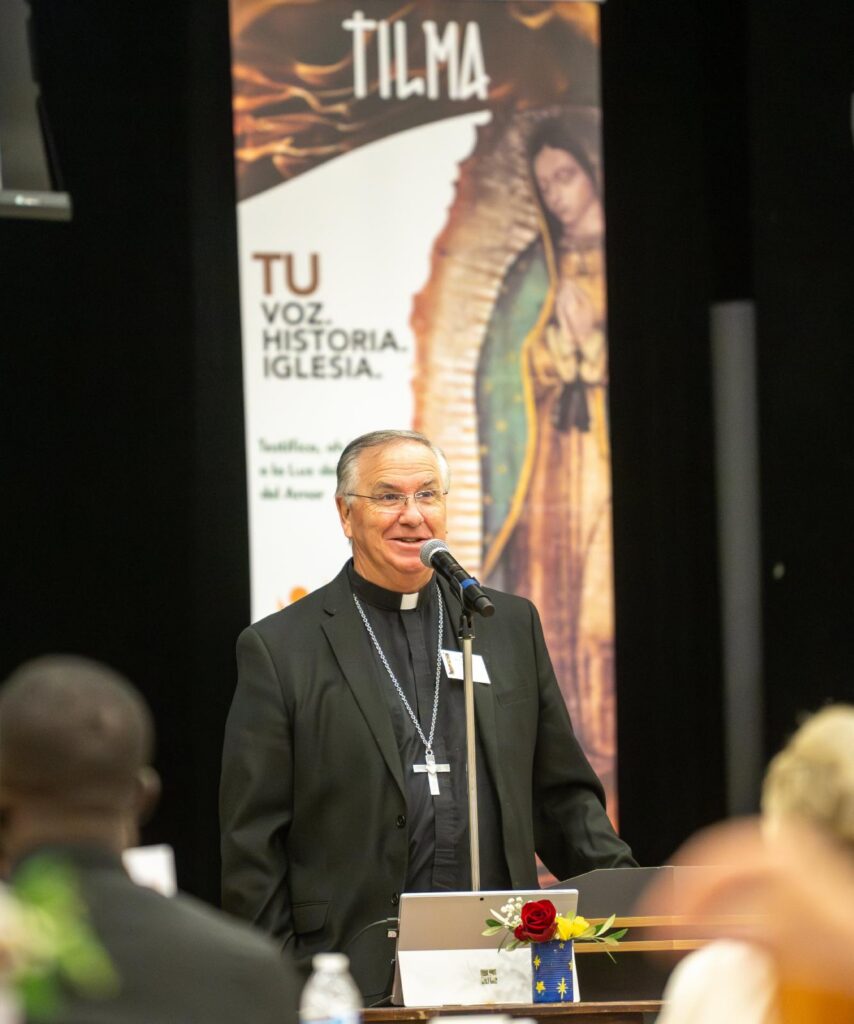
“More and more young adults are coming to participate in the sacraments and the ministry of our diocese,” said Bishop John Dolan. “It is amazing to see so many people coming into the Church and participating in the Rite of Election. It’s a very exciting time.” 

Over the past two years, due to the vastness of the nearly 44,000-square-mile Diocese of Phoenix, Bishop Dolan has celebrated the liturgies in multiple locations for the opportunity to personally welcome more of the individuals who are entering the Catholic Church. Last year four liturgies were celebrated — this year there were five. 

During the liturgy, representatives from each parish or community present a book to the celebrant which contains the names of the catechumens, those unbaptized who are preparing to come into full communion with the Church. The celebrant receives the book and signs his name before declaring the catechumens to be the elect of God.

The Rite of Election liturgies spanned three weekends and took place at Ss. Simon and Jude Cathedral in Phoenix (Feb. 22 and 23, celebrated by Bishop Dolan), Immaculate Conception in Cottonwood, Ariz., (Feb. 28, celebrated by Bishop Dolan), St. Thomas Aquinas in Avondale, Ariz., (March 1, celebrated by Auxiliary Bishop Peter Dai Bui), and St. Mary in Kingman, Ariz., (March 7, celebrated by Fr. Matt Lowry, Episcopal Vicar of the North). 

Representatives from 83 of the diocese’s 94 parishes brought their OCIA groups to participate in the Rite of Election liturgies, and there were nearly 3,400 people in attendance across the liturgies. This participation increase of 16 parishes from last year alone comes with a recognizable growth in camaraderie among parishes and priests, noted Alyssa Yingling, manager of liturgical events and formation. She commented that several years ago only 30-35 parishes participated in the Rite of Election on a regular basis. 

The estimated 1,600 candidates and catechumens in attendance, in addition to numerous others around the diocese, will receive the sacraments of initiation at the Easter Vigil on April 4.  

“I really feel as though there is quite a movement within the body of Christ, the Church,” added Bishop Dolan. 

SEE FACEBOOK ALBUM OF RITE OF ELECTION LITURGIES

SEE FACEBOOK ALBUM OF RITE OF ELECTION GROUP PHOTOS

In the face of the mystery of evil, Christians must be signs of hope, pope says

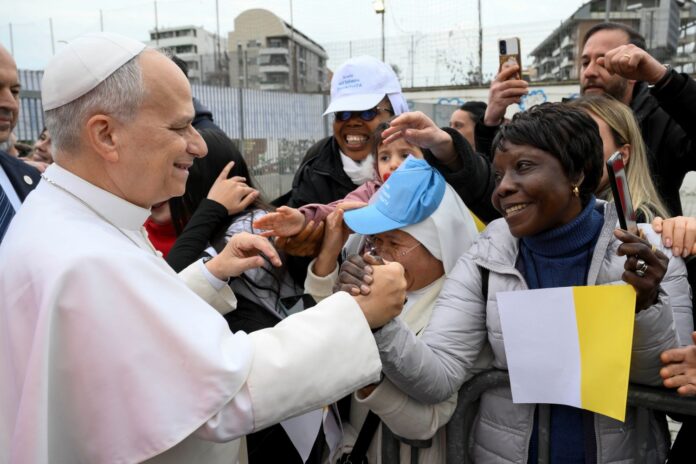
Pope Leo XIV greets women during a pastoral visit to the Church of the Ascension of Our Lord Jesus Christ in the working-class neighborhood of Quarticciolo in Rome March 1, 2026. (CNS photo/Vatican Media)

By Carol Glatz

ROME (CNS) — Life is a journey that requires trust and reliance on Jesus, who sometimes asks his disciples to leave everything behind, Pope Leo XIV said.

While it may be tempting to flee from the uncertainty of heading into the unknown, it is precisely in this “dizzying vertigo” that people of faith will find God’s promise of unexpected greatness, he said in a homily during a Mass celebrated at a small parish in Rome March 1.

While it is normal to try to have everything under control, he said, “we miss the opportunity to discover the true treasure, the precious pearl, as the Gospel teaches us, which God has surprisingly hidden in our field.”

Pope Leo was visiting the Church of the Ascension of Our Lord Jesus Christ in the working-class neighborhood of Quarticciolo for the second Sunday of Lent as part of a series of parish visits in the run-up to Easter.

The neighborhood has experienced an increase in crime and drug-dealing. The church and local community, however, have been active in building initiatives to create job opportunities and strengthen essential services and solidarity.

mar 1 26
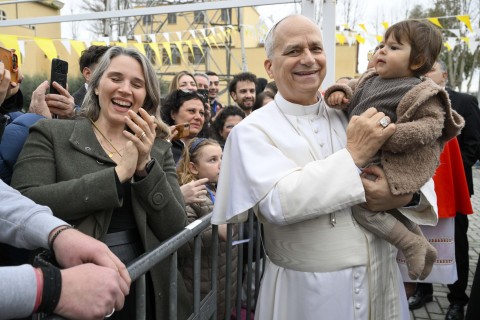
Pope Leo XIV holds a child during a pastoral visit to the Church of the Ascension of Our Lord Jesus Christ in the working-class neighborhood of Quarticciolo in Rome March 1, 2026. (CNS photo/Vatican Media)

“You are signs of hope,” he told the parishioners in his homily.

Faced with so many complex problems, he said, “you are entrusted with the pedagogy of the gaze of faith, which transfigures everything with hope, putting passion, sharing and creativity into circulation as a cure for the many wounds of this neighborhood.”

It is easy to become discouraged and doubt efforts make any sense when so many things are not right in the world, he said. “Instead, it is precisely in the face of the mystery of evil that we must bear witness to our identity as Christians, as people who want to make the Kingdom of God perceptible in the places and times in which we live.”

Life, he said, “is a journey that requires trust; it requires reliance on the Word of God, who calls us and sometimes asks us to leave everything behind.”

For example, he said, Abraham’s journey began with the loss of his homeland, but he was led to a new land with many descendants and “where everything becomes a blessing.”

“If we allow ourselves to be called by faith to walk the path, to risk new decisions in life and love, we, too, will cease to fear losing something, because we will feel ourselves growing in a wealth that no one can steal,” the pope said.

mar 1 26
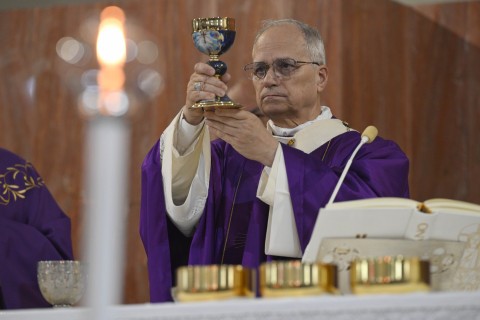
Pope Leo XIV elevates the chalice during Mass at the Church of the Ascension of Our Lord Jesus Christ in the working-class neighborhood of Quarticciolo in Rome March 1, 2026. (CNS photo/Vatican Media)

Another example, he said, is Jesus’ “Eucharistic gesture,” that is, his willingness to offer his body as bread to eat and to live and die to give life.

In fact, Sunday is a chance to take a moment during the journey to gather together around Jesus, who “encourages us not to stop and not to change direction” and to know there is “no more precious treasure than to live in order to give life!”

“Listen to Jesus!” Pope Leo said. “He travels with us, even today, to teach us in this city the logic of unconditional love, of abandoning every defense that becomes an offense.”

“Let us enter into his light to become light of the world, beginning with the neighborhood where we live,” he said, because “the whole life of the parish and its groups exists for this: it is a service to light, a service to joy.”

mar 1 26
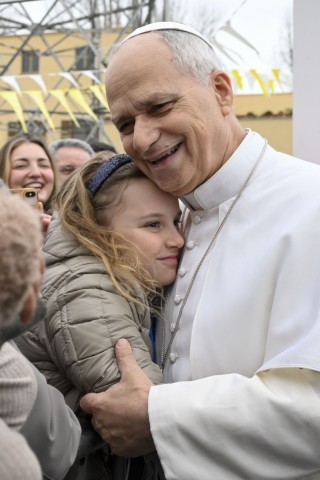
Pope Leo XIV hugs a young girl during a pastoral visit to the Church of the Ascension of Our Lord Jesus Christ in the working-class neighborhood of Quarticciolo in Rome March 1, 2026. (CNS photo/Vatican Media)

Pope Leo is the third pope — after St. John XXIII in 1963 and St. John Paul II in 1980 — to visit the church, which is overseen by the Congregation of the Priests of the Sacred Heart, also known as the Dehonians.

During the late afternoon visit, the pope met with children and young people active in the Jesuits’ MAGIS program. The young adults gave the pope a soccer ball and the black and gold jersey of their local soccer team, the Lions.

The pope also met with vulnerable members of the community, including the elderly, the ill and parents whose children’s drug addictions led them to incarceration. He also spoke with members of the parish’s pastoral council and priests.

©2026 Catholic News Service/United States Conference of Catholic Bishops

New Catholic home for mothers opens in North Phoenix

Life Choices Women’s Clinic has officially opened the doors of Casa St. Gianna, a three-bedroom house for pregnant and homeless mothers and their children. Bishop Emeritus Thomas Olmsted celebrated Mass on the property and blessed the home nestled in a quiet North Phoenix neighborhood on Feb. 21, which began serving its first guests in January. 

Initially inspired by a request for more housing for pregnant mothers in the Valley from the Sisters of Life — a community of religious sisters who embody the mission to uphold the dignity and worth of every person — Catholic Charities Community Services partnered with the City of Phoenix and the Valley Pregnancy Resources Center to purchase and prepare the home for women in need. When it came time for someone to run the program, Sheila Riely from Life Choices stepped up to fill the role. 

“Pregnant women and young children should not live on the streets … with help, we can meet this need,” said Riely. 

Named after St. Gianna Molla, the Italian saint and pediatrician who refused an abortion when she became fatally ill while pregnant with her fourth child, the home seeks to embody the maternal love of St. Gianna, the patron saint of expectant mothers and unborn children. “Casa” is the Spanish word for “home” and was chosen to reflect the diversity of the Catholic community in the Phoenix area while also giving a nod to the Life Choices staff members, the majority of whom are fluent in Spanish. 

The home is for a variety of women in need. 

First priority will go towards a woman considering an abortion. If living at Casa St. Gianna would save that baby’s life, we want to be available to help,” said Christy DeMuro, Life Choices’ community outreach advocate. “Second priority goes to pregnant women and their children currently unhoused and in need of safe, stable housing. Third priority would be to a mother with young children on the streets, even if she is not pregnant.”    

The program fits right in with the mission of Life Choices, which exists to provide pro-life healthcare, help those in crisis, offer the uninsured and underinsured affordable, dignified pro-life healthcare and educate the youth about pro-life values. In addition to Casa St. Gianna, Life Choices has two Phoenix locations and a mobile clinic, which offered 2,885 free pregnancy tests, 1,530 ultrasounds and 6,455 medical visits in 2025. 

“With Casa St. Gianna, we have moved into housing, but it is all along the same lines of living the teachings of the Catholic Church, respect for human life and preferential option for the poor, while compassionately assisting people in need, both born and unborn,” continued DeMuro. 

One of the unique aspects of Casa St. Gianna is the House Mother, a woman who lives on site with the women and children in need. In addition to living in community with guests, she also cooks dinner for the women, offers emotional support and occasional babysitting, models maintaining a tidy and loving home and provides resources to help the women meet their goals.  

Volunteer mentors also work one-on-one with each mom, assisting her in goal setting and attainment.  

“We are so thrilled that Casa St. Gianna is open,” said DeMuro. “It is a great honor and privilege to be a small part of this exciting project. St. Gianna Molla, pray for us!” 

Intakes for potential guests take place at Life Choice’s clinic on 7th Street in Sunnyslope. For more information on location and hours, click here. 

Tips for godparents

Photo Credit to Joseph Pillado

To the visible eye, I am not a very good godmother.

By outside, tangible measures, I am failing. In the years that followed my conversion around the age of 30, I became godmother to a number of sweet little ones. But even as my own spiritual life developed, I never seemed to remember to do those godmother-ish things that I saw others do. Time spent one on one with a godchild proved difficult with our growing family, special gifts seemed unfair to my godchild’s sibling(s) and I was never one for big flashy gifts or envelopes of cash.

At one point, I desperately asked my parish priest, “What WAS my responsibility, realistically?”

At the time of baptism, the godparents and parents both profess promises before God and the community present, to reject sin in a number of poignant ways, and they agree to certain statements taken from the Apostles’ Creed. But prior to all of this, the godparents specifically are asked one question:

Are you ready to help the parents of this child in their duty as Christian parents?

It is a simple answer: I do.

The words fall off the lips so easily.

Of course we want to help the parents of this little one. But what does that actually entail? As the baby becomes a toddler, child, adolescent, young adult — how do godparents actually help the parents in their duty?

The idea of a godparent present at activities, events and celebrations, showering the child with love and affection is sweet. But it isn’t exactly what the godparent signed up to do. Together with the parents, we are instructed to “make it your constant care to bring them up in the practice of the faith” and we promise to help keep the flame of faith burning bright in the life of the child.

Almost 25 years ago, when I first recited my “I do” to those promises in the sacrament of baptism, I was living in a separate state from my sweet goddaughter, but I loved her more than I ever had thought possible. Put bluntly, I would have — and still would — take a bullet for her. But knowing how to support any of my godchildren on their spiritual journey to sainthood has been challenging. Here are three things that any godparent can do to make it his or her constant care to bring the child up in the practice of the faith:

Pray for your godchildren’s spiritual, physical and emotional well-being. Praying for our godchildren isn’t flashy, fun or memorable, but it matters. Just as I pray almost constantly for my own children, praying with deep intentionality for my godchildren is a must. Unite your daily sufferings in prayer for your godchildren and let your pain or frustrations each day be redemptive in nature.

Accompany them on their spiritual journey — be accessible. If you don’t see your godchild regularly, it can be hard to develop a relationship with them. But if you are intentionally interested in them and their life, the constancy of your presence will make a difference. Send them little cards or special messages, remember their baptism day with a small gift or prayer card and give them a little extra attention when you see them.

Be a witness of a life well-lived for Christ. As godparents, you are called to witness the faith in action, in word and deed as you love God and your neighbor. There is no room for hypocrisy in the life of a godparent.

Being asked to be a godparent is a great honor, but it is not an honorary title. Your prayers, love and witness are essential.

I may not ever manage the picture-perfect moments of godparenting, but my truest success lies in helping to kindle and nurture the light of faith in my godchildren. In the end, being a godparent is not about grand gestures or outward appearances. It is about quiet faithfulness. It is a vocation of hidden sacrifices, steady prayer and unwavering support. It is about showing up — not always in person, but always in spirit — with a heart turned toward Christ and a commitment to walk alongside your godchild and their family on the road to heaven. And if we do that, even imperfectly but with love and sincerity, then we have lived our “I do” well.

Once-jobless electrician empowered to spread light

While the fruits of the Diocese of Phoenix’s annual Charity and Development Appeal (CDA) can be seen in myriad ways, one recipient’s labors reflect its 2026 theme literally. 

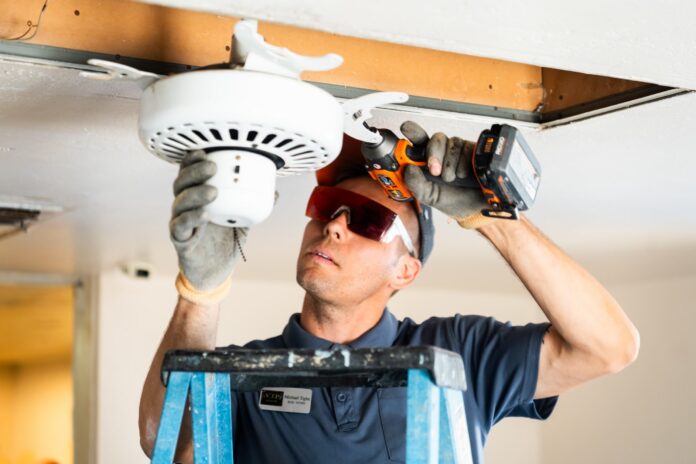
An electrician who jumpstarted his career through a CDA-supported ministry, Michael Tighe has been lighting up buildings across the city after St. Joseph the Worker helped him navigate barriers entering the job market. 

As it’s commonly known following a 2025 rebrand, The Worker is among over 70 ministries supported by the CDA, which was established in 1970. This year’s campaign was launched by Bishop John Dolan Feb. 7, with the theme, “Faith Lights the Way.” 

Empowering the jobless to find life-sustaining employment, The Worker provides services at its Phoenix headquarters including job search and resume prep, employer referrals, proper work attire, life skills and financial workshops. Its Workforce Housing program offers 90-day transitional housing for those already with a job. 

Over seven years ago, having left college and his dream of entering a trade, Tighe found himself mired in low-paying jobs and struggling with alcohol use. He entered rehabilitation, where he met Daren Strunk, now The Worker’s chief operating officer. 

“He (Daren) was seeking people looking for work. When he said that he partnered with a bunch of trade programs, I got really excited,” Tighe recalled. 

The Worker connected Tighe with a private company, where he was hired as an apprentice. The Worker personnel bought him work boots and power tools and checked in with him regularly with support and encouragement. 

Tighe soon found he loved electrical work. 

After finishing his apprenticeship and earning his electrician’s license, Tighe launched his own business, began building a customer base and now plans to add his first employee. 

“It’s been exciting,” he beamed. 

“I was in a fragile place. Having someone to guide me [helped]. The Worker [made] it easy. They didn’t make me fill out a bunch of paperwork. They just said, basically, ‘Oh, you need a job; you need help; here it is.’” 

In addition to his commercial labor, Tighe has added volunteering on The Worker projects. 

Tighe volunteered at Mom’s House, a home for women newly released from prison seeking to re-enter society. He also is contributing to a similar men’s facility planned in the East Valley. 

His experience reflects a broader success story, according to The Worker CEO Carrie Masters. 

“Michael is just one tiny example of the tremendous work we do here,” Masters said. 

Founded by a pair of Catholic priests in 1988 to help homeless individuals seeking jobs, The Worker has guided over 40,000 people toward self-sufficiency by connecting them to employment at a self-sustaining wage. 

“We have evolved into a place for all, serving everyone, regardless of background,” Masters said. 

“We are a nonprofit solely supported by the community through donations, foundations and grants. The Diocese of Phoenix and the CDA have been a huge supporter of ours for many years. The support from the diocese has been tremendous.” 

Masters’ own experience has helped fuel The Worker’s vision. 

Homeless as a child with a father who served more than 10 years in prison and a mother who left the family when she was 14, Masters has tried to ensure the ministry lifts clients to the point they can pull themselves along, very much like Tighe. 

“They’re doing all the work. We’re really just the cheerleader on the sidelines, instilling hope and confidence, connecting them to opportunities,” she said. 

“I’ve been sober three years,” added Tighe. “God’s been a huge part of that. I try to start my day, asking God, ‘How can I serve others as an electrician?’ 

“I also have learned to value myself. I don’t think I cared very much about that,” he said. 

To make a gift to the CDA, visit www.give.dphx.org 

Christ in our Neighborhood: Fourth Sunday of Lent (Cycle A)

NOTE: Christ in Our Neighborhood is a parish-based program consisting of small Christian communities that gather in the home weekly to prayerfully discuss the upcoming Sunday Mass readings. It’s easy to form a community and you can find out more by searching “Christ in Our Neighborhood at the Diocese of Phoenix website, dphx.org.

This coming Sunday, we mark the Fourth Sunday of Lent. The question the Christ in Our Neighborhood Commentary asks us is: The man worshipped Jesus as Lord. In what way do I worship Jesus?

The eucharistic celebration is central to the way Catholics worship God. At every Mass, we enter into a sacred mystery in which the Body, Blood, Soul and Divinity of our Lord Jesus are made present to us. And though the Eucharist is the source and summit of our Catholic faith, we can worship God in other ways, too. When we surrender our hearts fully to Him and ask Him to be Lord of everything in our life, we are worshipping Him. When we praise Him for the splendor of a sunset or the majesty of the sea, we are worshipping Him. When we sing songs of praise to Him with all our hearts, we are worshipping Him.

How will you worship God this week?

If you haven’t joined a Christ in Our Neighborhood small group yet, perhaps you are being called to start one yourself. It’s easy! Check out our website today to find out more: dphx.org/Christ-in-our-neighborhood. 

Watch the video of the weekly podcast segment featuring Christ in Our Neighborhood with Bishop Dolan by clicking HERE.

To sign up for our weekly Christ in Our Neighborhood newsletter that has everything you need for your next meeting, visit: https://phoenixdiocese.flocknote.com/CION

Christ in our Neighborhood: Third Sunday of Lent (Cycle A)

NOTE: Christ in Our Neighborhood is a parish-based program consisting of small Christian communities that gather in the home weekly to prayerfully discuss the upcoming Sunday Mass readings. It’s easy to form a community and you can find out more by searching “Christ in Our Neighborhood at the Diocese of Phoenix website, dphx.org.

This coming Sunday, we mark the Third Sunday of Lent. The question the Christ in Our Neighborhood Commentary asks us is:  How have I responded to the love of God in my life?

Many people have never experienced unconditional love. There’s a real healing made possible once we understand that God loves us profoundly, even in the midst of our brokenness. It’s not that He condones our sins or poor choices; it’s that HE loves us even in the middle of the mess. In experiencing that love, our hearts are overwhelmed with gratitude. In response to His love and His invitation and through His grace, we can extend forgiveness and love to others.

There are no secrets from God. He knows all about you and will never abandon you. Have you ever pondered His love and what it frees you to do? Lent is a time to reflect on the love of God poured out for mankind on the cross.

If you haven’t joined a Christ in Our Neighborhood small group yet, perhaps you are being called to start one yourself. It’s easy! Check out our website today to find out more: dphx.org/Christ-in-our-neighborhood. 

Watch the video of the weekly podcast segment featuring Christ in Our Neighborhood with Bishop Dolan by clicking HERE.

To sign up for our weekly Christ in Our Neighborhood newsletter that has everything you need for your next meeting, visit: https://phoenixdiocese.flocknote.com/CION

New initiative to form mental health professionals rooted in Church teaching

Students are seen in the grotto at the University of Mary in Bismarck, N.D., Sept. 8, 2023. A new initiative by the University of Mary in Bismarck, N.D., and the Diocese of Phoenix, promises to respond to today's rising mental health challenges by forming mental health professionals who are clinically trained and rooted in the Catholic teaching on human dignity. (OSV News photo/Mike McCleary, University of Mary)

Courtesy of OSV News, Written by Katie Yoder

(OSV News) — A new initiative by the University of Mary and the Diocese of Phoenix promises to respond to today’s rising mental health challenges by forming mental health professionals who are clinically trained and rooted in the Catholic teaching on human dignity.

“The idea of mental health ministry is to reach out to those who may be struggling with mental health or those who have lost loved ones through suicide — and let them know that they’re loved and that they belong in the life of the Church,” Bishop John P. Dolan of Phoenix, who has lost four family members to suicide, told OSV News.

Both Bishop Dolan and Msgr. James P. Shea, president of the University of Mary in Bismarck, North Dakota, spoke with OSV News about the initiative called the Photina Center for Catholic Counseling. Located in Phoenix, the center will provide select educational programs, professional development and community resources beginning this year.

As soon as this fall, the center will offer courses for the university’s counseling master’s degree program to diocesan employees. It will coordinate practicum and internship opportunities so students can experience hands-on learning in diocesan schools or with Catholic mental health practitioners. The center will also provide coursework for the university’s Catholic anthropology for counselors graduate certificate.

Responding to mental health needs

Phoenix Bishop John P. Dolan is pictured in a Feb. 14, 2026, photo. A new initiative by the University of Mary in Bismarck, N.D., and the Diocese of Phoenix, promises to respond to today’s rising mental health challenges by forming mental health professionals who are clinically trained and rooted in the Catholic teaching on human dignity. (OSV News photo/Brett Meister, Diocese of Phoenix)

In addition to academic programs, the center will offer professional development and resources for local Catholic mental health professionals, support the Diocese of Phoenix’s Office of Mental Health Ministry and co-sponsor an annual conference on Catholic mental health ministry.

“One of the fundamental and primary and central needs in the wider culture is for mental health professionals,” Msgr. Shea said. “Catholic higher education is the best place to prepare a caring, sensitive but also properly trained mental health professional working in schools or in charities or in private therapeutic practice.”

Around 1 in 6 Americans say they have poor mental health, according to a poll released by National Alliance on Mental Illness in December. At the same time, a West Health-Gallup Healthcare survey conducted in November found that, for the first time, the percentage of U.S. adults who call their mental health “excellent” fell below 30%.

Focus on mental health in schools

With the help of the center, Bishop Dolan said his diocese wants to place counselors in each of its grade school systems, among other things.

“The idea is that those who are going through the M.S. program will also act as interns in our grade schools to assist our children,” he said.

Bishop Dolan said the diocese has been expanding its Office of Mental Health Ministry to include education, accompaniment and advocacy. He called the Photina project a culmination of all three.

A program of support

Msgr. Shea saw a need for the university to grow with its master of science degree in counseling filled to capacity. The university also saw the needs of the Diocese of Phoenix, the second largest Catholic diocese in the country by population.

Msgr. James P. Shea, president of the University of Mary in Bismarck, N.D., is seen in an undated photo engaging with students. A new initiative by the University of Mary and the Diocese of Phoenix, promises to respond to today’s rising mental health challenges by forming mental health professionals who are clinically trained and rooted in the Catholic teaching on human dignity. (OSV News photo/Mike McCleary, University of Mary)

“We’ve launched this program together in an effort to bring our academic program, our CACREP-accredited master of science in counseling, to the Diocese of Phoenix, where we hope to equip counselors — both school counselors and mental health counselors — for the schools of the Diocese of Phoenix and also for the charitable apostolates of the Diocese of Phoenix,” Msgr. Shea said.

The University of Mary’s master of science programs in clinical mental health counseling and school counseling are accredited by the Council for Accreditation of Counseling and Related Educational Programs, or CACREP. The counseling program that will be offered through the center is currently seeking CACREP authorization.

A continued relationship

Msgr. Shea said the center is part of a “growing and burgeoning relationship” between the university and the Diocese of Phoenix. He described how the University of Mary began providing Catholic higher education in the diocese in 2012 with the launch of Mary College at ASU — a partnership between the University of Mary and Arizona State University.

That partnership also includes the diocese through the Catholic Newman Center at ASU, Msgr. Shea said.

More recently, the university’s relationship with the diocese continued when Bishop Dolan asked the University of Mary to provide academic formation for the seminarians at the newly launched Nazareth Seminary in Phoenix, he said.

“Out of these collaborations which already existed, grew the idea that the University of Mary should expand our offerings in counseling at the graduate level … to the Diocese of Phoenix,” Msgr. Shea said.

The meaning behind the name

The new center takes its name from St. Photina, the Samaritan woman who encounters Jesus Christ at Jacob’s Well.

“Here’s a woman who comes broken and full of shame — hiding from others — out to the well in the middle of the day,” Msgr. Shea said. “She meets Jesus at that well, and, in one conversation, he teaches her about God’s love for her, about right worship, about her own life and what her desires have meant. He fills her with courage and healing, and then she runs into the city to evangelize others.”

“It’s the most wonderful example of inner transformation,” he added. “That’s the very kind of healing we hope comes shining forth from the Photina Center for Catholic Counseling.”

Katie Yoder is an OSV News correspondent. She writes from Maryland.